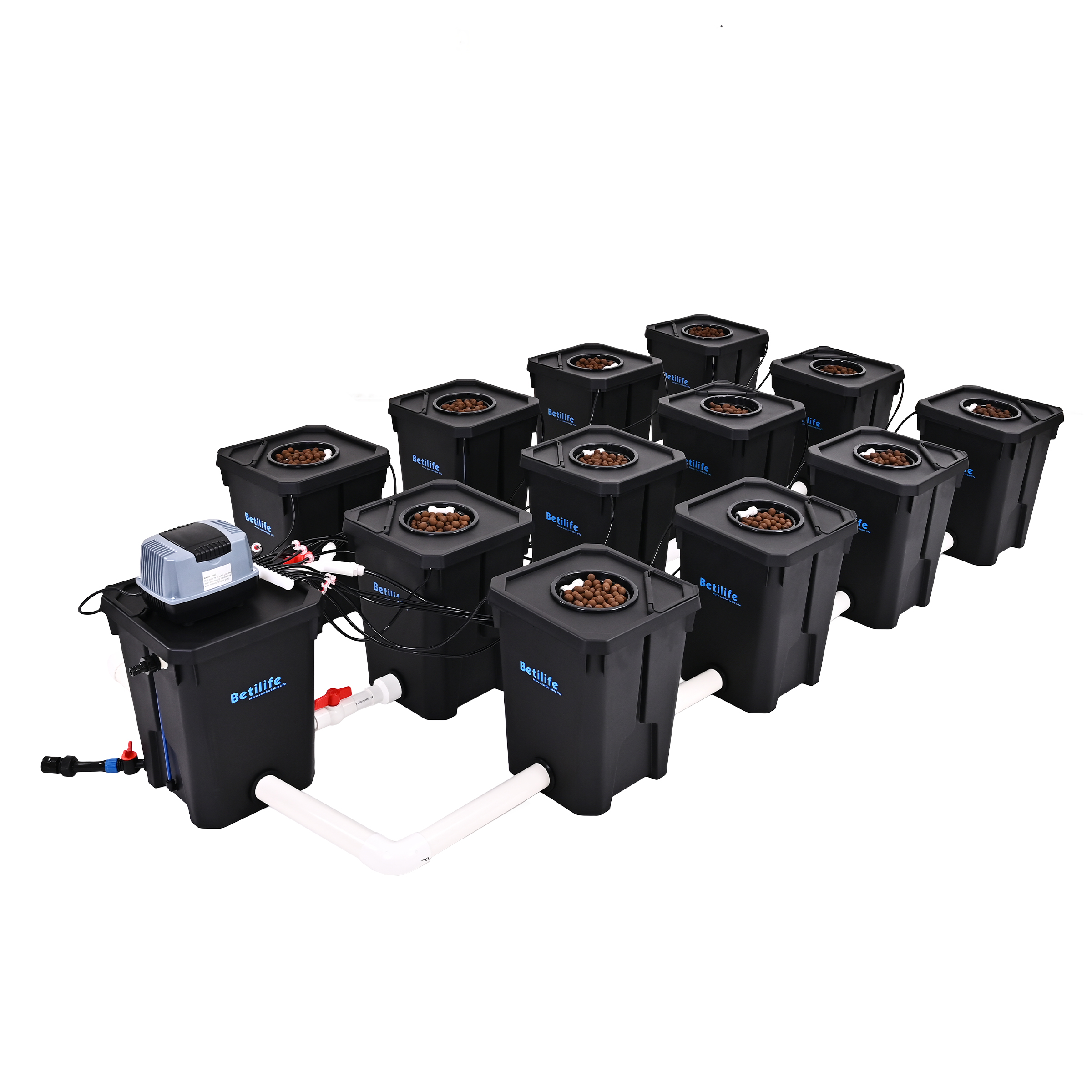
What Is an RDWC System
If you're researching high-yield hydroponic systems, you've likely come across the term RDWC system.
But what exactly is an RDWC system — and why is it widely used in commercial indoor cultivation across the United States?
In this guide, we break down:
-
What RDWC (Recirculating Deep Water Culture) is
-
How it works
-
Its advantages over traditional DWC and soil
-
Maintenance best practices
-
Why commercial growers prefer RDWC
What Is an RDWC System?
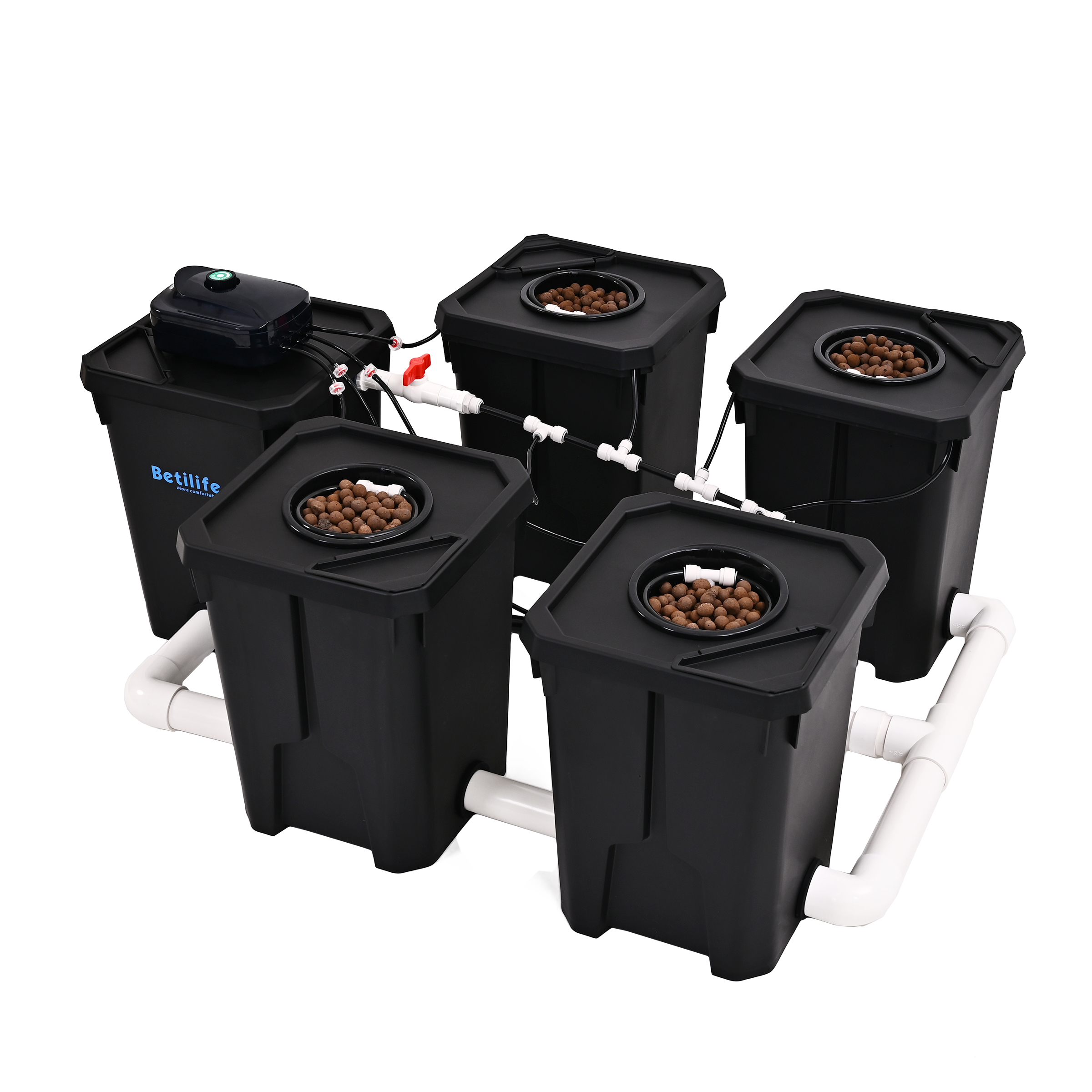
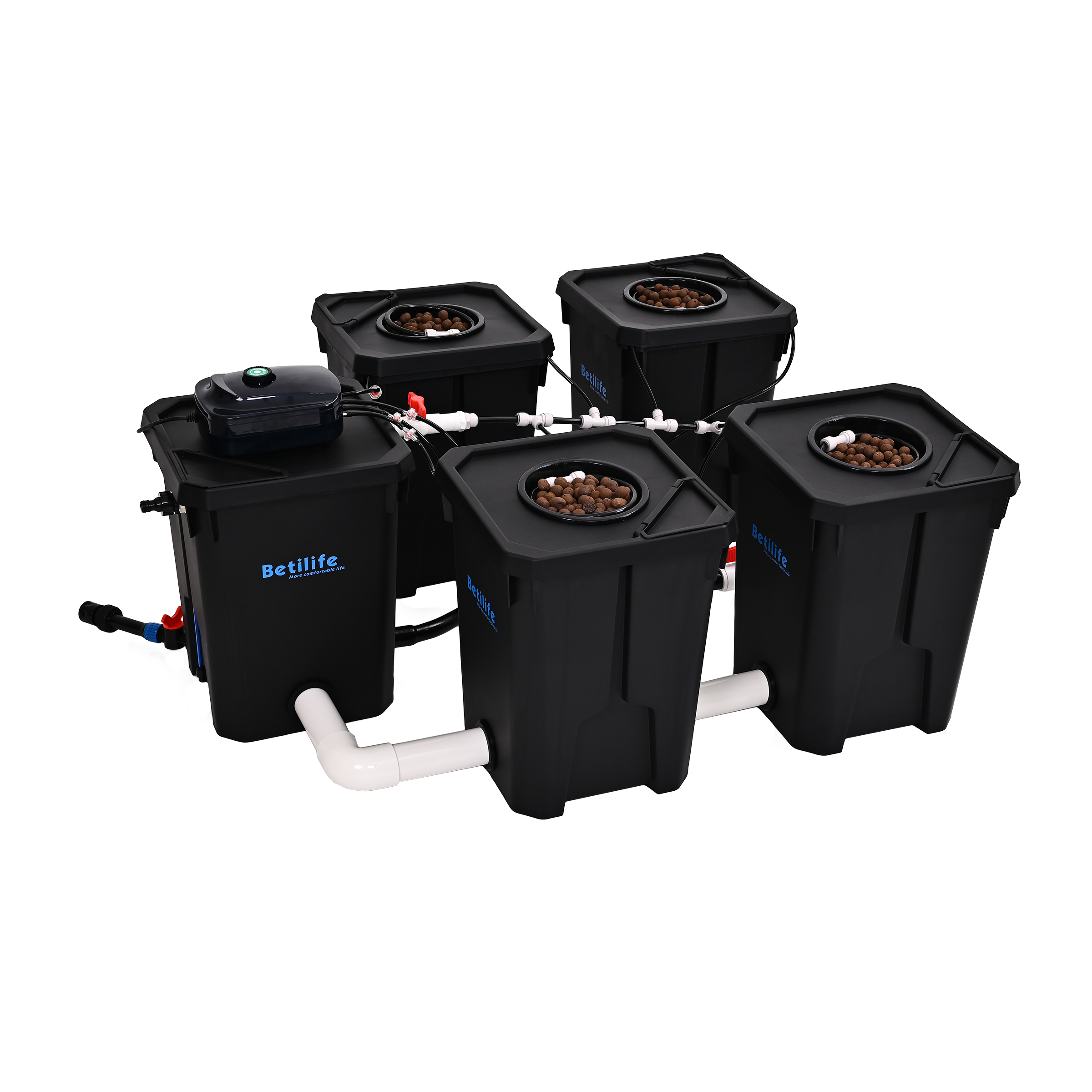
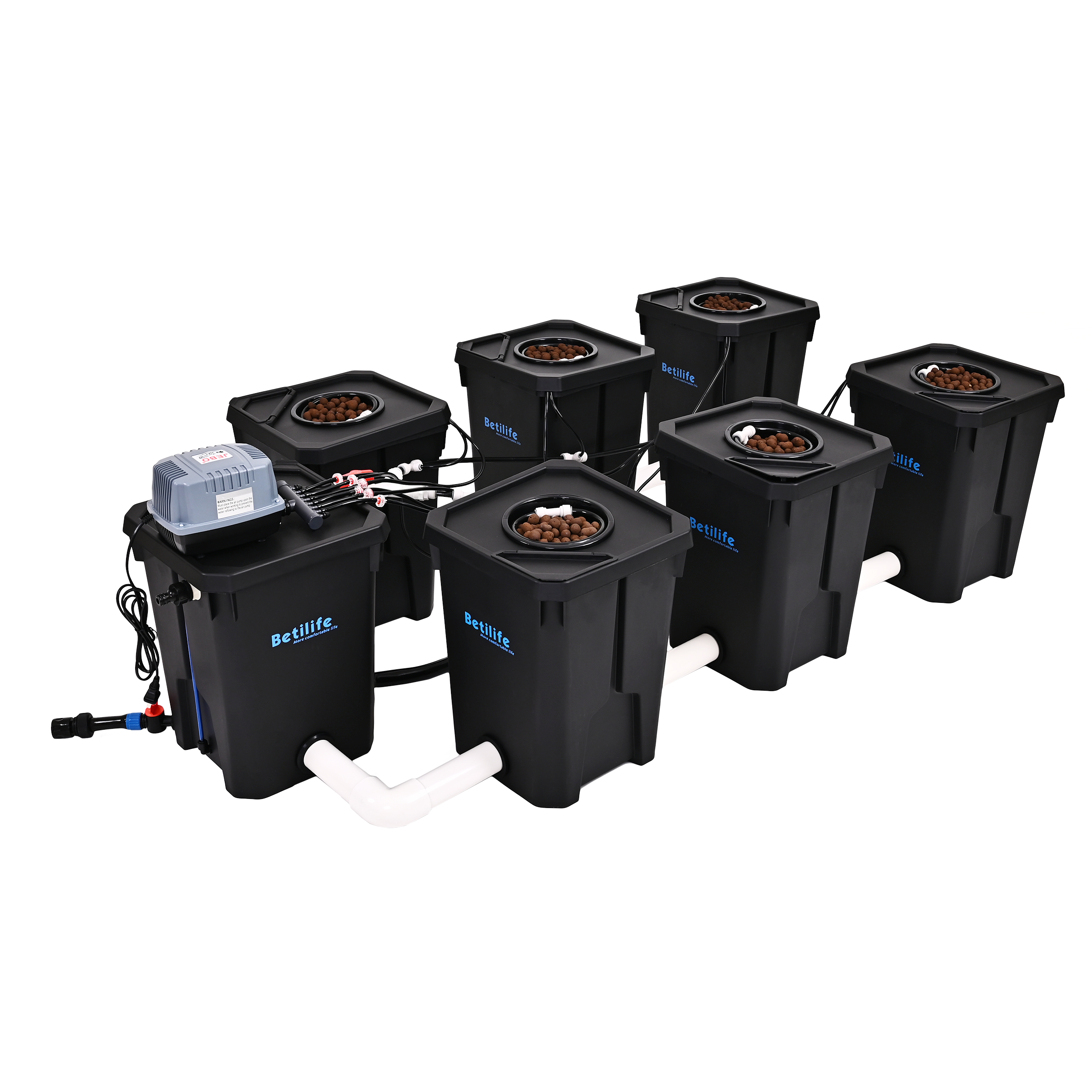
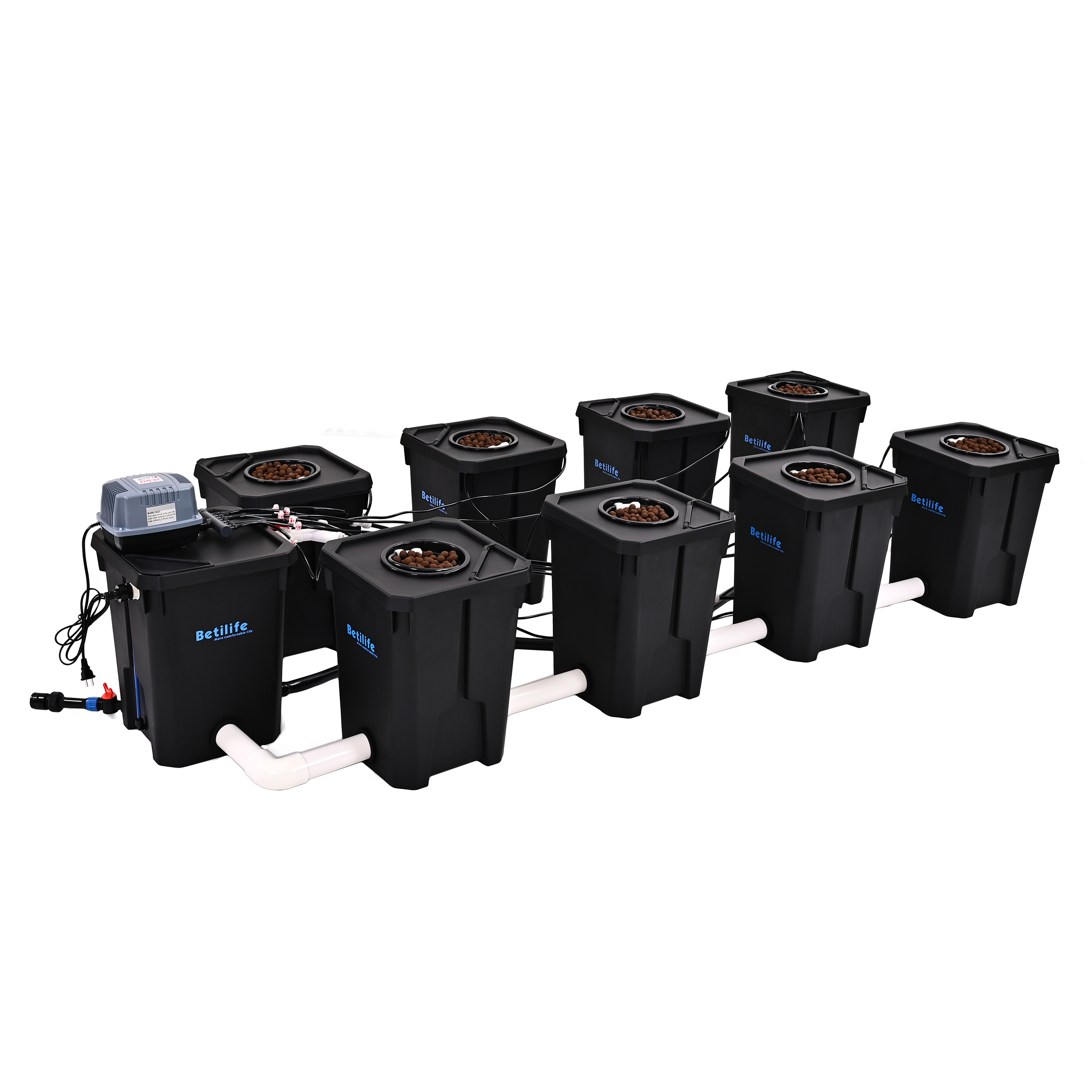
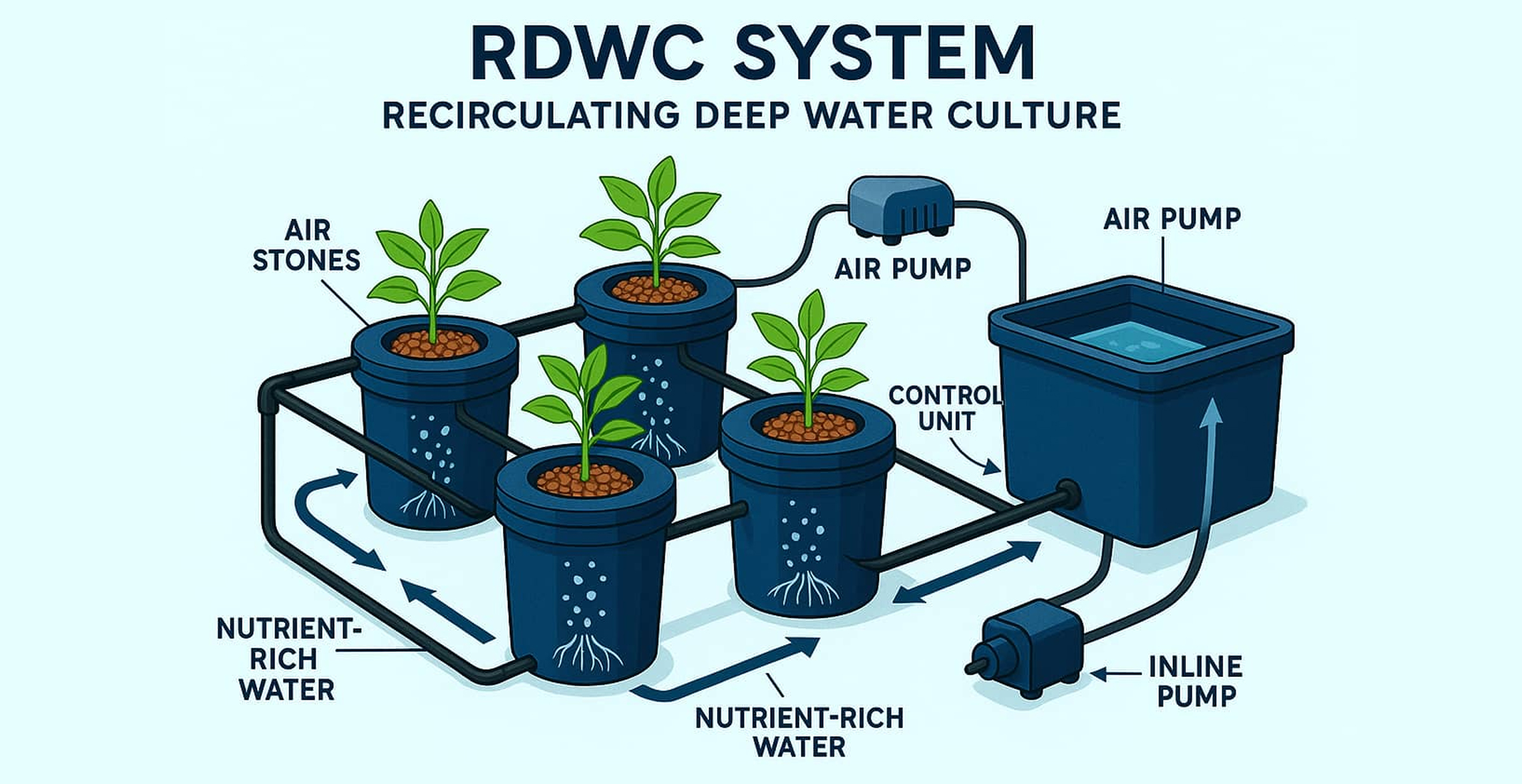
An RDWC System (Recirculating Deep Water Culture) is an advanced hydroponic growing method where multiple grow buckets are connected to a central reservoir. Nutrient solution continuously circulates between all sites, ensuring consistent oxygenation and nutrient distribution.
RDWC is an upgraded version of standard DWC (Deep Water Culture), offering improved stability and scalability for professional operations.
Core Components of an RDWC System
-
Multiple grow buckets (4, 5, 6, 7, 8, 9, 12, 16, 24, 36+ sites)
-
Central control reservoir
-
Recirculating water pump
-
High-output air pump and air stones
-
Return piping system
-
Water level balancing system
Plant roots remain submerged in oxygen-rich nutrient solution, allowing direct access to water and nutrients 24/7.
How Does an RDWC System Work?
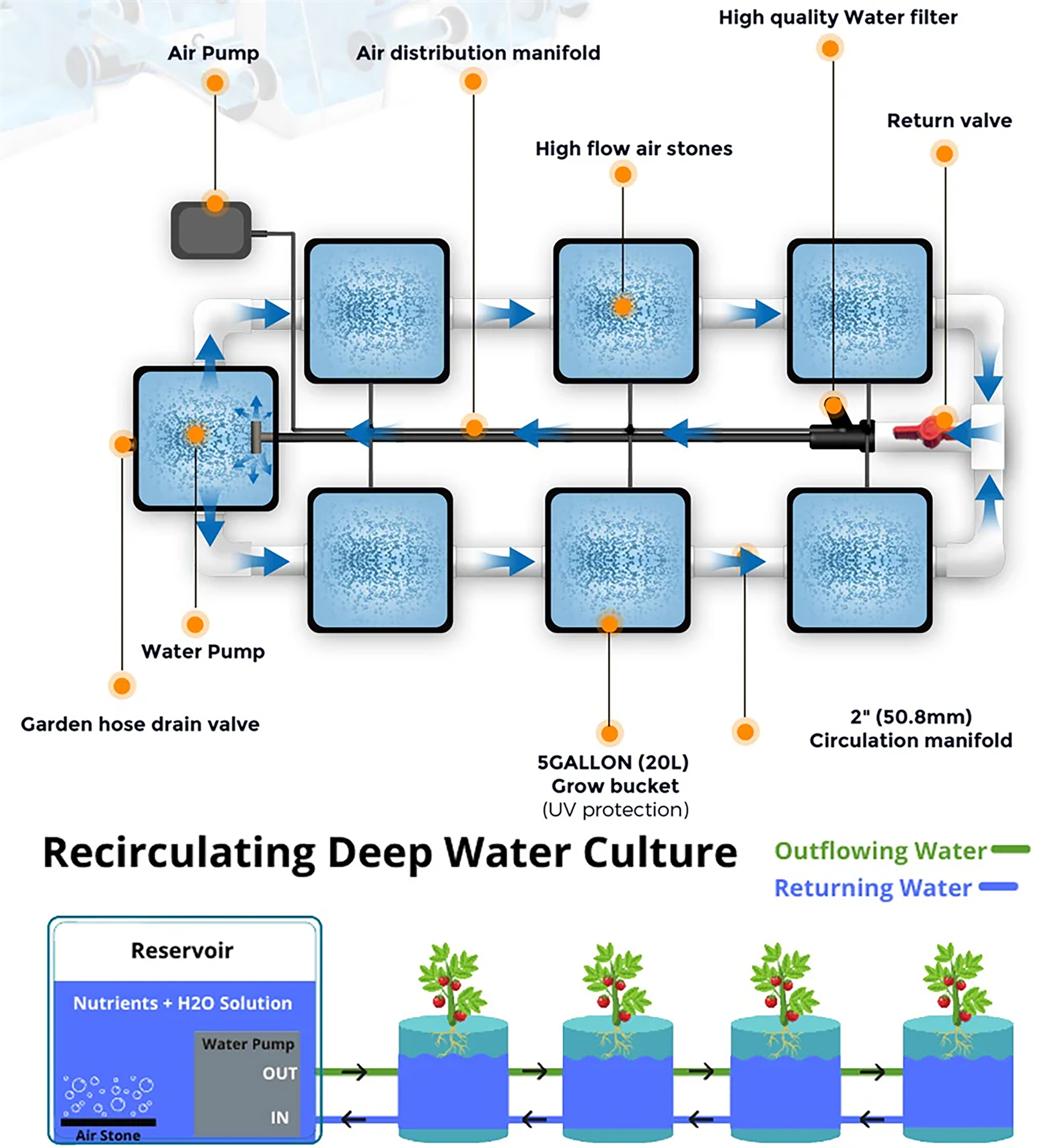
Unlike standalone DWC buckets, RDWC systems continuously circulate water through all grow sites.
Here’s how it works:
-
Nutrient solution is mixed in the central reservoir.
-
A water pump distributes the solution to each bucket.
-
Excess solution returns through gravity-fed piping.
-
Air stones maintain high dissolved oxygen levels.
-
pH and EC adjustments are made centrally.
Because all buckets share the same reservoir, growers maintain consistent nutrient levels across the entire system.
RDWC vs DWC: What’s the Difference?
| Feature | DWC | RDWC |
|---|---|---|
| Buckets Connected | No | Yes |
| Nutrient Control | Individual per bucket | Central reservoir |
| Scalability | Limited | High |
| Maintenance | Manual per site | Centralized |
| Growth Speed | Fast | Faster |
For small hobby growers, DWC may be sufficient. For commercial-scale indoor cultivation, RDWC offers significantly more control and uniformity.
Advantages of an RDWC System
1️⃣ Faster Growth Cycles
High dissolved oxygen levels allow plants to absorb nutrients more efficiently. This often results in:
-
Accelerated vegetative growth
-
Stronger root mass
-
Shorter overall grow cycles
Commercial growers can increase harvest frequency annually.
2️⃣ Higher Yield Potential
Because roots are constantly submerged in oxygenated nutrient solution:
-
Nutrient uptake is optimized
-
Stress is reduced
-
Plant vigor improves
Many growers report increased biomass compared to soil or coco systems.
3️⃣ Centralized Nutrient Management
All buckets share one reservoir.
This means:
-
Single-point pH adjustment
-
Consistent EC levels
-
Simplified nutrient mixing
-
Reduced human error
This is especially valuable in multi-site indoor grow rooms.
4️⃣ Cleaner Growing Environment
Compared to soil systems:
-
No medium compaction
-
Fewer pest issues
-
Easy root inspection
-
Less waste
RDWC systems are popular in controlled environment agriculture where sanitation is critical.
5️⃣ Scalable for Commercial Operations
RDWC systems can expand from:
-
4-site starter setups
-
To 12+ site commercial modules
They are widely used in:
-
Indoor grow facilities
-
Licensed cultivation environments
-
Vertical farming operations
-
Hydroponic research setups
How to Maintain an RDWC System Properly
While RDWC offers performance advantages, maintenance is essential.
Maintain Water Temperature
Ideal range:
-
65–70°F (18–21°C)
Higher temperatures reduce dissolved oxygen and increase root disease risk.
Professional growers may use:
-
Water chillers
-
Insulated reservoirs
-
Climate-controlled grow rooms
Monitor pH and EC Daily
Recommended ranges:
-
pH: 5.5–6.2
-
EC: Based on plant growth stage
Since RDWC is recirculating, changes affect all plants at once — making monitoring critical.
Perform Regular Reservoir Changes
Best practice:
-
Replace nutrient solution every 7–10 days
-
Flush system between growth cycles
This prevents salt buildup and nutrient lockout.
Maintain Oxygen Levels
Healthy roots should appear:
-
White
-
Thick
-
Odor-free
Use high-quality air pumps and large air stones to ensure sufficient dissolved oxygen.
Is RDWC Right for You?
RDWC systems are ideal for growers who:
-
Want high-yield hydroponic performance
-
Operate indoor or controlled environments
-
Require consistent multi-site nutrient management
-
Plan to scale operations
RDWC may not be ideal for growers who prefer low-maintenance soil cultivation or cannot monitor systems regularly.
Why RDWC Is Popular in the U.S. Commercial Market
Across the United States, indoor cultivation continues to expand due to:
-
Climate control advantages
-
Year-round production
-
Higher yield per square foot
RDWC systems offer the precision and scalability needed for commercial indoor operations.
For distributors and equipment suppliers, RDWC remains one of the most in-demand hydroponic system categories due to its performance-driven reputation.
Final Thoughts
An RDWC system is more than just connected buckets — it is a high-performance hydroponic method designed for growers who prioritize:
-
Speed
-
Yield
-
Consistency
-
Scalability
When properly maintained, RDWC systems can outperform traditional soil and standalone DWC setups in controlled environments.
Upgrade your grow room with the BetiLife™ professional RDWC complete kit. Shop the all-in-one solution for professional growers today.
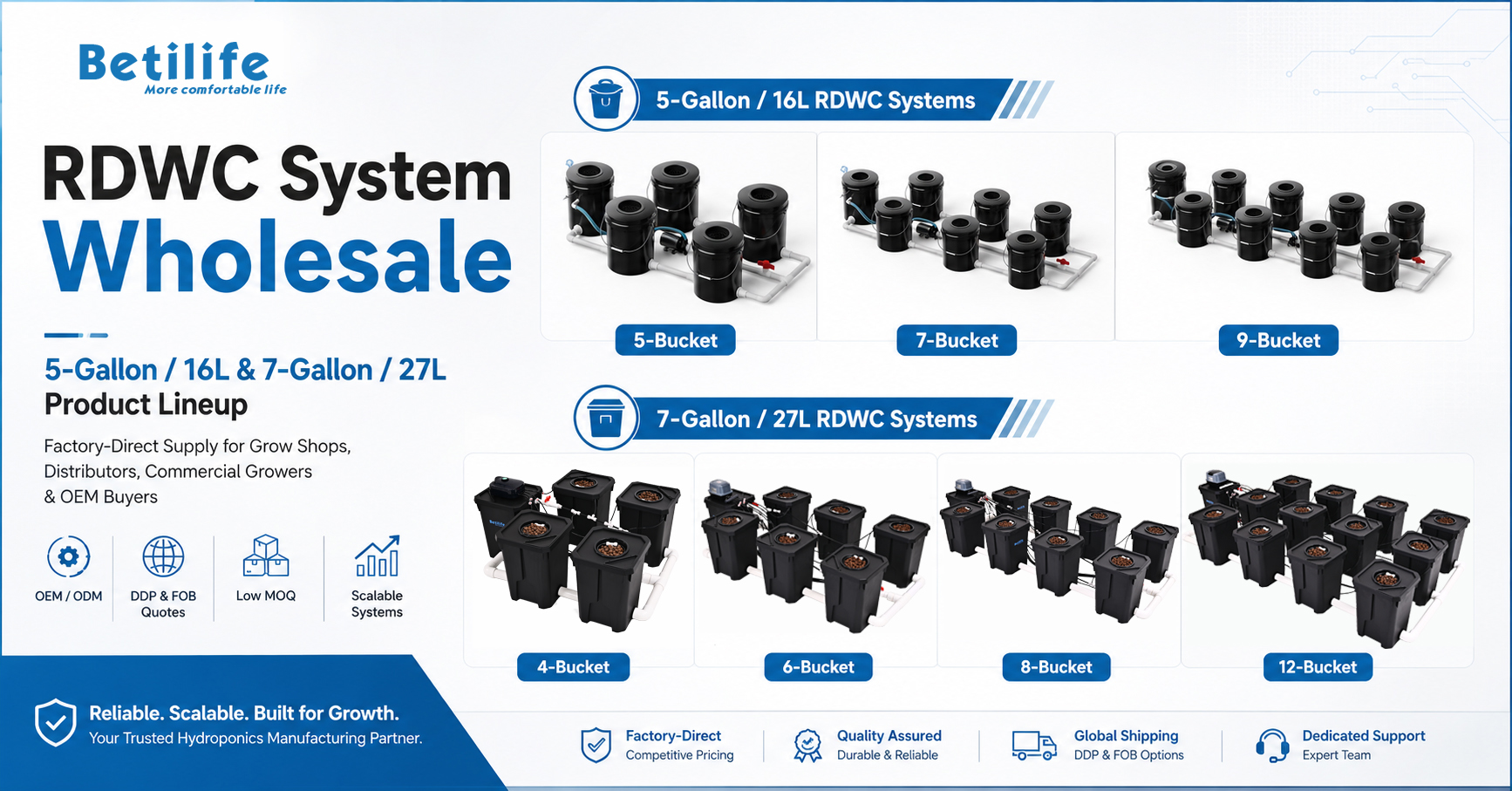
Explore the BetiLife™ RDWC Hydroponic System and build a professional recirculating deep water culture system designed for serious growers.