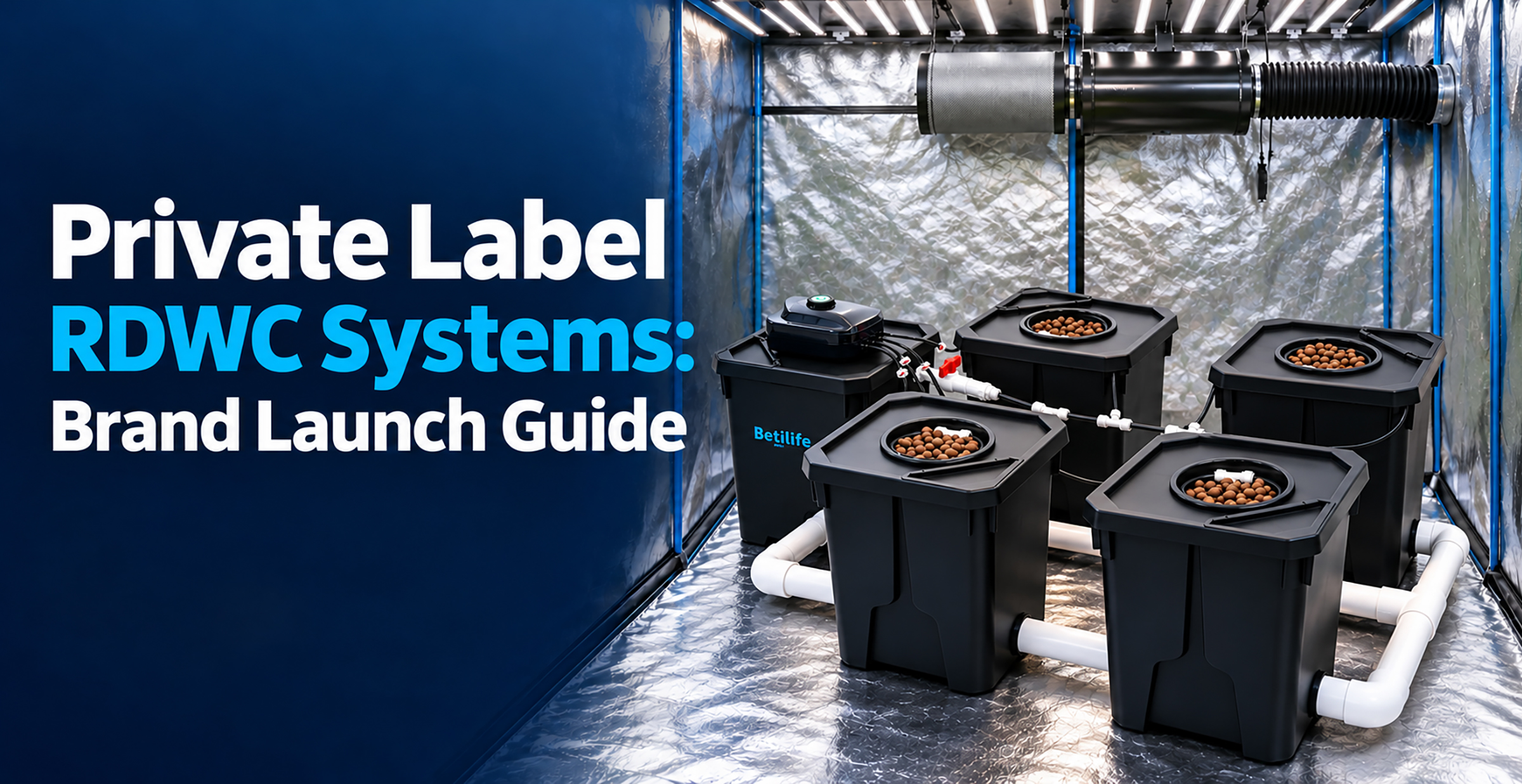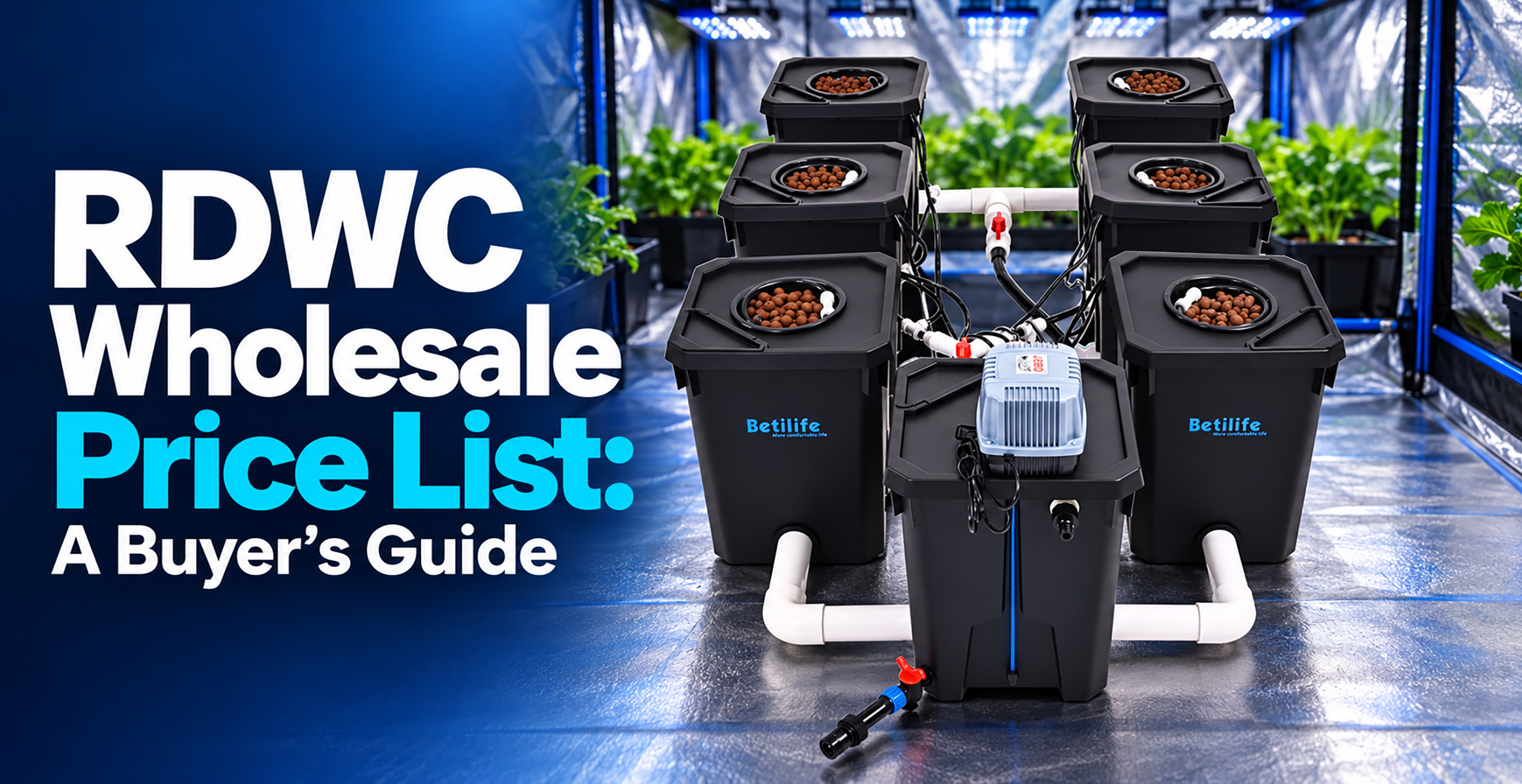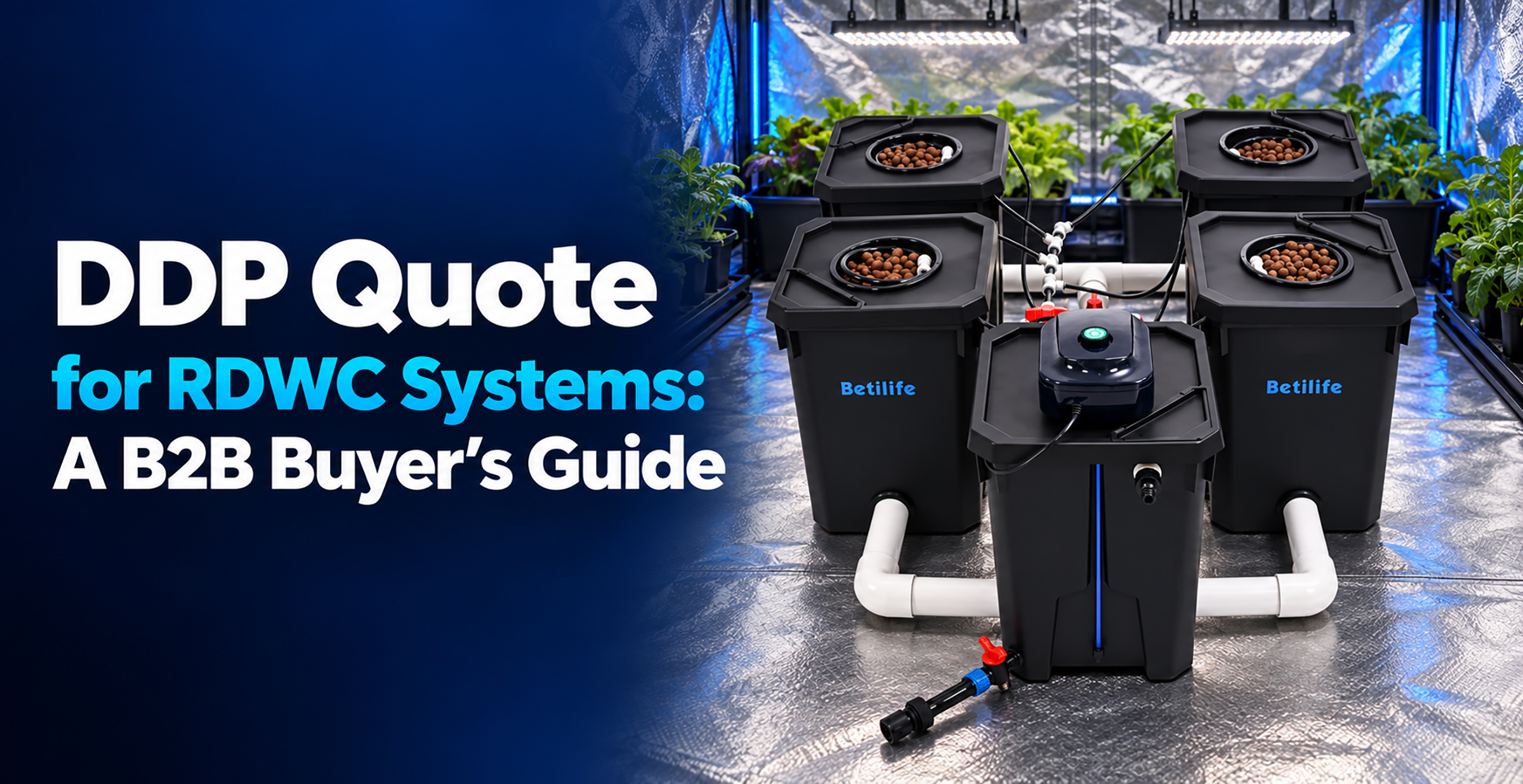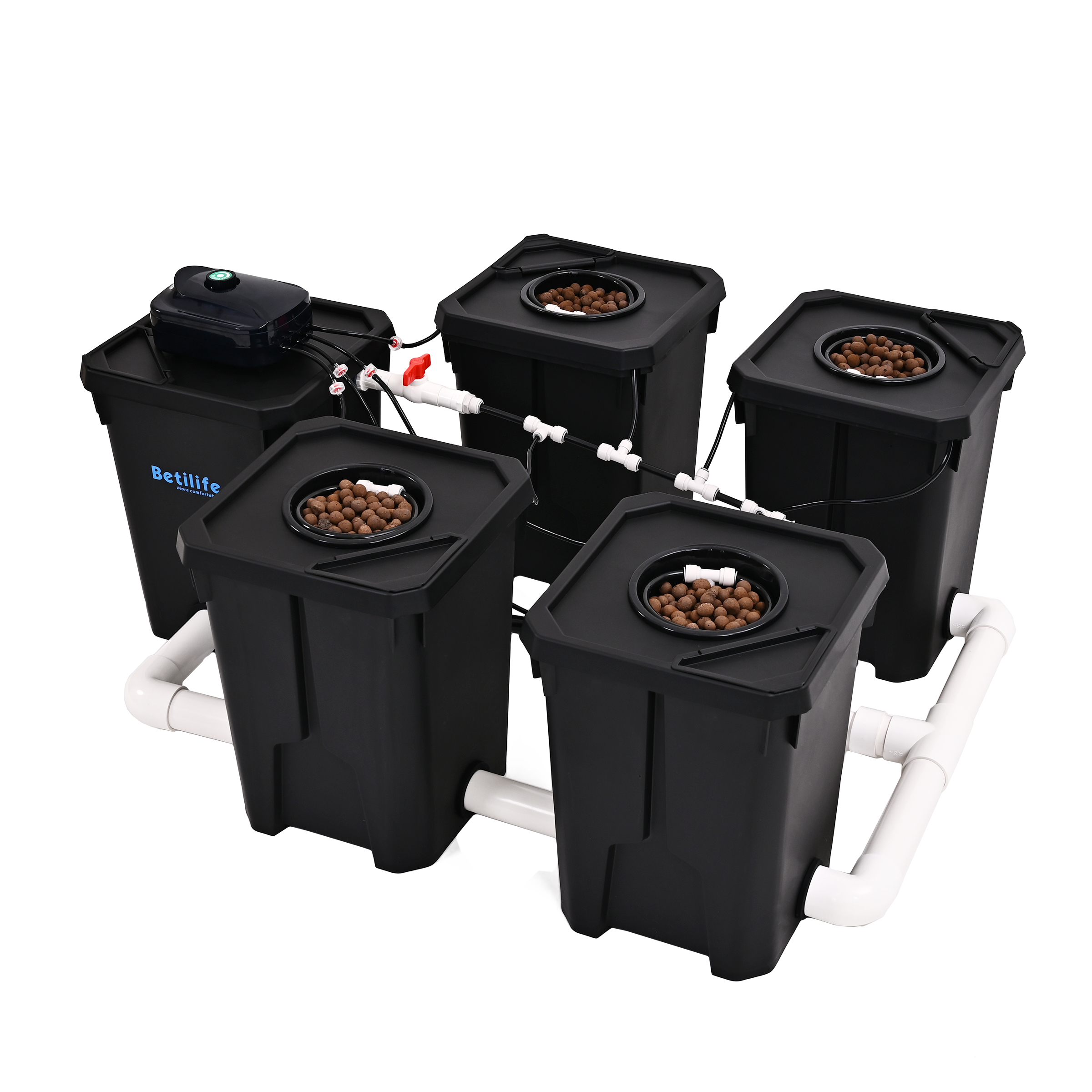
The right commercial RDWC supplier is the one whose system, delivered cost, and support match your operation or sales channel. Compare the complete configuration before comparing prices: the same number of planting sites can come with different container sizes, plumbing, aeration methods, and service requirements.
This buyer's guide reviews Current Culture H2O, Hydra Unlimited, Alien Hydroponics, and BetiLife. It helps commercial growers, grow shops, hydroponic retailers, and distributors build a shortlist, evaluate the trade-offs, and request a useful quote.
By BetiLife. Product references reviewed October 14, 2026. This is a supplier-published guide, not independent performance testing or an exhaustive market ranking. BetiLife is one of the suppliers discussed. Suitability assessments are purchasing guidance based on the cited product information; specifications and commercial terms require confirmation before ordering.
Quick Comparison: Which Commercial RDWC Suppliers Should You Evaluate?
Start with the buying requirement, not a universal winner. The shortlist below covers different system approaches. These are options for buyers serving the U.S. market, not a claim that every supplier manufactures in the United States.
| Supplier and product line | Reason to evaluate | Question to resolve |
|---|---|---|
| Current Culture H2O: Under Current | Larger-module configurations with specified plant spacing and centralized system access. | Which exact configuration fits the room and required service access? |
| Hydra Unlimited: HydraMax | Venturi-based systems, with separate Professional products and Commercial engineering discussions. | Does the project need a standard package or a custom facility solution? |
| Alien Hydroponics: V-System and RDWC | A choice between V-System architecture and conventional air-pump-based RDWC product lines. | Which series and destination-market configuration are being quoted? |
| BetiLife: 7-Gallon RDWC | A four-model range for standard-system purchasing and wholesale assortment planning. | Which model, quantity, and delivery plan produce a workable landed cost? |
Official product references and configuration details appear in the supplier profiles below. The table is not a performance scorecard.
What Makes an RDWC System Suitable for Commercial Use?
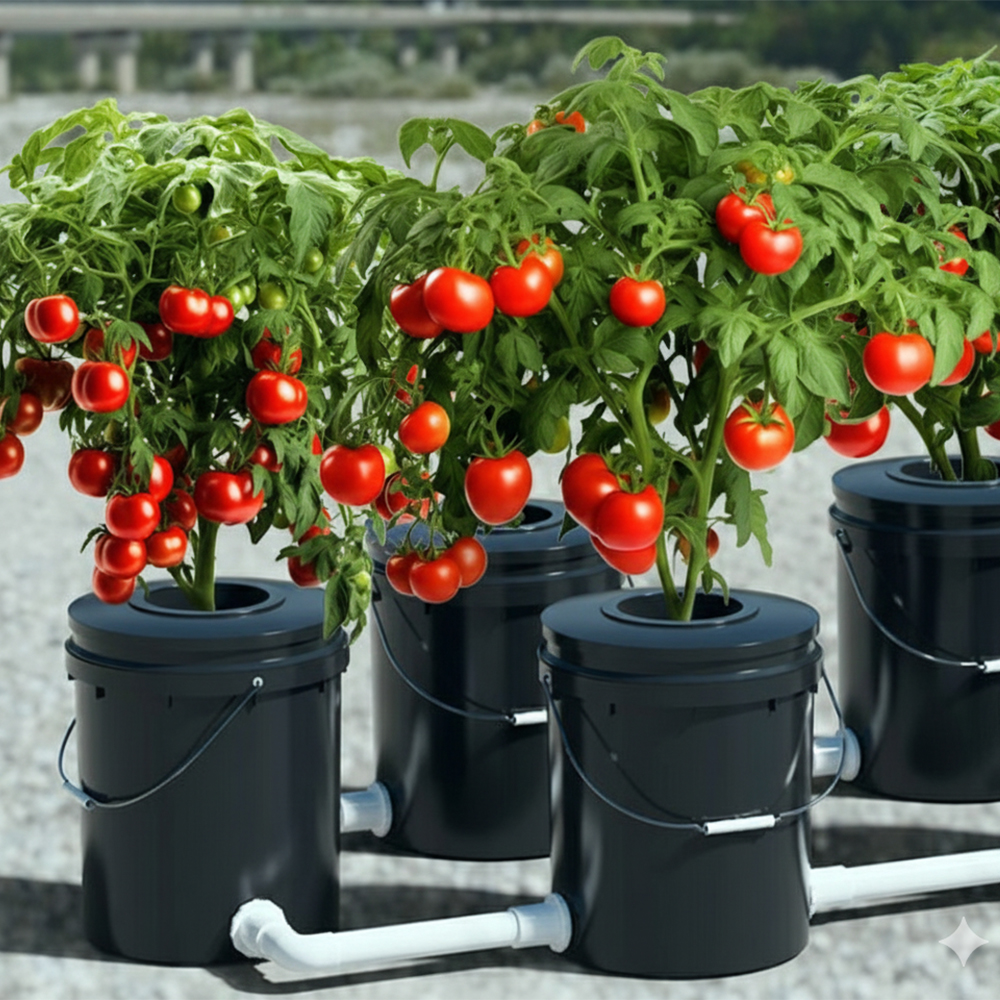
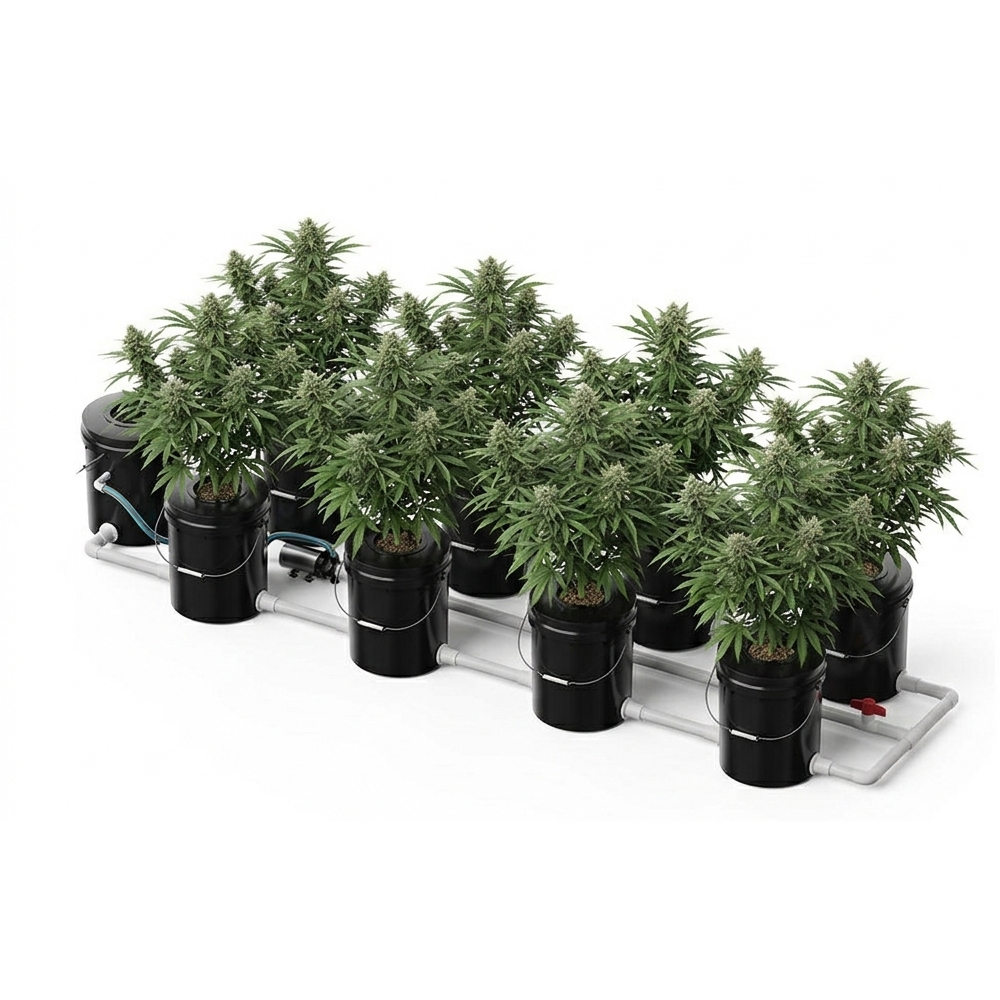
RDWC stands for recirculating deep water culture: connected growing containers circulate nutrient solution while roots receive oxygen through the system's aeration arrangement. In a commercial purchase, the relevant question is how the complete installation will function in your specific workflow.
A grow shop evaluating one display system has different requirements from an operator designing an entire production room. Both are business buyers, but only the second may need substantial layout engineering, dosing integration, operating procedures, and infrastructure planning.
- Growers: prioritize room fit, service access, operating workload, and recovery from equipment problems.
- Retailers: prioritize customer fit, landed inventory cost, clear documentation, and a manageable support process.
- Distributors: add packaging consistency, order accuracy, replacement-part identification, and repeat-order planning.
A larger bucket count does not, by itself, prove commercial suitability. Nor does buying several standard systems establish that they can be joined into one larger hydraulic circuit. Confirm the proposed operating arrangement with the supplier.
Key Evaluation Criteria for Commercial Operations
Use the same checklist for every candidate. Separate what the supplier has documented from what still needs testing or project approval.
| Criterion | Evidence or clarification to request |
|---|---|
| Capacity and layout | Planting-site count, container size, recommended operating water level, plant spacing, reservoir position, and a dimensioned layout. |
| Circulation and oxygenation | Plumbing arrangement, pump specifications, aeration method, and the conditions used for any flow or dissolved-oxygen measurements. |
| Temperature and controls | Chiller connections, monitoring needs, refill arrangements, and which control or dosing devices are included. |
| Cleaning and maintenance | Drain procedure, disassembly access, cleaning guidance, and instructions for replacing pumps, filters, or seals. |
| Reliability and recovery | Commissioning checks, leak inspection, blockage troubleshooting, spare-part recommendations, and outage planning. |
| Electrical and material documentation | Voltage, frequency, plug configuration, material specifications, and documentation supporting any relevant compliance claims. |
| Expansion limits | Permitted layouts, component changes needed for expansion, and whether separate operating zones are recommended. |
| Delivered cost and support | Current packing list, gross shipping weight, delivery scope, lead time, written warranty terms, and a claims contact. |
Check the installation, not just the nameplate
Ask whether a quoted pump-flow number is a rated specification or a measurement from the proposed installation. Likewise, an aeration method is not a substitute for measured dissolved oxygen under stated conditions. Do not treat unlike measurements as equivalent performance evidence.
For layout approval, draw the system together with the mature canopy, lighting arrangement, reservoir access, doors, and working aisles. A product footprint is not the same as the total space required to operate it.
Define acceptance before placing the order
Agree on what will be checked at receipt and commissioning: carton count, component quantities, visible damage, electrical labels, assembly, and operation according to the supplied instructions. Document who handles missing parts or a failed component. This gives both sides a clearer basis for resolving problems.
Commercial RDWC Suppliers and Product Lines to Compare
Current Culture H2O: Under Current Systems
Current Culture's Under Current range is worth evaluating when container volume, specified spacing, and a documented professional configuration are priorities. For example, the official UC4XL13 listing specifies four 13-gallon growth modules, 30-inch plant spacing, 3-inch connective components, a control module, a water pump, and separate air-pump aeration. It also lists a limited three-year warranty.
Purchasing implication: compare the complete layout and included hardware, rather than treating this as equivalent to every other four-site system. Confirm the precise model, accessories, delivery conditions, and warranty exclusions before committing.
Hydra Unlimited: HydraMax Professional and Commercial
HydraMax Professional uses Venturi circulators and Qwik-Lok plumbing connections. The product line emphasizes access for cleaning and a design without a separate epicenter bucket. These are relevant design differences for buyers evaluating maintenance routines and floor layouts, not proof of universal performance superiority.
HydraMax Commercial is presented separately as a custom-engineered solution for facility layouts and integration requirements. Purchasing implication: establish whether your quote covers a standard Professional package or a Commercial project. Do not assume dosing equipment, design work, or commissioning services are included without an itemized scope.
Alien Hydroponics: V-System and Standard RDWC
ALIEN's V-System and standard RDWC series should be compared separately. The V-System lists 58-liter containers, 5-inch connecting tubing, an external water pump, and vortex and Venturi oxygenation without a separate air pump.
The standard RDWC range includes Black and PRO Silver series using air-pump aeration. The manufacturer distinguishes the Silver series with 50 mm pipe and fittings, compared with 32 mm in the Black series, among other configuration differences.
Purchasing implication: request the exact series, layout, and destination-market package. For U.S. purchases, confirm electrical configuration, the supplying channel, replacement-part availability, and delivery terms. Features from the V-System should not be attributed to every ALIEN RDWC product.
BetiLife: Standardized 7-Gallon RDWC Systems for B2B Buyers
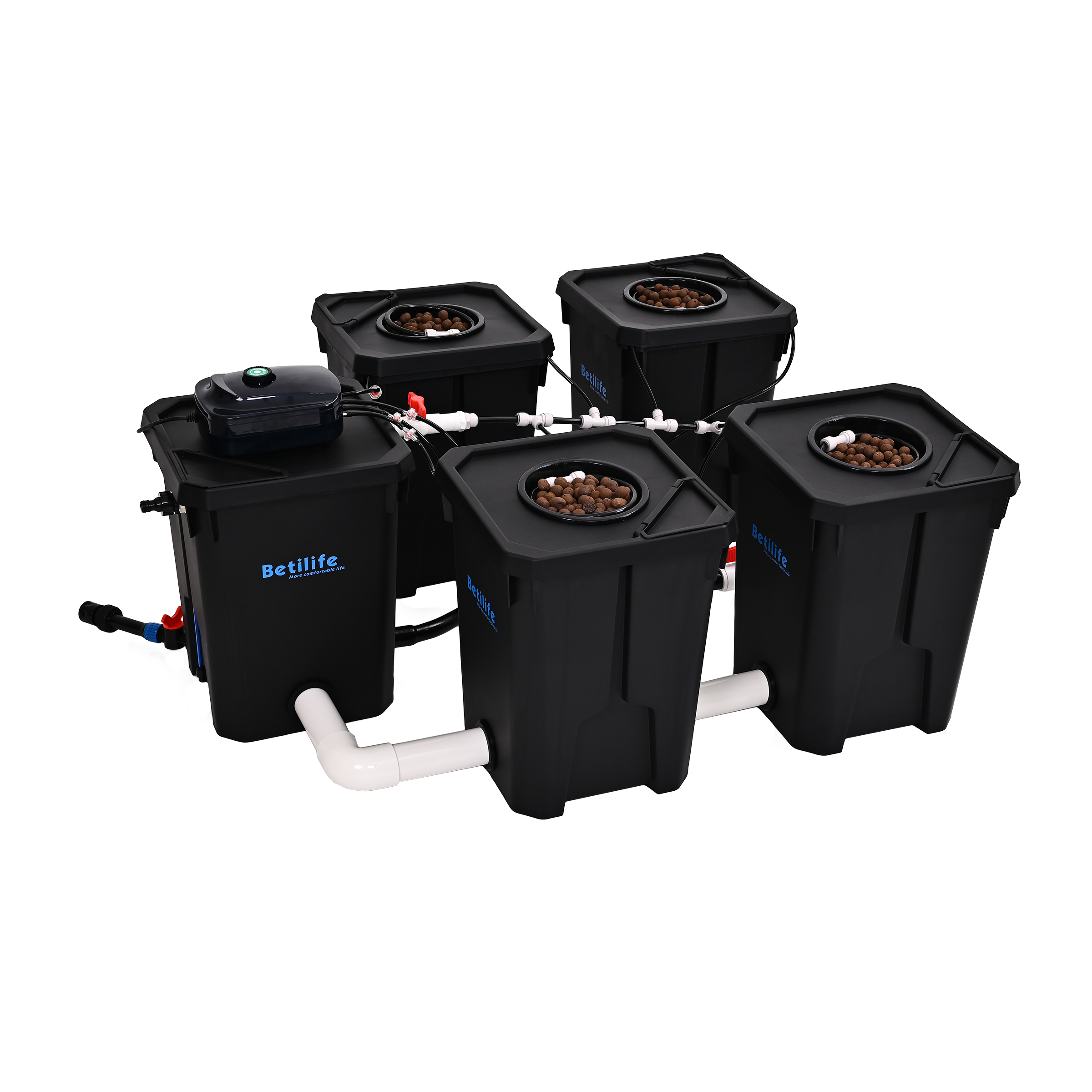
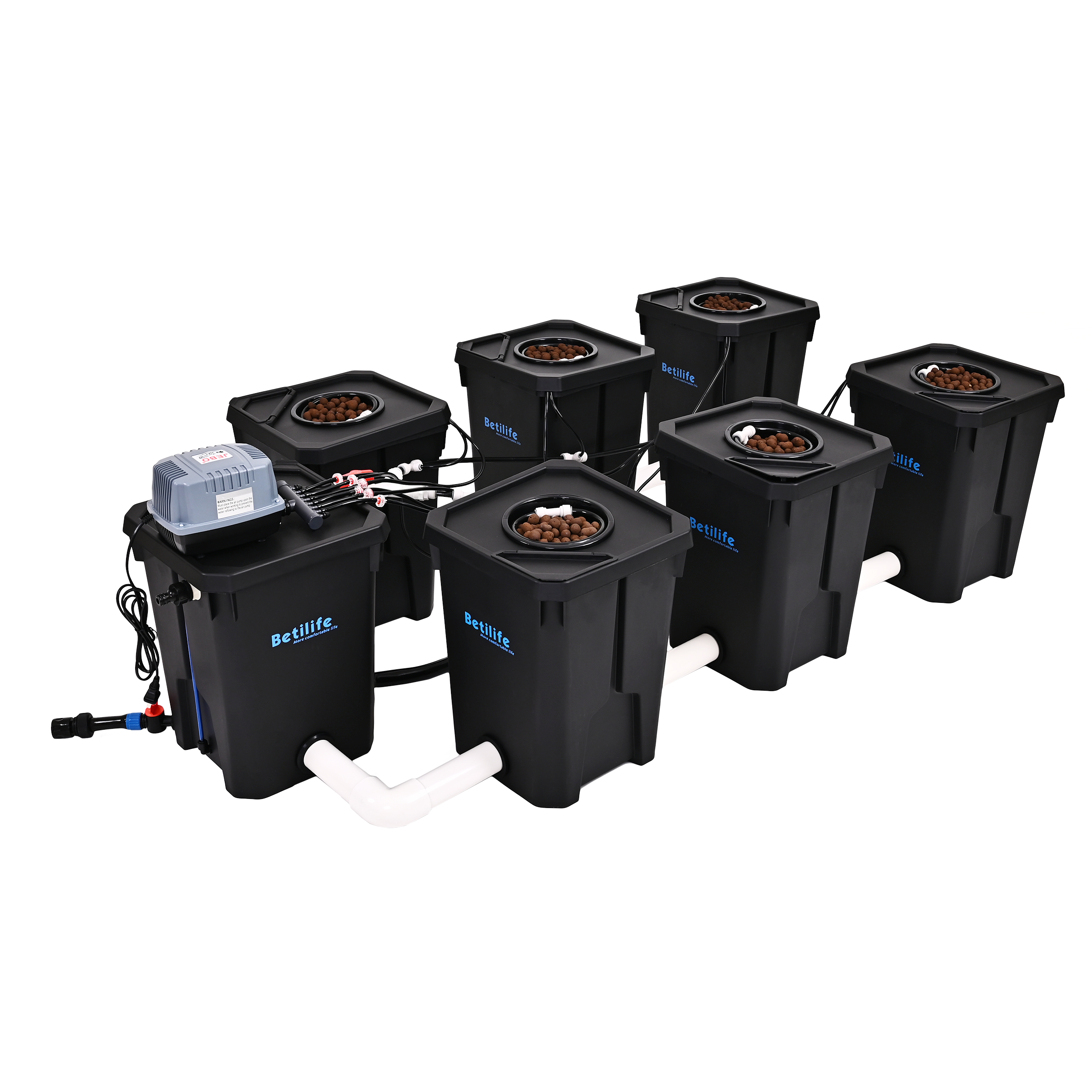
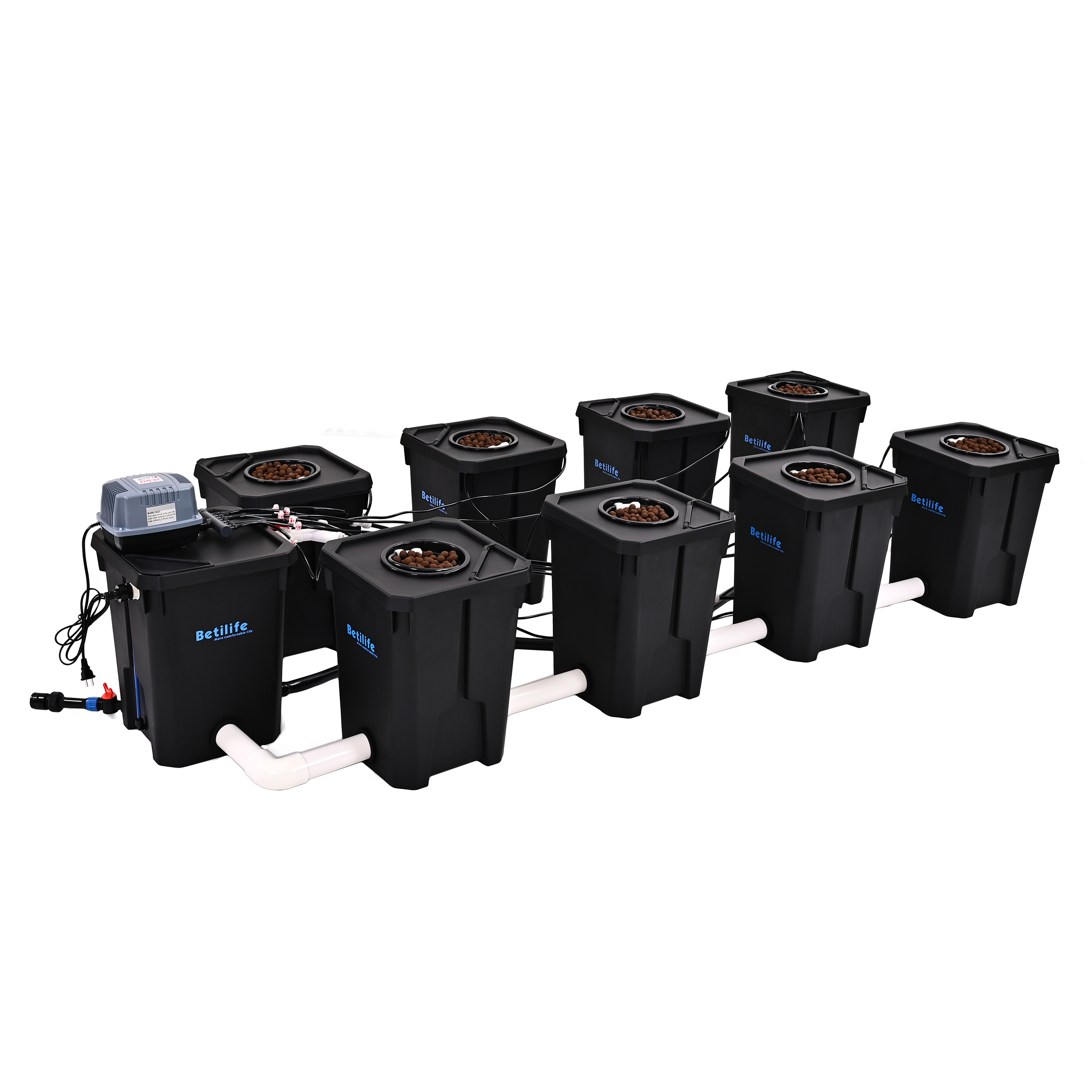
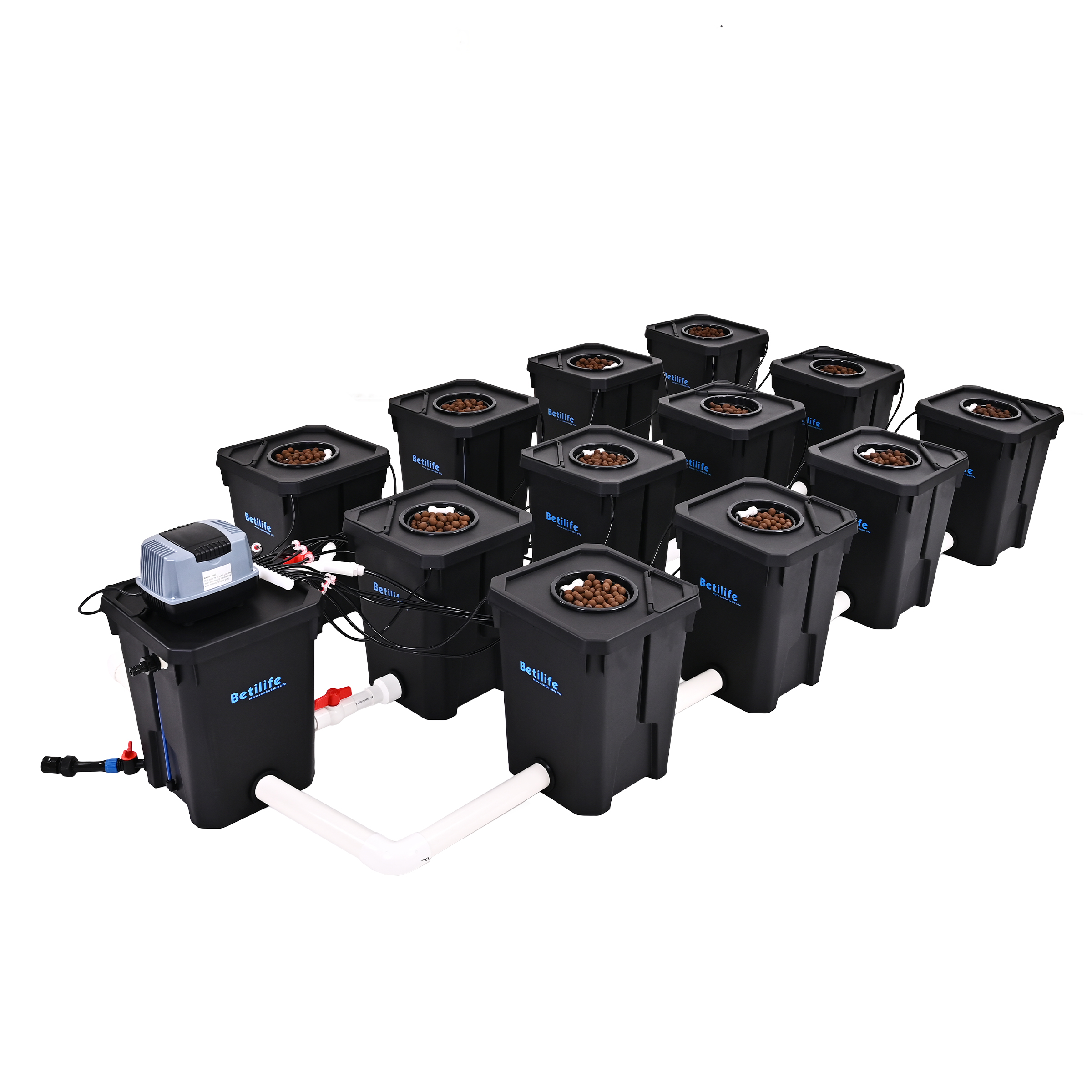
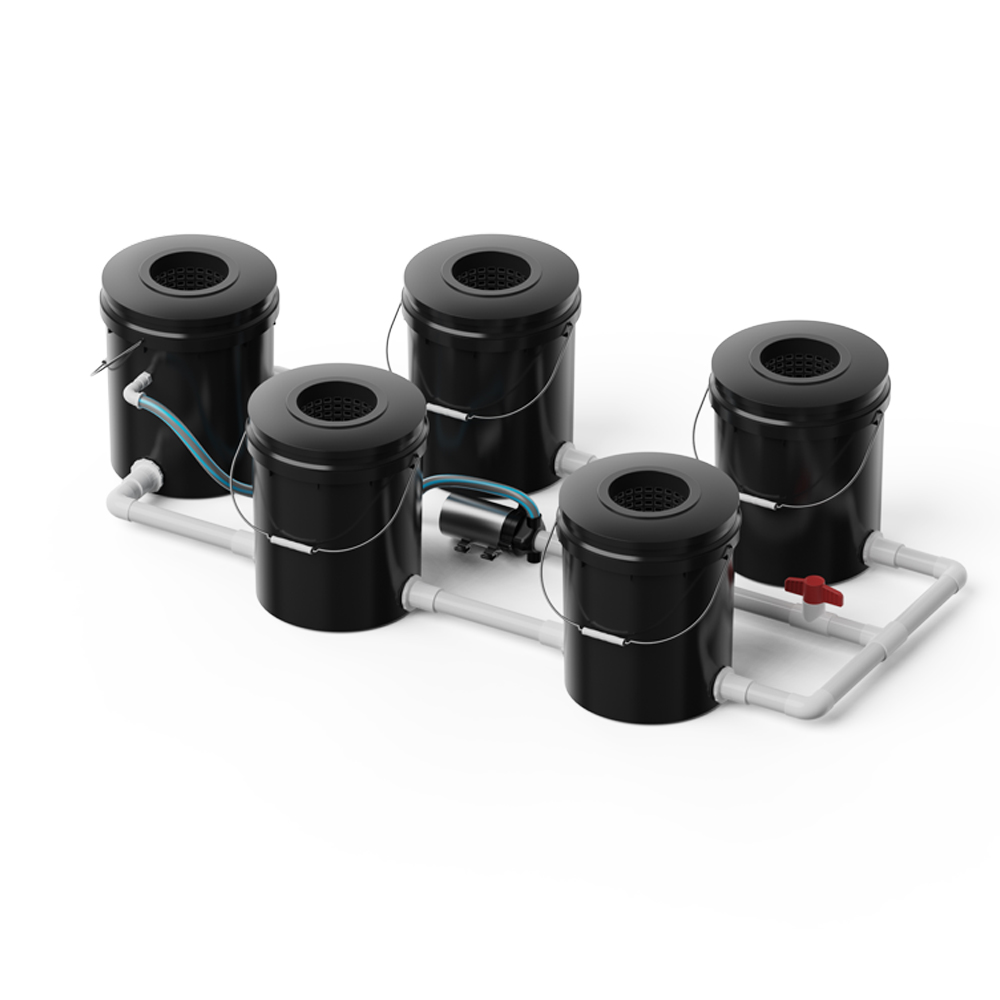
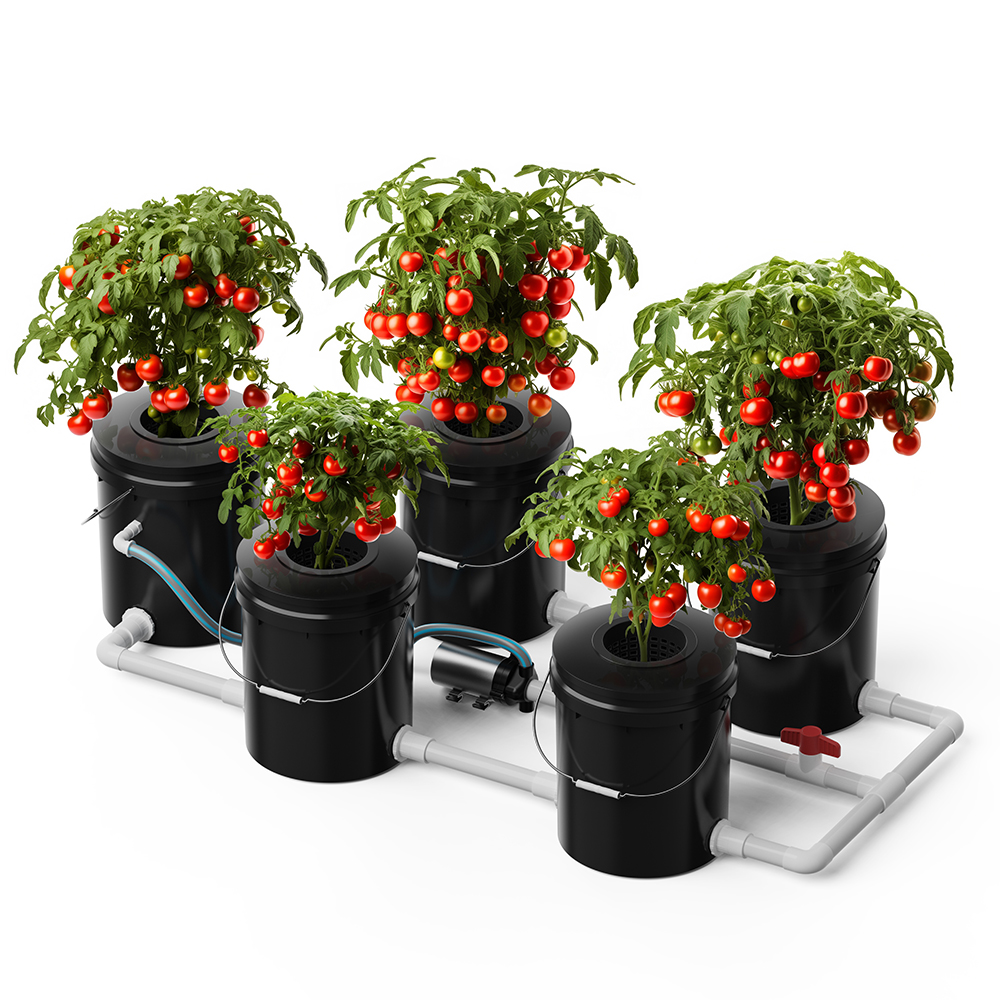
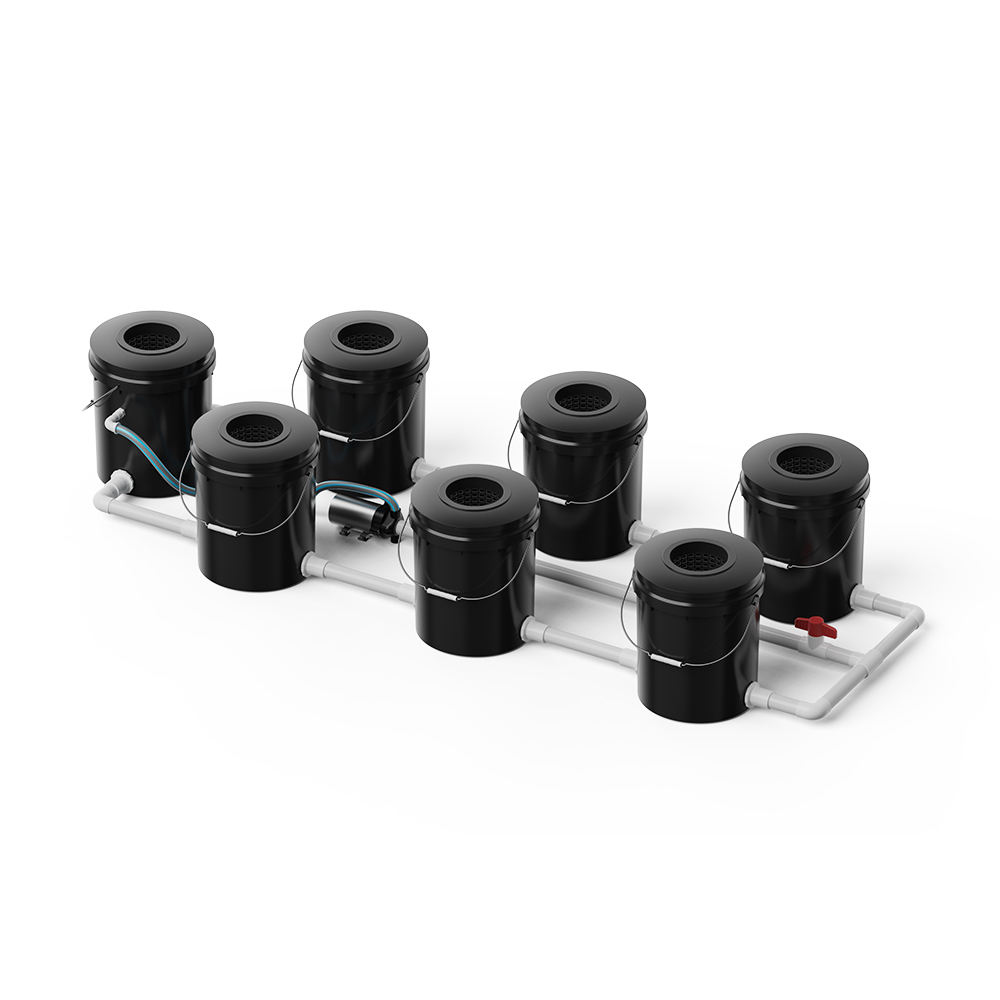
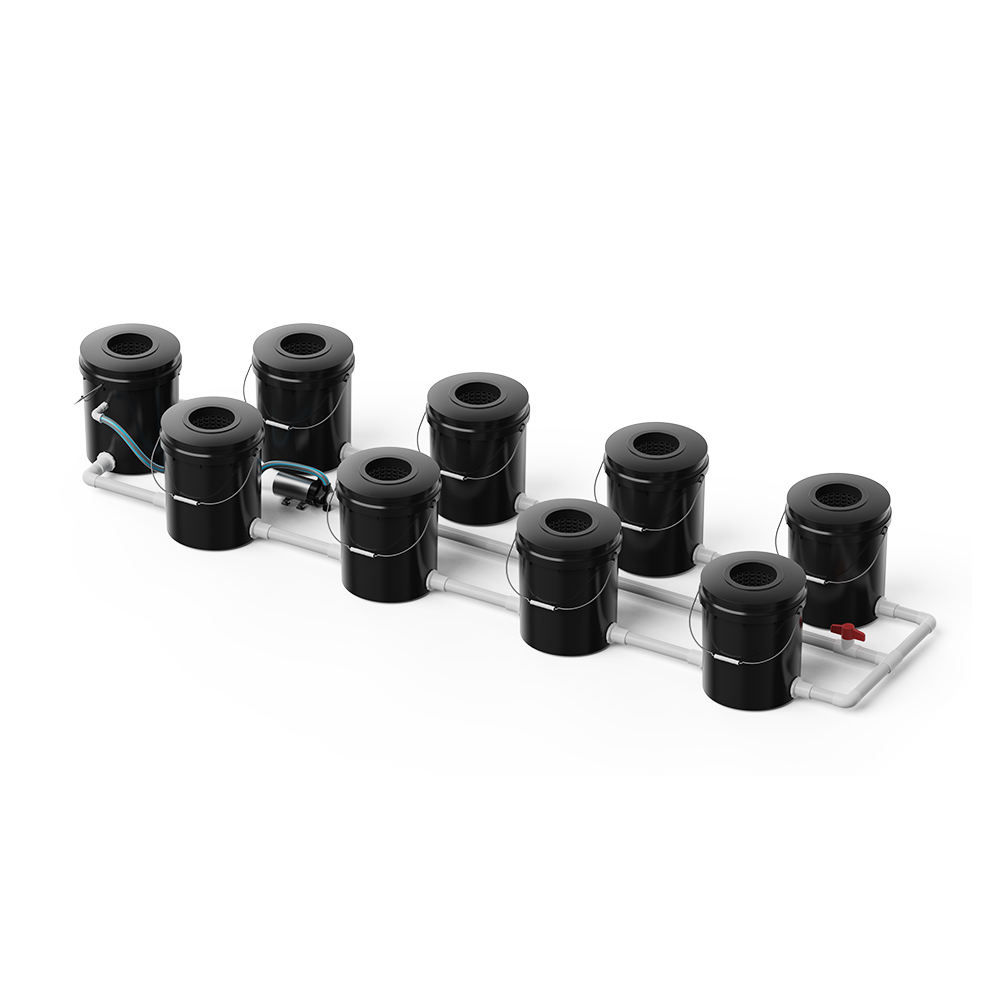
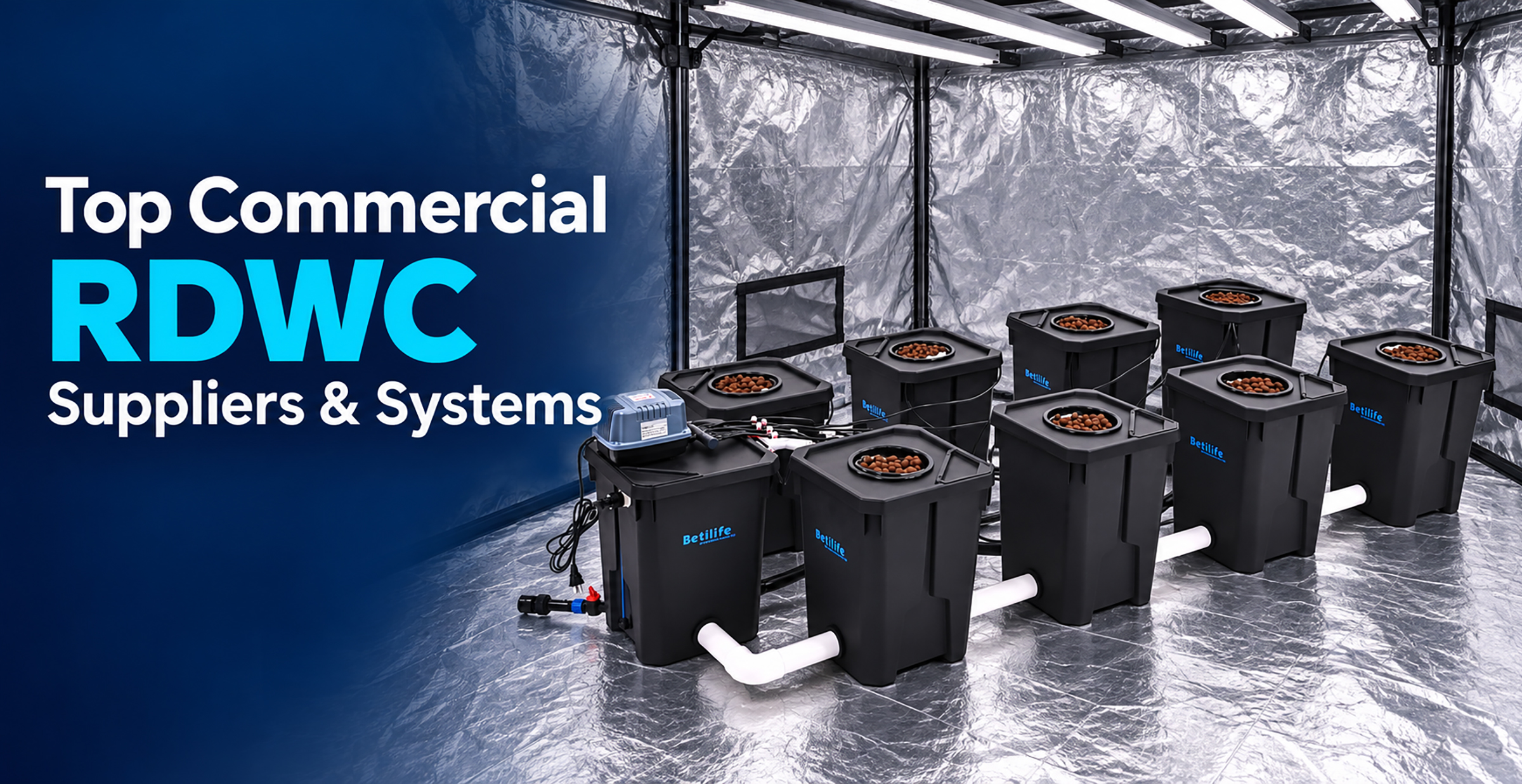
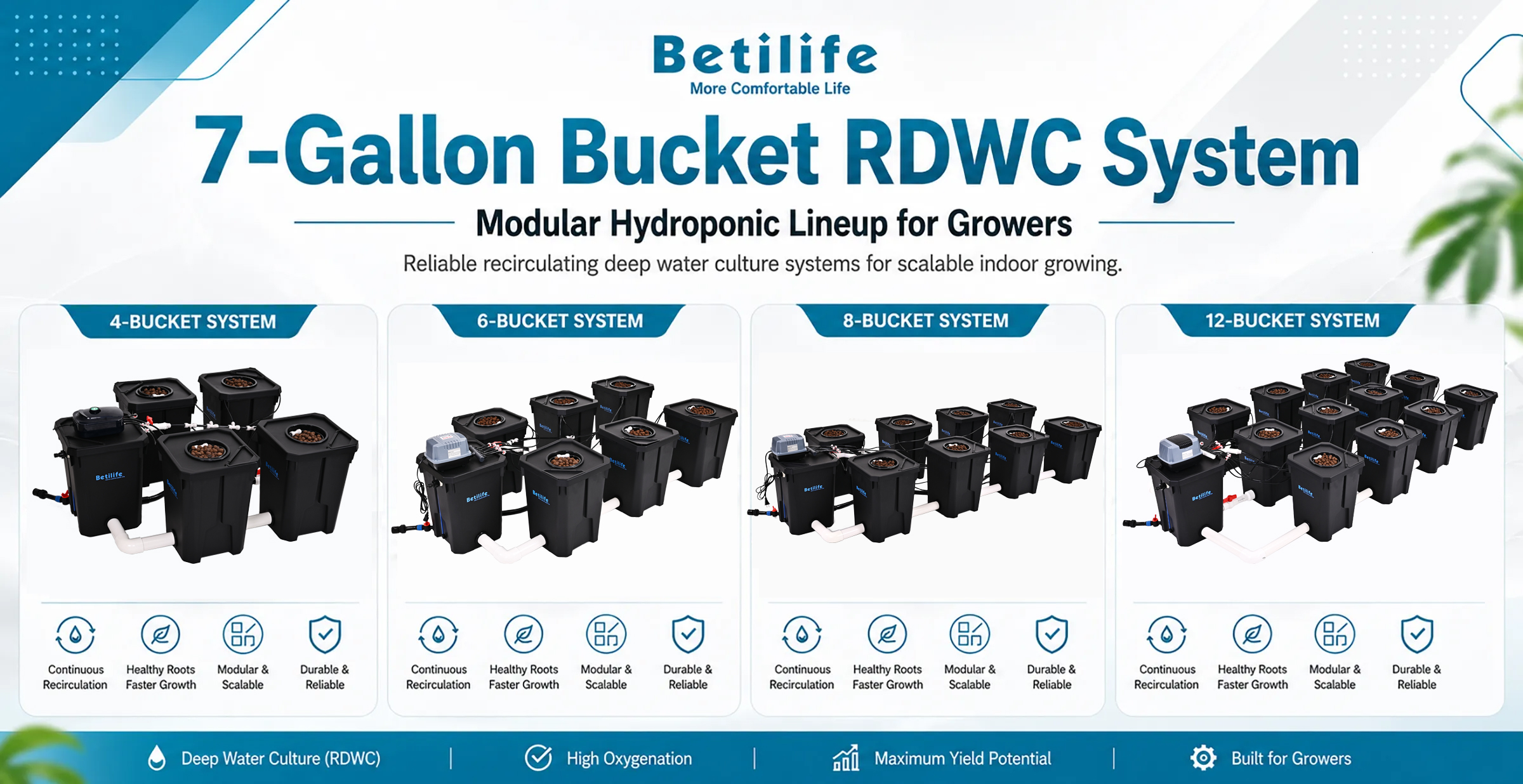
BetiLife offers four standard configurations: BLGX-04, BLGX-06, BLGX-08, and BLGX-12. Each has its stated number of planting buckets plus one reservoir and an integrated drip irrigation function. The nominal bucket size is 7 gallons, approximately 27 liters, not 27 gallons. See the BetiLife wholesale product overview.
Purchasing implication: this range gives buyers a defined set of models to cost, demonstrate, or offer to customers. A retailer can evaluate a limited assortment before deciding whether wider stocking makes sense. A grower can request a specific configuration rather than starting with an open-ended equipment list.
The commercial case should be built around configuration fit, actual delivered pricing, and the support agreed for the order. It does not depend on claiming that a standard 7-gallon system duplicates the design or performance of a larger-module premium system.
Choosing Between BetiLife's 4-, 6-, 8-, and 12-Bucket Systems
Start with required planting sites and available space, then consider the purchase role: evaluation, demonstration, resale inventory, or project supply.

| Model | Planting sites | Listed footprint | Retail reference |
|---|---|---|---|
| BLGX-04 | 4 | 120 × 90 cm | $599 |
| BLGX-06 | 6 | 170 × 90 cm | $799 |
| BLGX-08 | 8 | 230 × 90 cm | $949 |
| BLGX-12 | 12 | 240 × 130 cm | $1,499 |
Source: BetiLife's 7-gallon collection. Prices can change and are not dealer prices or confirmed DDP totals. Footprints are product references, not required room dimensions. Confirm reservoir placement, connections, canopy clearance, and service space in the final layout.
Choose the model for the purchase, not the largest available count
- BLGX-04: consider it when four sites meet the requirement and minimizing the initial equipment commitment matters.
- BLGX-06: evaluate it when six sites justify a step up without the longer eight-site footprint.
- BLGX-08: consider it for confirmed eight-site demand or a retail assortment that needs a higher-capacity option.
- BLGX-12: evaluate it against a defined twelve-site layout or a customer project, rather than assuming it belongs in every opening stock order.
These are selection suggestions, not sales rankings. For a more detailed model-selection discussion, see 4-bucket vs. 6-bucket vs. 8-bucket vs. 12-bucket RDWC.
Comparing Prices: Equipment Cost, Landed Cost, and Operating Cost
A lower advertised price is a reason to investigate, not a complete value calculation. First align the planting-site count, container size, layout, included hardware, accessories, and delivery destination.
Understand three different cost figures
- Equipment cost
- The price of the specified system and components. Check what the seller means by a complete system.
- Landed cost
- The cost of getting that order to the agreed receiving location, accounting for the charges included in the supplier's offer and those the buyer must arrange separately.
- Operating cost
- The ongoing budget for operation, cleaning, maintenance, replacement parts, and other site-specific requirements.
A low equipment quote may leave chillers, monitoring devices, room infrastructure, or installation work outside its scope. List these separately. Where a charge is already included in a delivered quotation, do not add it again.
Retailer margin starts with realistic sales and support costs
For a grow shop, an attractively priced system creates a margin opportunity only if the actual selling price and support workload leave room for a sustainable business.
Estimated contribution per sale = net sales revenue − landed product cost − variable selling and service costs.
This is not net profit: fixed overhead still needs to be covered. Use an achievable transaction price, not an assumption that every unit will sell at the advertised retail price. Include applicable payment fees, outbound delivery, and a reasonable allowance for the service your store provides.
Before stocking, ask for a current dealer quote, packing information, repeat-order conditions, and the parts support available for the selected model. An evaluation-order discount does not establish the economics of a continuing wholesale program.
Standard models can help staff explain the assortment, but stocking all four at once is not compulsory. A demonstration unit and a focused set of customer-relevant offers may be a more useful starting plan. See how to read an RDWC wholesale price list.
Growers should compare a defined operating scenario
Use the same planned growing area, site count, operating schedule, and maintenance assumptions when comparing proposals. Ask what work the supplier will perform and what remains your responsibility. A credible project budget is more useful than an unsupported promise of higher yields or a fixed payback period.
Working With a China-Based RDWC Supply Chain
BetiLife's published structure combines a Hong Kong commercial entity, operations and quality-control coordination in Dongguan, qualified manufacturing partners in China, and export coordination through Shenzhen. This is a manufacturing-partner and supply-coordination model, not a claim that BetiLife owns every production facility. See BetiLife's company and supply-chain information.
For a buyer, the potential value is a coordinated discussion covering product requirements, packaging, production follow-up, and shipment preparation. Any cost or timing advantage should be verified in the actual order plan. Manufacturing location alone does not establish quality, reliability, or the lowest landed cost.
- Approve the configuration and component list before production or order confirmation.
- Agree on inspection items, acceptance criteria, and evidence required before shipment.
- Confirm carton quantities, gross weights, protective packaging, and receiving requirements.
- Identify replacement components and how batch or configuration changes will be communicated.
- Record lead-time assumptions and the procedure for shortages, damage, or product faults.
DDP or your own freight forwarder?
BetiLife offers DDP quotation options for single standard systems and wholesale orders, subject to the destination and order details. Buyers with an established freight forwarder can also request alternative arrangements, including FOB, CIF, or EXW where appropriate for the shipment.
Compare both routes using the same model mix, quantity, destination, and delivery requirements. Ask for the named place or port, transport mode, applicable trade rule, included charges, and responsibilities in writing. Your own forwarding arrangement may reduce costs, but it should be compared on the complete scope, not freight alone.
For delivery questions, read when a DDP quote makes sense for RDWC buyers.
What to Include in Your RDWC B2B Quote Request
A useful quote request identifies what you need, how much you need, and where it must go. You do not need to request an entire catalog when you already have a model in mind.
- Business type: grow shop, retailer, distributor, commercial grower, or project buyer.
- Model or required planting-site count: BLGX-04, BLGX-06, BLGX-08, BLGX-12, or a requirement needing review.
- Quantity: units per model and whether the order is for evaluation, inventory, or a project.
- Destination: country and delivery ZIP code, plus relevant receiving restrictions.
- Timing: target purchasing and delivery dates.
- Supply preference: DDP quotation, your own forwarder, or a request to compare both options.
Growers should add room dimensions and installation requirements. Retailers should explain whether the systems will be displayed, stocked, or purchased against customer orders. If the model and quantity are already decided, request pricing directly; an evaluation order is an option, not an automatic prerequisite.
We are a U.S. hydroponic retailer evaluating your 7-gallon RDWC line. Please quote [quantity] units of [model] for delivery to ZIP code [ZIP]. Include the system contents, delivery scope, estimated lead time, quote validity, and replacement-part and warranty arrangements.
Request a BetiLife Wholesale or Project Quote | Email Your Requirements
Frequently Asked Questions
Which commercial RDWC supplier is best?
There is no universal best supplier for every operation. Compare the required configuration, room fit, maintenance approach, delivered cost, and support. This guide identifies four candidates with different product approaches; it does not establish a tested overall winner.
Is a more expensive RDWC system always the better business choice?
No. A higher price may reflect different container sizes, components, or services that matter to your project. A lower-priced system may meet a simpler requirement. Evaluate what you receive and what you still need to purchase or manage.
Are BetiLife's 7-gallon buckets the same as 27-gallon containers?
No. The line is described as 7 gallons, approximately 27 liters, per planting bucket. That is a nominal container-size description, not the operating solution volume or total system capacity.
Which BetiLife models should a grow shop consider first?
Choose from observed customer demand, display space, and purchasing budget. Four or six sites may suit an initial evaluation; eight or twelve may suit confirmed higher-capacity demand. These are planning options, not claims about which model will sell best.
Can I request DDP pricing for one system and for wholesale quantities?
Yes. Send the model, quantity, and destination for a current quotation. Confirm its validity and exact delivery scope. Public retail prices should not be assumed to be the final delivered price for your order.
Can I use my own freight forwarder?
Yes, alternative arrangements can be discussed. Give the supplier your forwarder's requirements and compare the full costs and responsibilities with the delivered offer before choosing a shipment plan.
What should I confirm about replacement parts and warranty support?
Ask which components are covered, what exclusions apply, who handles the claim, what evidence is required, and who pays applicable replacement shipping. Also confirm part numbers, supply locations, and expected availability; warranty duration alone does not answer these questions.
Can standard systems be expanded into a larger commercial installation?
Possibly, but the configuration needs review. Confirm plumbing, pump selection, layout, control requirements, and maintenance zones. Adding buckets or connecting separate kits should not be treated as an approved expansion method without supplier confirmation.
Choose the Supplier That Fits the Business Plan
The strongest RDWC purchase is the one you can explain and verify: the configuration fits, the responsibilities are clear, and the total cost works for the intended use. Compare suppliers on those terms rather than on bucket count or price alone.
For buyers considering a standardized 7-gallon lineup, compare BetiLife's four models and request a quote for your actual purchasing plan.