Private label RDWC systems can make sense when you have a defined customer base, a sales channel and the resources to support the product under your own brand. Start with a suitable standard configuration, agree on the branding scope, and confirm costs, samples and after-sales responsibilities before committing to production.
For grow shops, hydroponic retailers and distributors, a branded RDWC line can connect product selection, store demonstrations, installation resources and customer service under one recognizable name. That opportunity comes with inventory and support work: a new logo alone does not guarantee higher margins, exclusive products or stronger sales.
This guide explains how to plan a private-label project around BetiLife's four 7-Gallon / 27L RDWC models. It covers the decisions between an initial idea and a product line you can launch, support and reorder.
By BetiLife | Product and supplier references reviewed October 10, 2026. Customization feasibility and commercial terms are confirmed for each project.
Prepare Your Private Label Inquiry | Compare the Four Starting Models
1. What Are Private Label RDWC Systems?
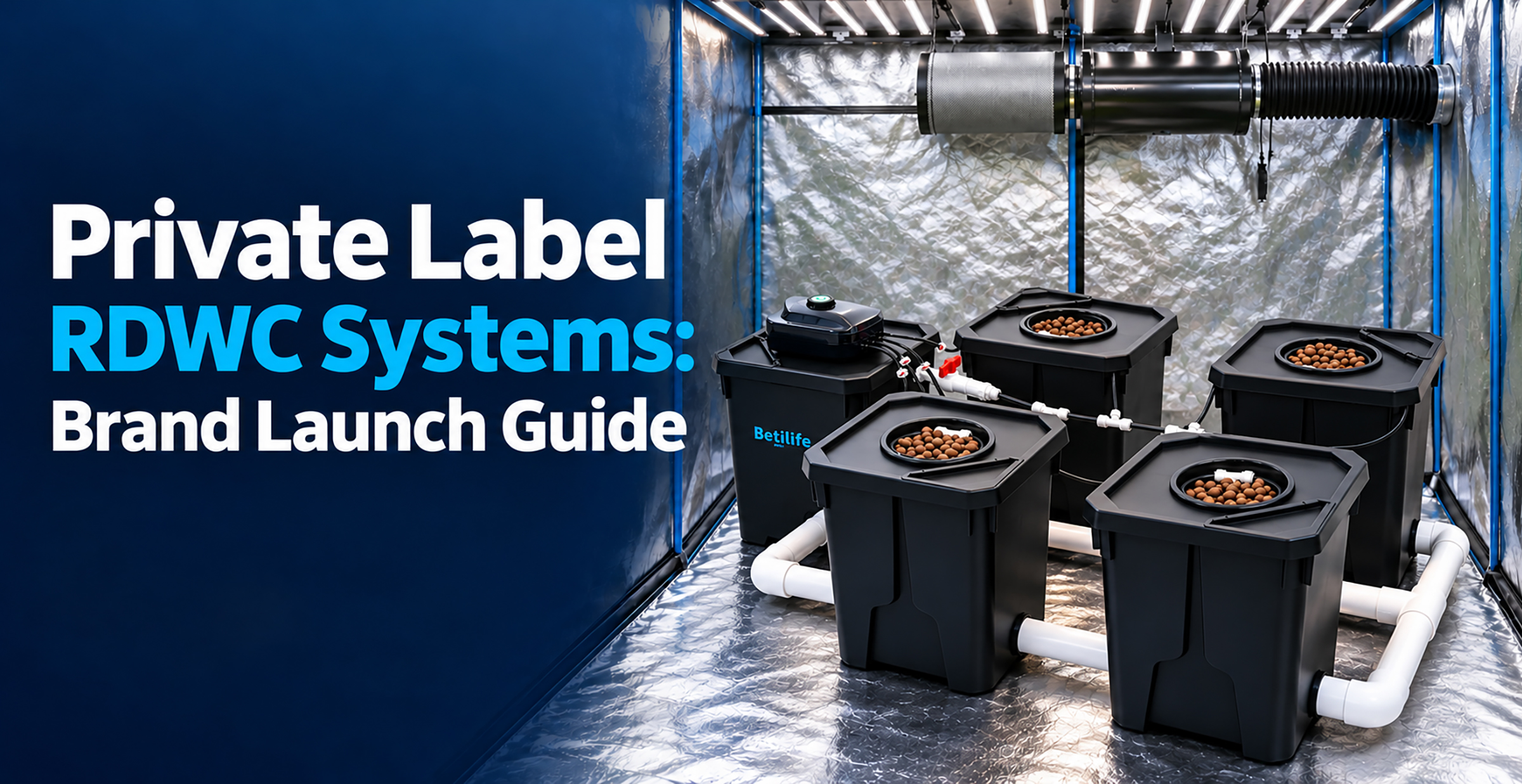
Private label RDWC systems are recirculating deep water culture systems supplied for sale under a buyer's brand through an agreed commercial arrangement. The underlying equipment may follow an existing configuration, while approved branding, packaging or documentation changes distinguish the buyer's offer.
This differs from reselling a supplier's branded system. It also differs from commissioning a new product design. The first decision is therefore the scope of the project, not the terminology printed on the quotation.
- Standard branded resale: sell the existing supplier-branded product with the agreed resale resources and support arrangements.
- Private label: agree on how a product will be identified, presented and supported under your own brand.
- Custom development: request design or structural changes that need separate technical, testing and production review.
Suppliers may use OEM and ODM terminology differently. Specify the deliverables rather than relying on those labels. Private labeling by itself does not establish design ownership, territorial exclusivity or permission to reuse every supplier image and document. Address those rights separately in the agreement.
2. When Does Private Label Make Sense for Your Business?
Private label is most useful when you can explain who will buy the system and how your business will support that purchase. Before creating artwork, answer these questions:
- Which existing customers or customer segment need an RDWC system?
- Will you sell through a grow shop, an online store, a distributor network or project quotations?
- Which planting-site counts match the demand you have observed?
- Who will explain assembly, identify replacement parts and handle initial support requests?
- Can the business fund the opening inventory and wait for it to sell?
If RDWC demand is still untested, evaluating a standard system or selling the existing brand can help you learn before adding customization costs. If you already have a defined private-label requirement, submit it directly for review; buying a standard sample is not automatically a prerequisite.
Brand differentiation can come from clear model selection, useful product pages, a working demonstration and dependable customer communication. These activities still matter when competing products have similar hardware. For a related retail strategy, see how grow shops can add RDWC without competing only on price.
3. Choose a Starting Model From the BetiLife 7-Gallon Line
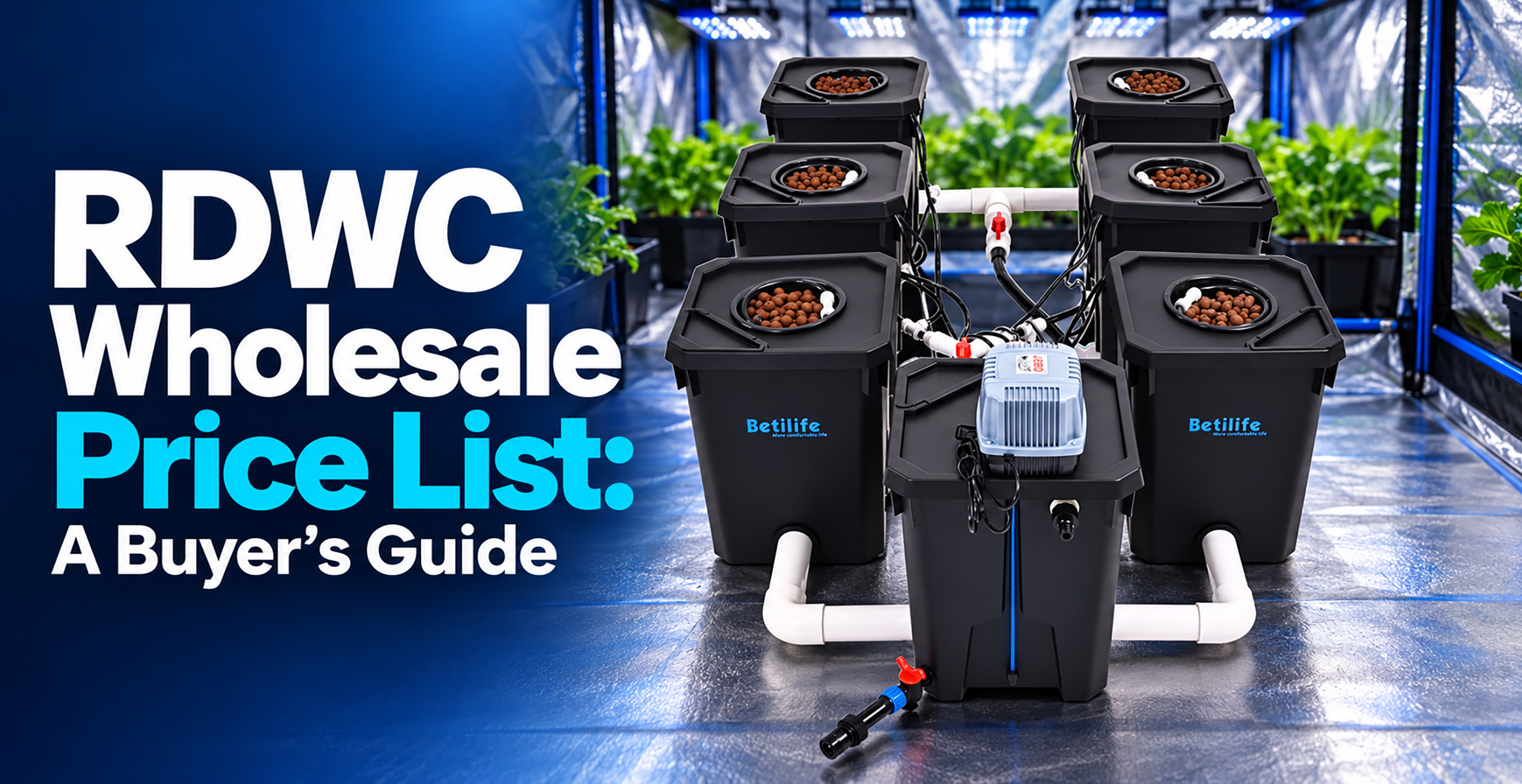
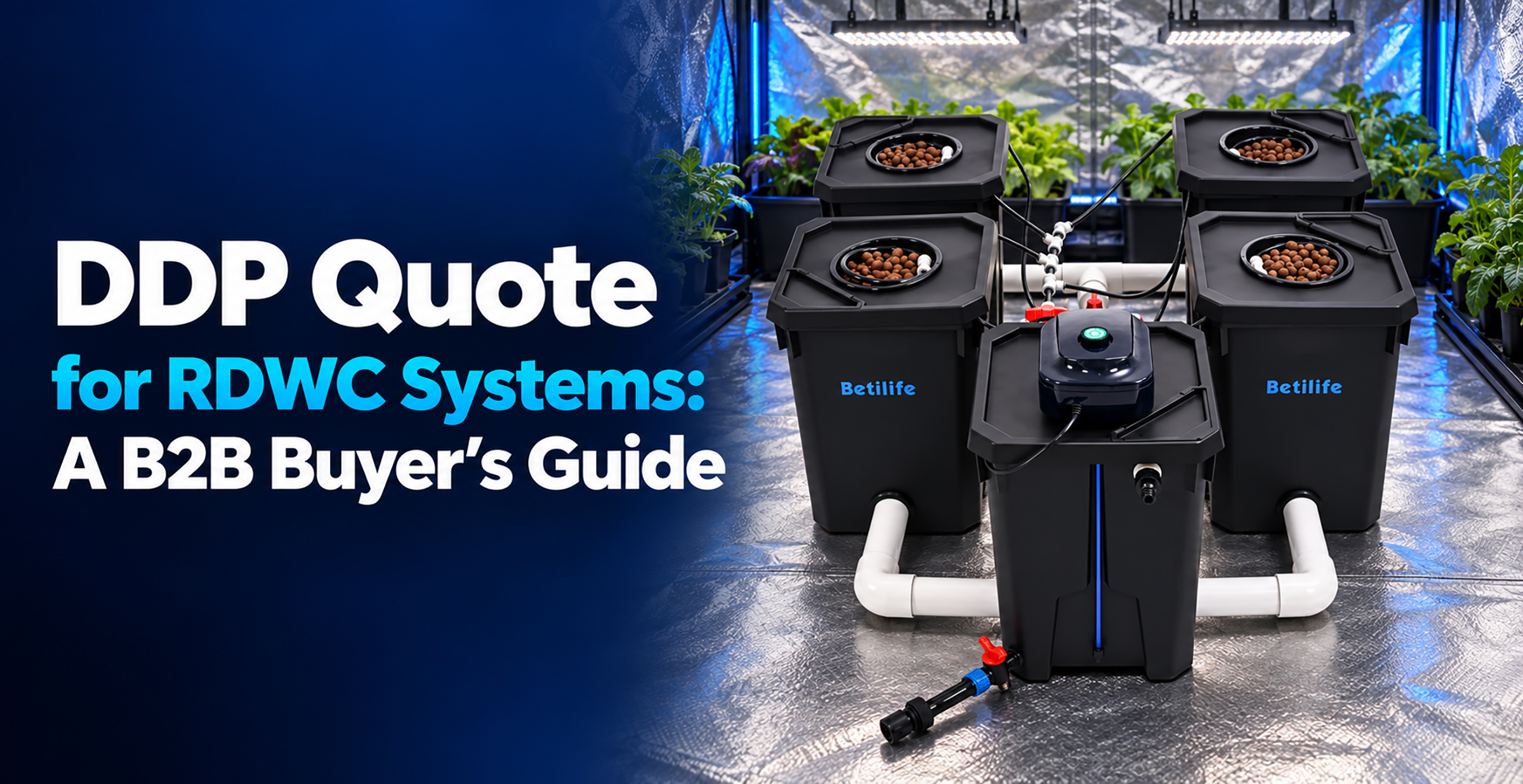
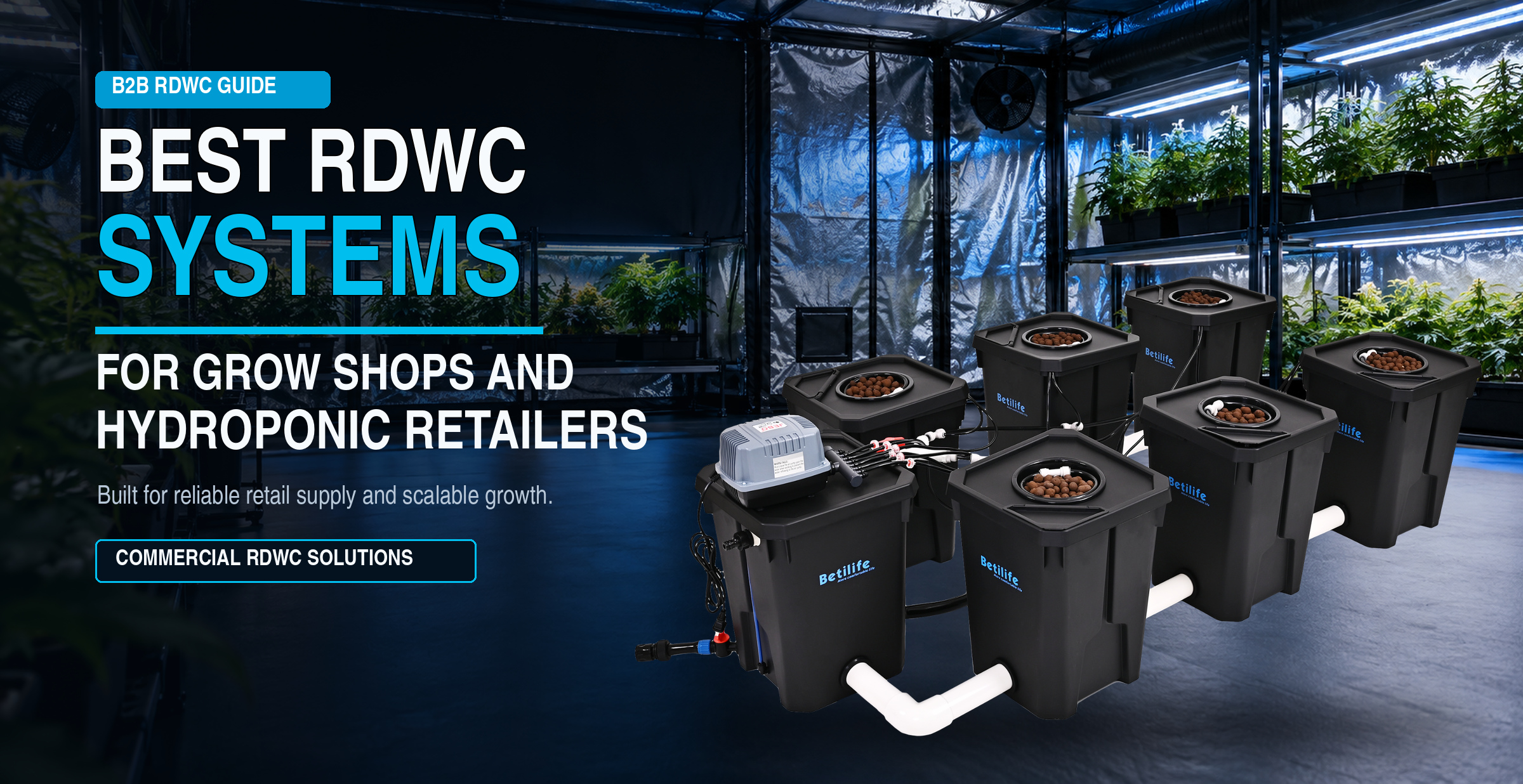
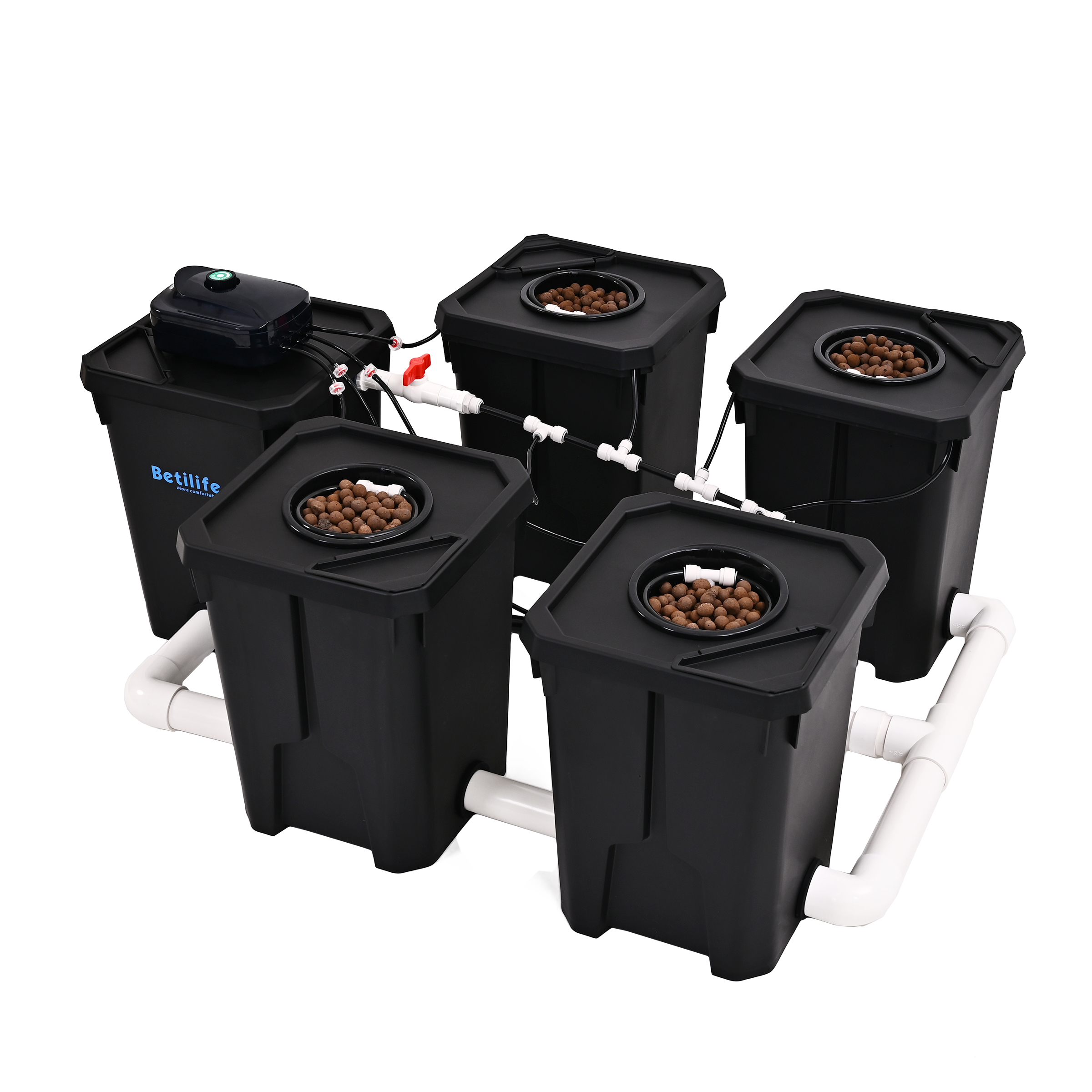
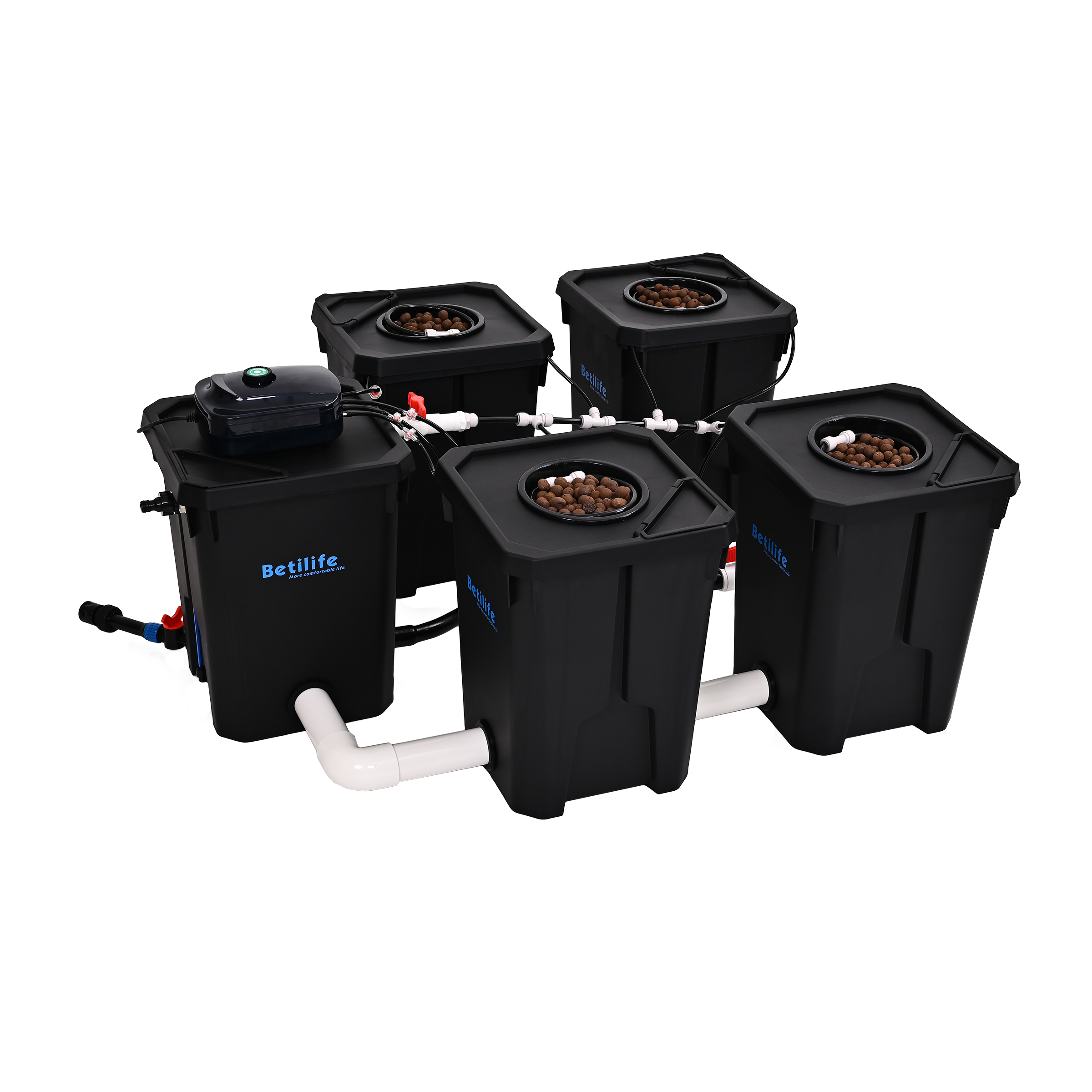
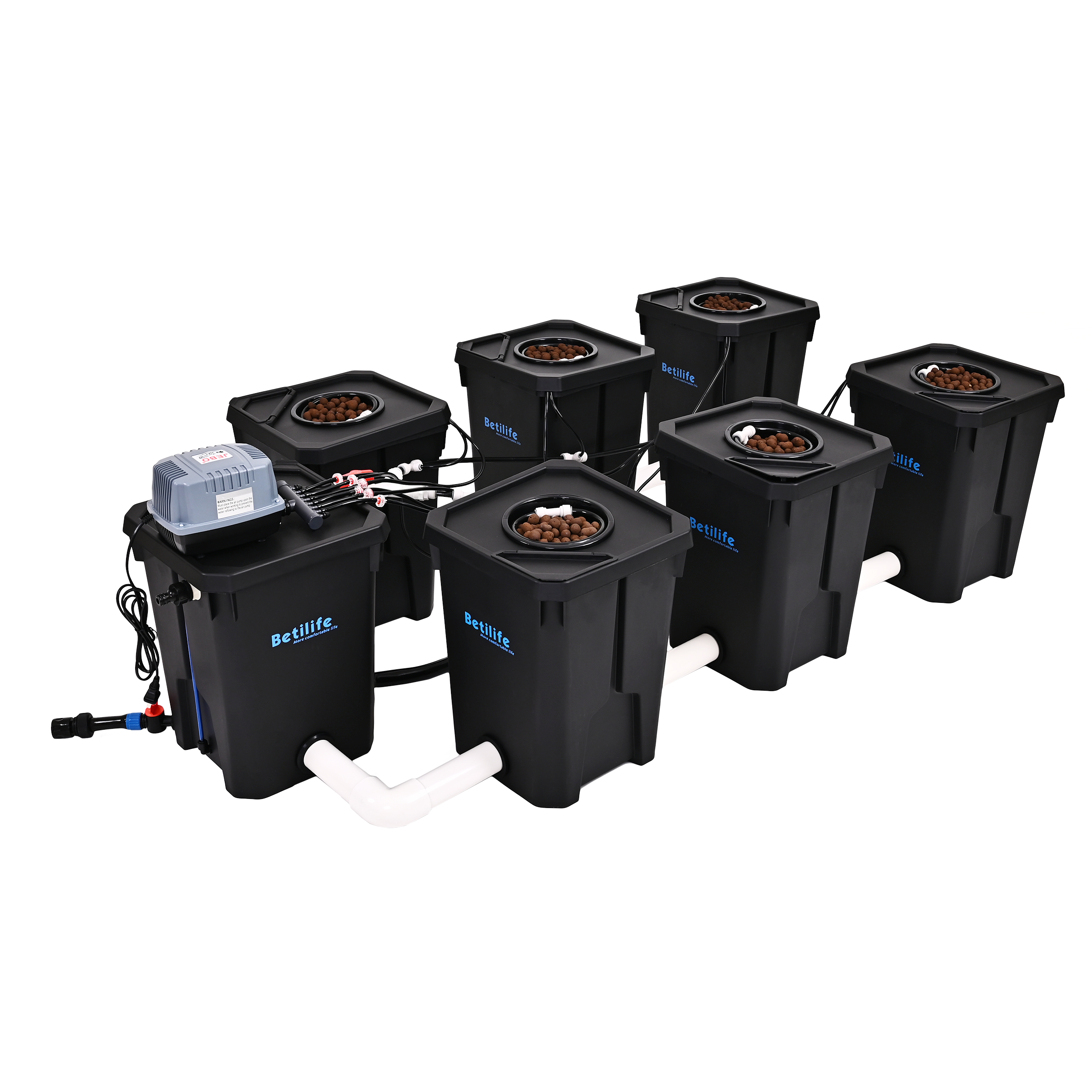
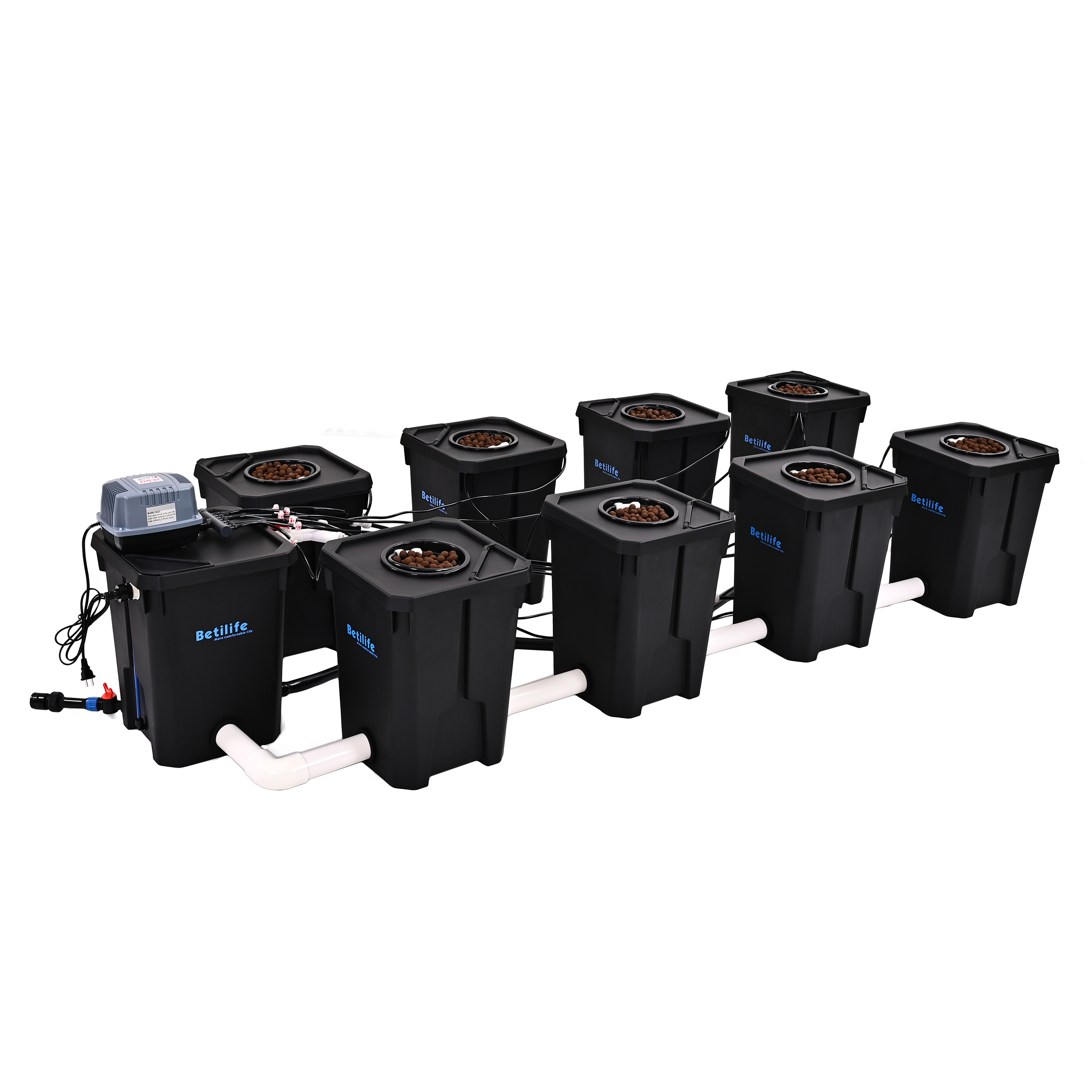
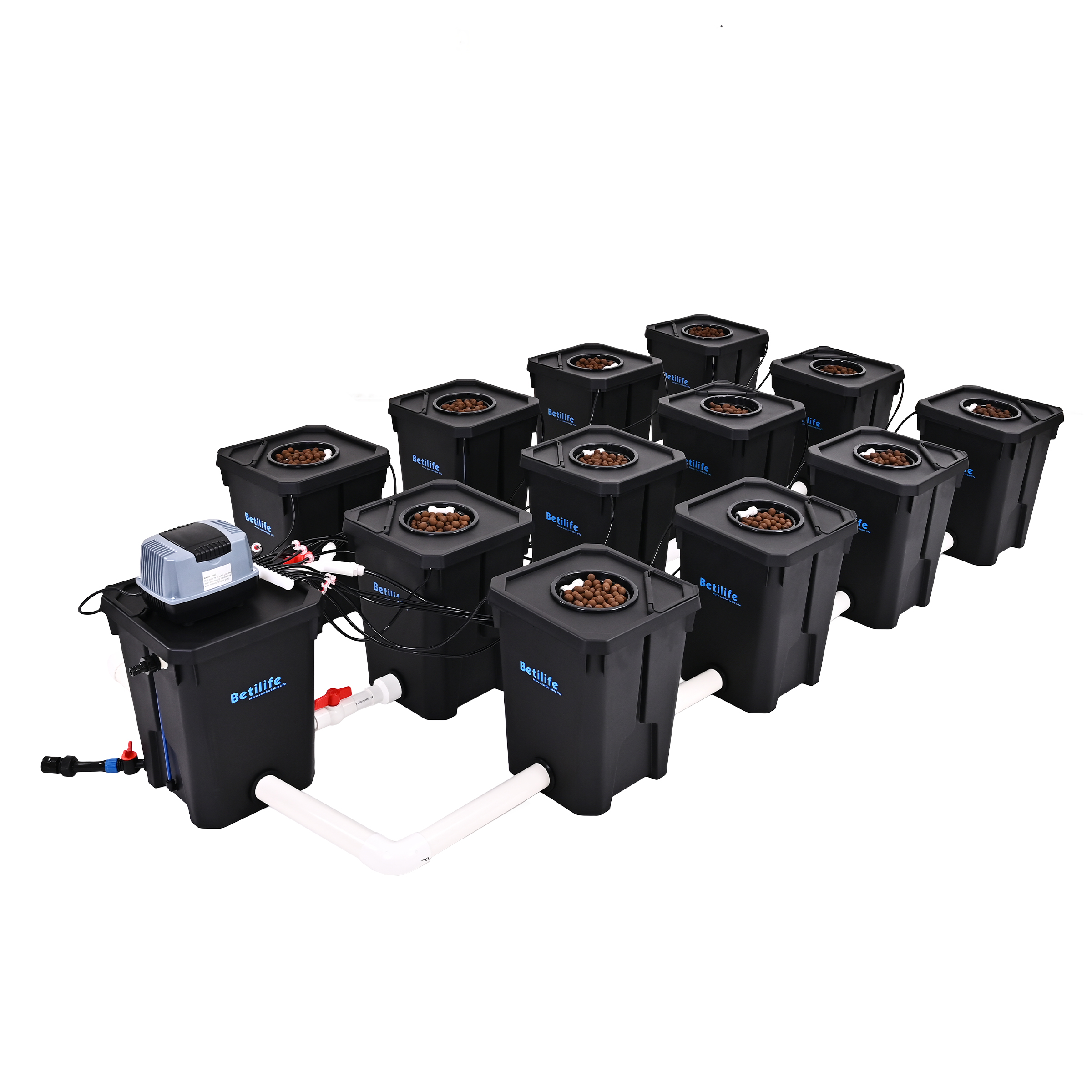
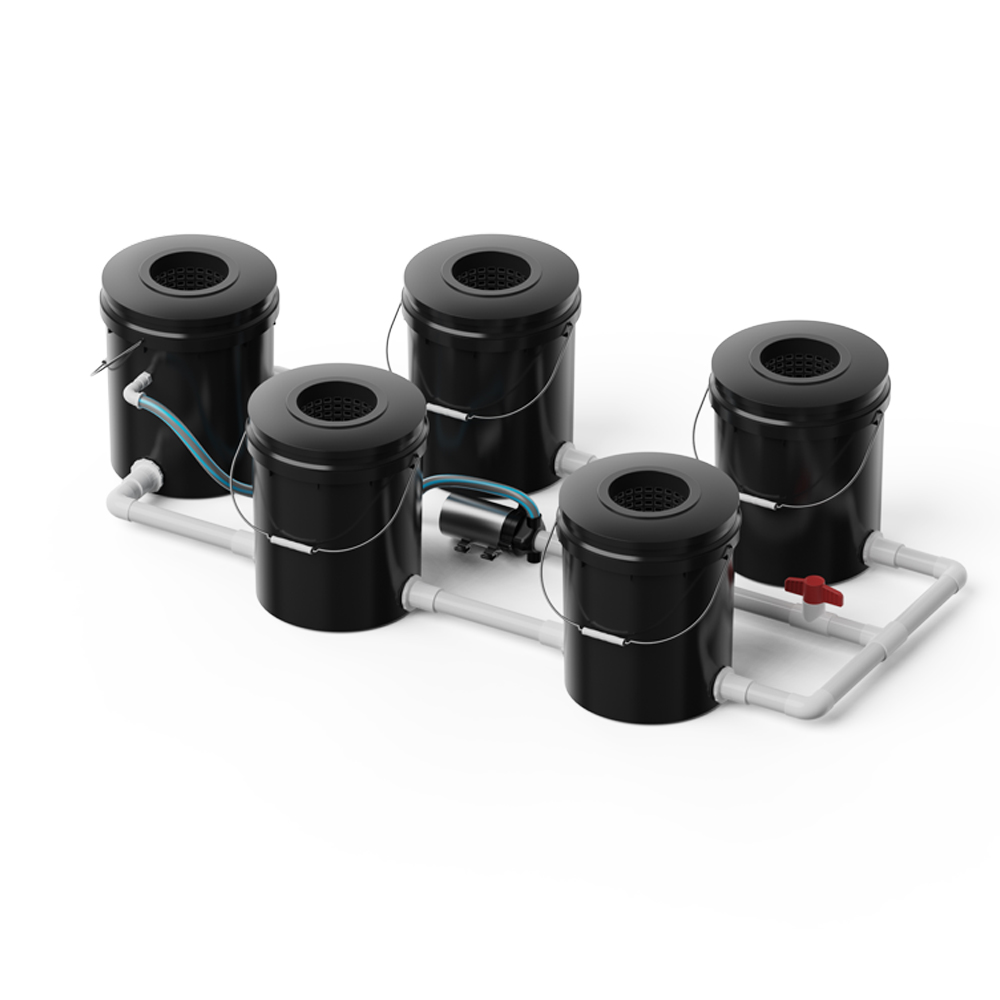
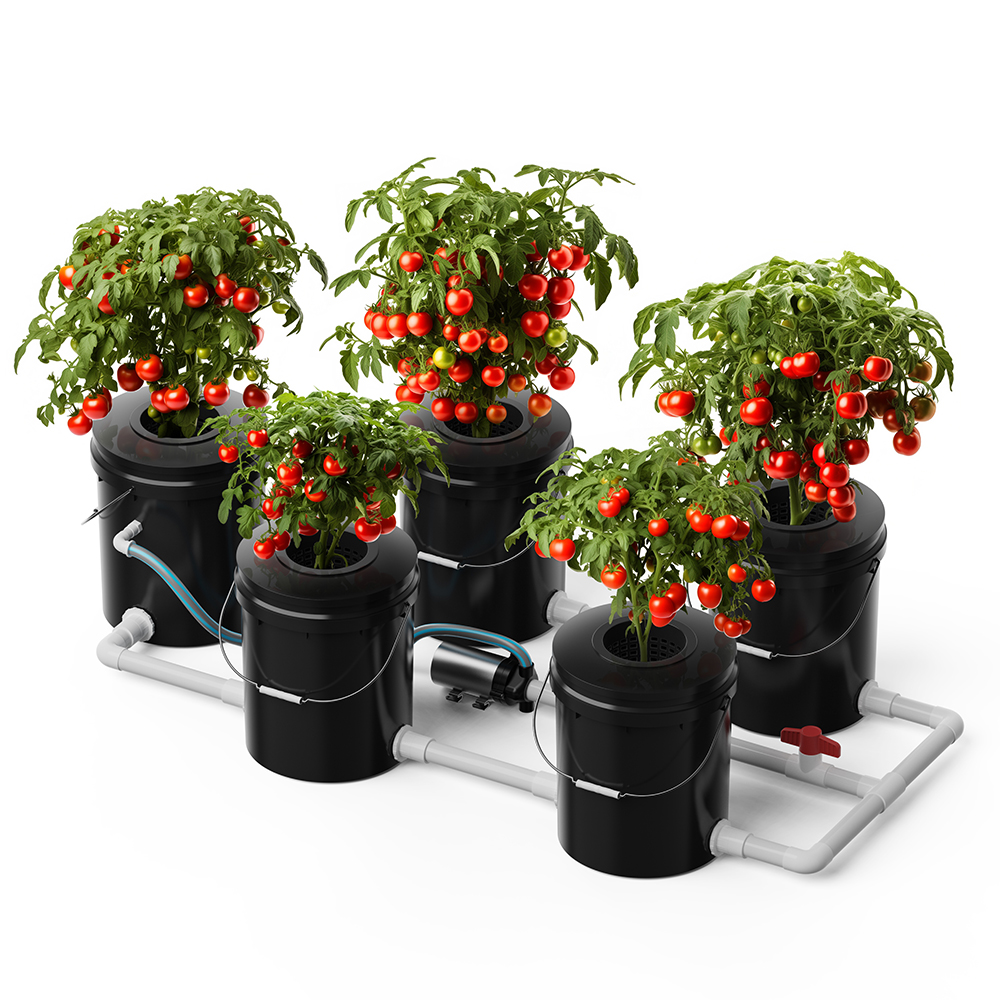
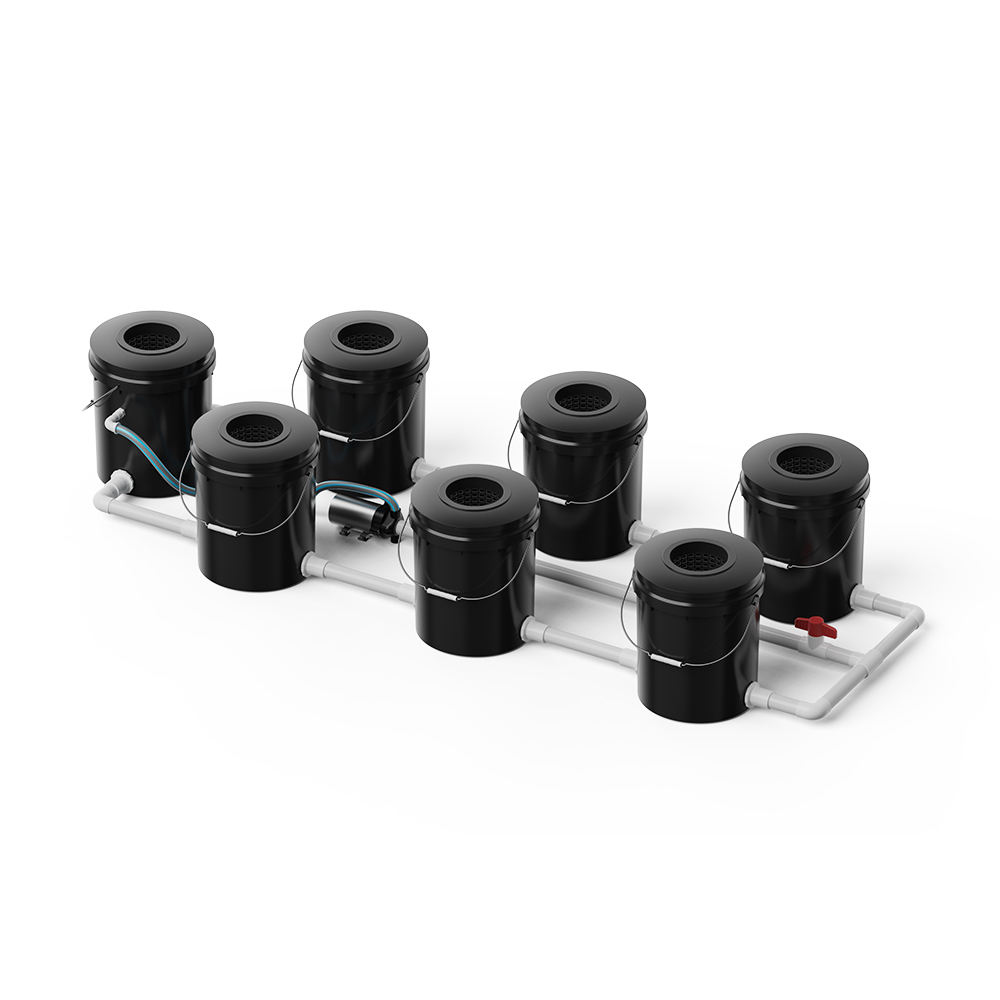
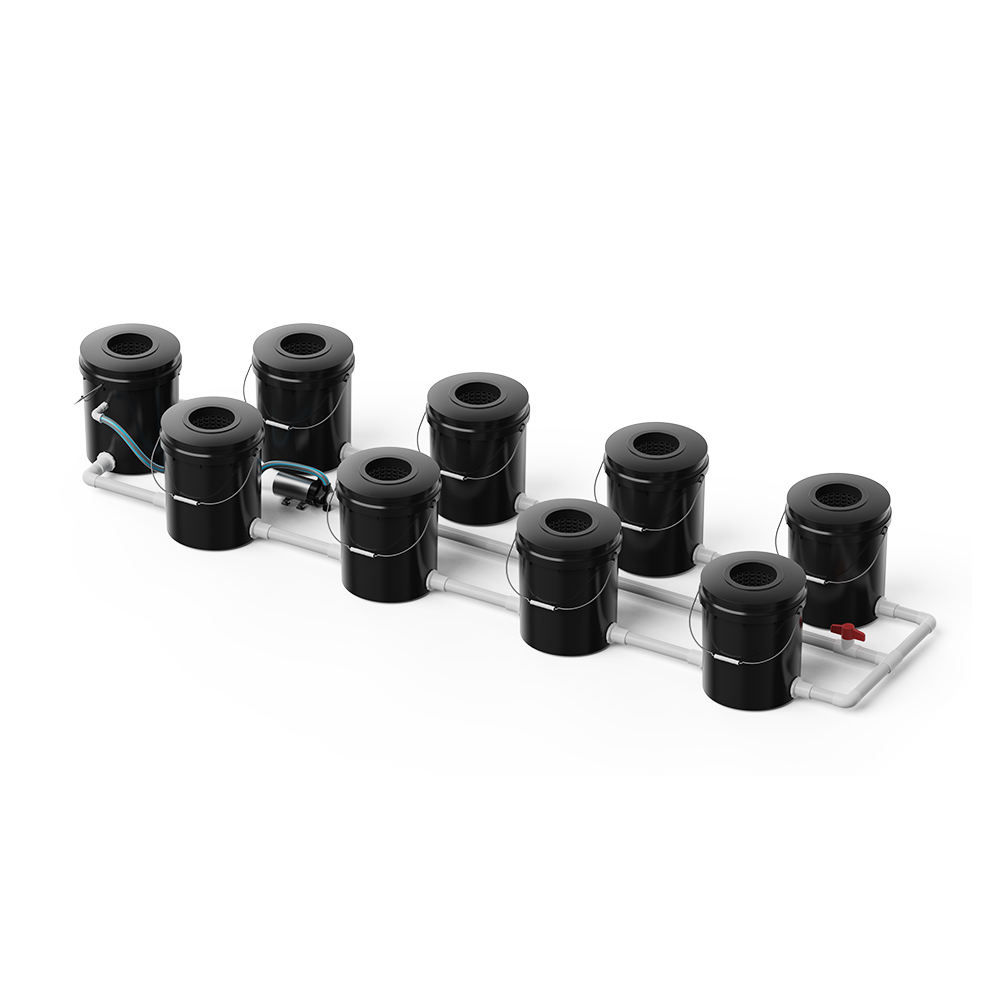
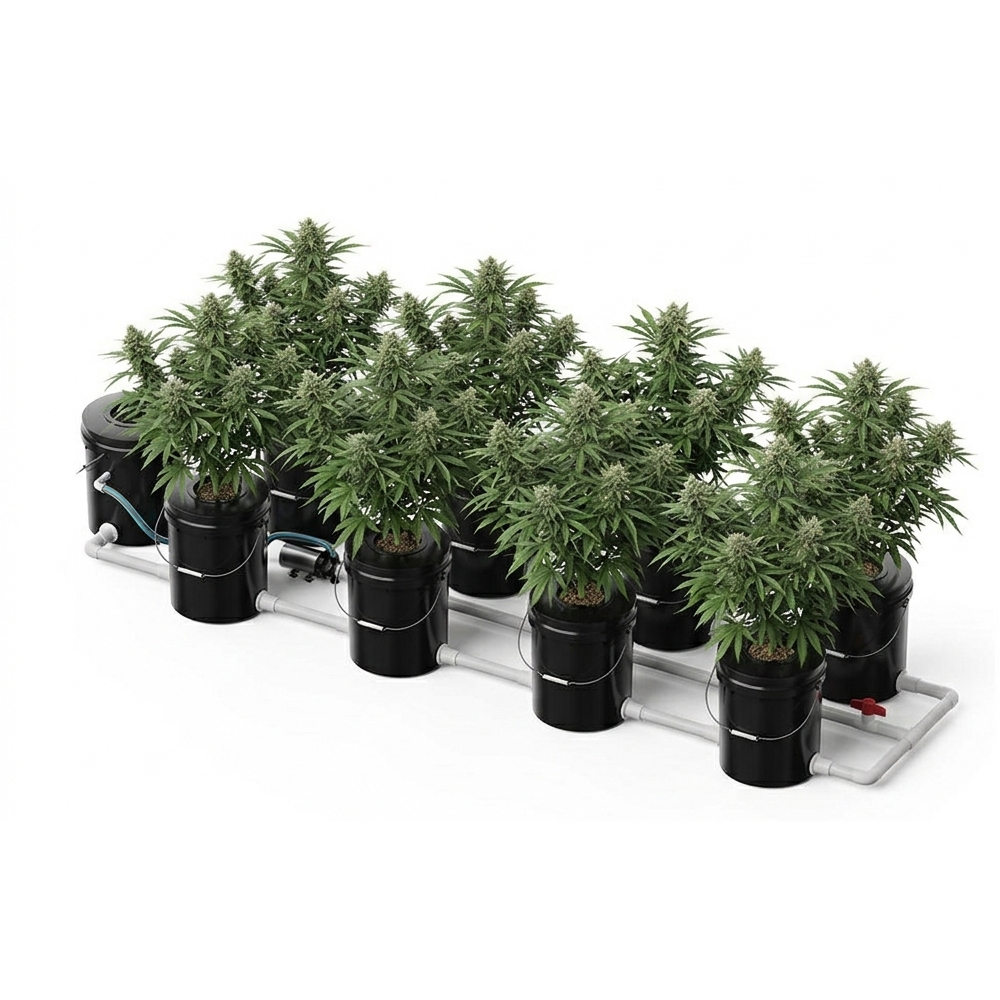
BetiLife's standard line includes BLGX-04, BLGX-06, BLGX-08 and BLGX-12. These have 4, 6, 8 and 12 planting buckets respectively, plus one reservoir, and include an integrated drip irrigation function. The nominal bucket size is 7 gallons, approximately 27 liters, not 27 gallons.
Use these configurations as starting references for discussion. The final private-label version, included equipment and approved changes must be documented for your order.

| Starting model | Standard configuration | Potential role in your range |
|---|---|---|
| BLGX-04 | 4 planting sites + 1 reservoir | A compact option when customer space or demonstration space favors a smaller layout. |
| BLGX-06 | 6 planting sites + 1 reservoir | A launch candidate when your customers need a six-site configuration. |
| BLGX-08 | 8 planting sites + 1 reservoir | An eight-site option for a clearly identified customer requirement. |
| BLGX-12 | 12 planting sites + 1 reservoir | A higher-capacity offer for confirmed demand, with inventory and delivery planned accordingly. |
You do not need to launch all four models simultaneously. Choose the smallest assortment that serves your actual customers, then expand using sales and support feedback. Check assembled footprint, access for maintenance and receiving requirements alongside site count. Our four-model RDWC comparison covers selection in more detail.
Keep a cross-reference between your brand's SKU, the supplier model and the approved configuration revision. For example, a fictional product called Brand Eight should map to a specific eight-site specification. If a pump or fitting changes later, your support team needs to know which version the customer owns. Do not assume all components are interchangeable across the range.
4. Define the Branding Scope Before Asking for a Quote
A useful private-label brief describes each requested change, its location and how approval will be recorded. Separate presentation changes from configuration changes and new development.
| Scope | Examples to discuss | Approval record to request |
|---|---|---|
| Brand presentation | Product labels, carton artwork, manuals, support contact details and authorized product content. | Approved files, dimensions, placement, language and version. |
| Product configuration | Requested electrical version, accessory selection or packaging arrangement. | A revised specification, component list and agreed verification requirements. |
| Product development | New structural features, tooling or changes beyond the existing configuration. | Feasibility review, development scope, validation plan and ownership terms. |
These are planning categories, not a list of pre-approved BetiLife services. Each requested change needs feasibility and commercial confirmation.
Consider a retailer that wants a six-site system with its own product label, carton artwork and support insert, but no hardware changes. That brief gives the supplier a defined starting point. Adding a different pump, new bucket color or redesigned connection introduces additional questions; it should not silently become part of the original artwork quote.
Specify who supplies the artwork, who checks technical text and who gives final approval. Also agree on permitted use of trademarks, manuals, photographs and any tooling. A packaging proof confirms appearance; it does not by itself confirm system performance.
5. Understand MOQ, Setup Costs and Your First-Order Budget
There is no single price or MOQ that describes every private-label RDWC project. The model mix, requested changes, packaging and approval work all affect the quotation. A public retail price is not a private-label buying price.
Separate three types of cost
- One-time project costs: agreed artwork preparation, samples, development, testing or tooling, where applicable.
- Per-system costs: the specified equipment plus approved labeling, packaging and configuration changes.
- Delivery and launch preparation: transport costs not already included, receiving arrangements, product content, spare-parts preparation and support training.
First-order budget = agreed one-time costs + ordered systems and customization + delivery costs not already included + launch and support preparation.
Ask which charges recur on reorders and whether any sample payment is credited against production. Do not assume a credit unless it is written into the quotation. Likewise, avoid adding freight twice when it is already included in the agreed delivered price.
Check which quantity requirement applies
The system MOQ, per-model MOQ and printed-packaging minimum may differ. Ask whether a mixed-model order qualifies and whether separate artwork creates separate print quantities. Clarify ownership, storage and future use of unused branded packaging.
Assess the cash required for the first batch without spreading setup costs over optimistic future sales. You can also model later reorder economics, but keep that forecast separate from the opening commitment. For quotation comparisons, use our guide to reading an RDWC wholesale price list.
6. Evaluate the Product and Approve the Branded Sample
Standard product evaluation and private-label sample approval answer different questions. The first asks whether the underlying system suits your business. The second checks the agreed version you intend to sell.
Evaluate the standard system
Have the people who will sell and support the product review assembly, component identification, circulation operation and maintenance access using the supplier's instructions. Record unclear steps and information missing from your intended customer materials.
Approve the agreed branded version
Determine which physical samples, artwork proofs and inspection records the project requires. A practical approval checklist includes:
- The model and included components match the confirmed specification.
- Brand, SKU, carton labels and documentation identify the same product version.
- Labels and print placement match the approved artwork and agreed acceptance criteria.
- The manual describes the actual supplied configuration and correct support route.
- Assembly and operating checks follow the agreed procedure and acceptance criteria.
- Deviations are resolved, and the approval record identifies the sample, revision and date.
A water-circulation check is not a substitute for required electrical testing, certification or a durability program. Agree on the relevant checks and responsible parties rather than treating a short demonstration as proof of every performance claim.
Retain an approved reference sample or another agreed specification record. Any proposed component or artwork substitution should go through a documented review before it becomes part of the order.
7. Confirm Labels, Documentation and After-Sales Responsibilities
Your brand will be the name customers contact. Plan the product information and service process before promising a launch date.
Verify labels and applicable documentation
Check electrical ratings, plug and frequency requirements, safety information, model identification and documentation for the intended market. Include country-of-origin marking in the U.S. import review; branding should not obscure required product information. Consult U.S. Customs and Border Protection's import guidance and your qualified import adviser for the specific shipment.
Do not assume a component certificate covers the complete RDWC system or that a certification mark can simply be reproduced under a different brand. For example, UL Solutions offers a Multiple Listing service for identical UL-certified products marketed under different names. Verify the actual product, listing and authorization before making such a claim. This example does not state that BetiLife's systems hold UL certification.
Agree on the customer-support handoff
| Support task | Decision needed before launch |
|---|---|
| First customer contact | Who receives requests, records the product version and handles initial troubleshooting? |
| Supplier escalation | Which photos, order references and other evidence are needed, and who reviews the case? |
| Replacement components | How are compatible parts identified, ordered and held for support? |
| Remedy and costs | What coverage, exclusions and remedies apply, and who pays agreed parts, labor and freight costs? |
Align your customer-facing commitments with the support arrangements you can deliver. A standard retail policy does not automatically define every private-label contract, and promising longer coverage to customers does not automatically extend the supplier's obligations.
8. Plan Packaging, Delivery and Repeat Orders
Packaging should make the product easy to identify, receive and support as well as present the brand. Confirm carton count, dimensions, shipping weights, barcode requirements and handling arrangements after the proposed branding or packaging changes.
The standard BLGX-12 is listed in two cartons. For a branded version, agree on a clear way to identify both cartons as parts of one complete system, and confirm the final packing data. Do not let the warehouse or customer mistake a partial delivery for a complete order.

BetiLife provides single-system and wholesale DDP quotation options, while buyers with their own forwarders can discuss suitable alternatives. A standard-system delivery option does not establish the MOQ or price for a customized product. Confirm the named destination, included charges and receiving scope for the actual order. See when a DDP quote for RDWC systems makes sense.
For reorders, maintain a record of the approved specification, artwork, components and packaging version. Ask how proposed changes will be communicated and approved. Track sales by SKU, customer questions, missing-part reports and replacement requests so your next purchase reflects real demand and support experience.
Improve the range through evidence: add a model when customers need it, update instructions when a recurring question appears, and adjust spare-parts planning when service records justify it.
9. A Practical Roadmap From Project Brief to Launch
Use the following sequence to organize decisions. It is a planning framework, not a fixed production schedule or a substitute for agreed payment and approval terms.
- Define the customer and channel. Describe who will buy, where you will sell and who will provide support.
- Select the model and quantity. Choose the initial assortment and separate opening quantities from future forecasts.
- Confirm feasibility and quotation. Document requested changes, commercial assumptions, required approvals and costs.
- Evaluate and approve. Complete the agreed product evaluation, proofs, sample review and any required verification.
- Finalize the order records. Approve specifications, artwork, commercial terms, responsibilities and the production-release conditions.
- Coordinate production and delivery. Follow the agreed inspection, packing, shipment and receiving process.
- Launch, support and review. Publish accurate product information, train the team and use operating feedback to plan reorders.
Work backward from the desired launch date with allowance for review rounds and any required testing. Confirm what starts each quoted lead time. Do not promise customers an availability date based only on an initial artwork concept or an unconfirmed production estimate.
10. What to Include in a Private Label RDWC Inquiry
A short, specific brief is enough to begin a useful discussion. If your requirements are already defined, request a quotation directly. If they are still developing, identify the decisions for which you need supplier input.
- Business and brand: company, brand name and contact person.
- Market and channel: target country and how the systems will be sold.
- Model plan: starting models and complete-system quantity per model.
- Demand plan: opening order quantity, with estimated future demand listed separately.
- Requested changes: labels, packaging, manuals, configuration or development requirements.
- Documentation: electrical requirements, languages and any channel-specific testing or certification needs.
- Delivery and timing: destination, freight preference and target launch date.
You can start with a written description before final artwork is ready. Avoid treating a preliminary feasibility discussion as an approval to print or produce.
We are planning a private-label RDWC line for [market and sales channel]. Our starting model is [BLGX model], with [quantity] complete systems in the first order. We would like to discuss [branding or configuration changes].
Please review feasibility, MOQ, sample requirements, one-time and per-system costs, applicable documentation, production timing and after-sales responsibilities. Our destination is [location], and our preferred delivery arrangement is [DDP or our own freight forwarder].
BetiLife accepts qualified OEM, ODM and private-label inquiries. Its Hong Kong commercial entity and Guangdong team coordinate supply with qualified manufacturing partners in China. Review BetiLife's business structure and confirm the contracting party and project responsibilities in the quotation.
11. Frequently Asked Questions
Can I sell RDWC systems under my own brand?
Yes, where a supplier agrees to the private-label arrangement and its scope. Confirm branding permissions, product configuration, documentation and support responsibilities before ordering or advertising the branded version.
Which BetiLife models can be discussed for private labeling?
The BLGX-04, BLGX-06, BLGX-08 and BLGX-12 standard models provide starting references. Send the model, quantity and requested changes so BetiLife can assess feasibility. Not every proposed customization is automatically available.
What determines the minimum order quantity?
MOQ depends on the product and customization scope, including model mix, packaging and production requirements. Ask whether the minimum applies per model, per artwork version or across an approved order.
Can I evaluate a standard system before approving a branded version?
Standard-system evaluation can be discussed, but it does not replace approval of the agreed customized version. Confirm which proofs, physical samples and verification records the project requires, along with their costs.
Can different RDWC models be included in one private-label project?
A mixed-model proposal can be submitted for review. Confirm quantities, packaging and artwork for each SKU; do not assume that one model's approval or minimum quantity automatically covers the others.
What should I budget for beyond the system price?
Include applicable setup, sample, development, testing and packaging costs, plus delivery items not already quoted. Also budget for product content, staff preparation and customer support. Not every project requires every cost category.
Does private labeling include exclusive distribution rights?
No automatic exclusivity should be assumed. Any territory, channel restriction, design ownership or exclusive supply arrangement must be separately discussed and documented.
Who handles warranty claims and replacement parts?
The parties should assign those responsibilities in writing. Define the first customer contact, supplier escalation process, claim evidence, remedies, compatible parts and responsibility for associated costs.
Discuss Your Private Label RDWC Project
A workable branded product line begins with a clear customer, a suitable configuration and an agreement your team can execute. Start with the model and scope you need today, then build the assortment around verified demand and customer feedback.
Send BetiLife your target market, preferred models, first-order quantities and requested changes. The team can review your project brief and identify what needs confirmation before quotation, sample approval and production.
Request a Private Label Project Review
Request a Quote for Your Defined Configuration | Discuss the Project on WhatsApp