Grow shops can add RDWC systems without relying only on discounts by filling a specific product-line gap, helping customers choose the right configuration and offering clearly defined local support. The approach still needs workable dealer economics: the selling price must cover the store's landed cost, fulfillment and the service it actually provides.
Choosing RDWC systems for grow shops is therefore both a product decision and an operating decision. A system that looks attractive in a catalog may be a poor inventory choice if it does not fit customer spaces, requires more support than staff can provide or leaves too little contribution after delivery.
This guide explains how U.S. hydroponic retailers can evaluate the category, using BetiLife's four 7-Gallon / 27L models as a practical example. The objective is a focused first purchase and a repeatable sales process, not a commitment to stock every size.
By BetiLife | Product, price and support references reviewed September 20, 2026
Compare RDWC Models for Your Shop or request an evaluation or opening-inventory quote.

Find the RDWC Gap in Your Current Product Line
RDWC, or recirculating deep water culture, connects planting containers through a shared nutrient-solution circulation system. For a retailer, a defined system can sit alongside lights, nutrients, meters and other equipment already in the store. Whether it deserves shelf space depends on a gap customers actually need filled.
Review your recent inquiries before selecting a model. A hydroponic retailer product line may need its first complete RDWC option, a different planting-site count or a configuration that better matches local growing spaces. A store already serving those needs may gain little from adding a similar item.
- No complete RDWC category: check whether customers currently leave to source a system elsewhere.
- An existing RDWC range: identify an unmet size, budget or support requirement.
- A new retail business: prioritize learning and demand validation before making a broad inventory commitment.
Record the requested plant-site count, usable room dimensions, budget and timing. Also ask whether the customer wants equipment only or needs help with selection and setup. These details are more useful for assortment planning than general interest in hydroponics.
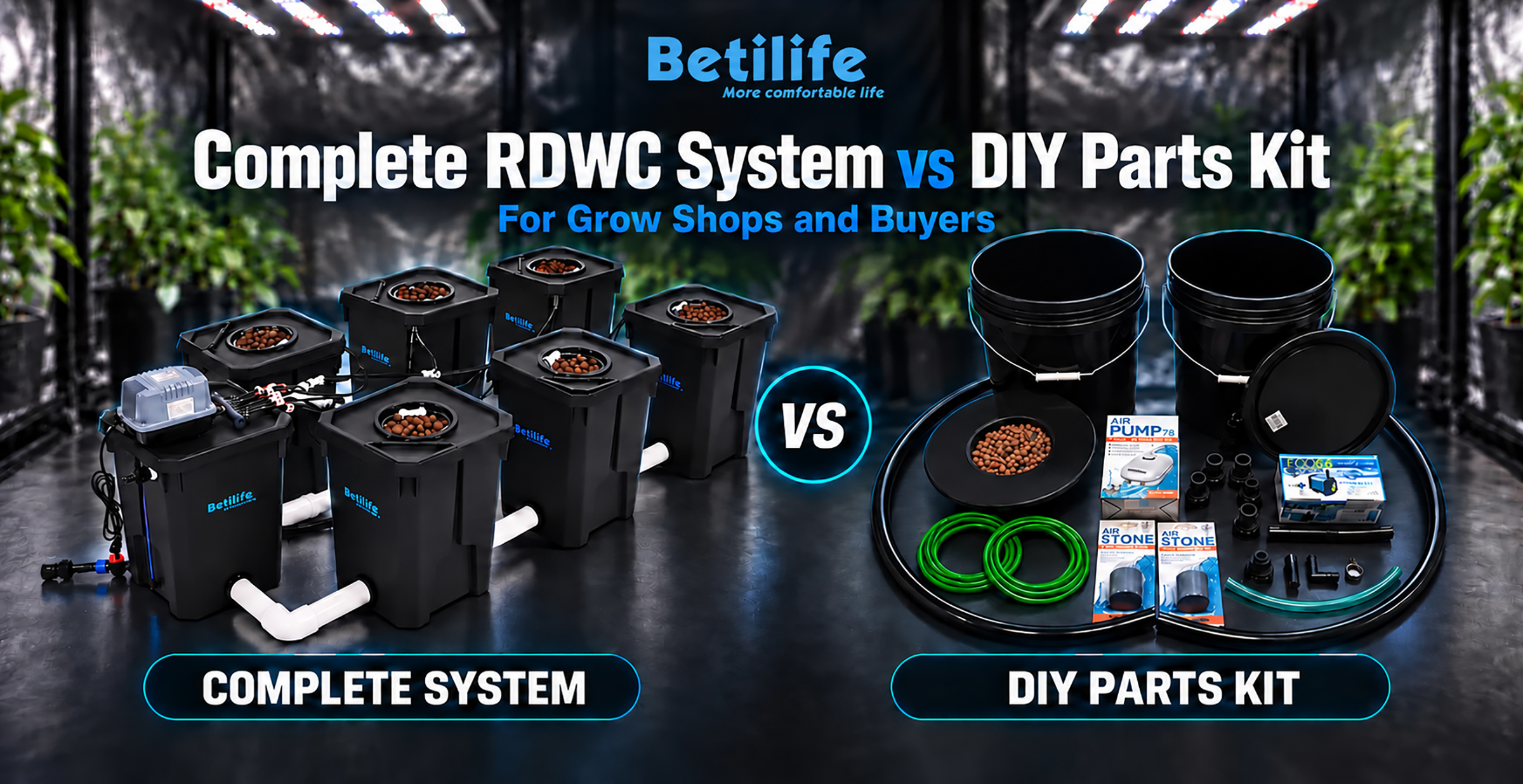
If most inquiries are from buyers who want individual components and already have proven designs, a complete-system line may be a secondary category. The comparison of complete RDWC systems and DIY parts kits explains that distinction.
Build a Focused Assortment Instead of Stocking Every Model
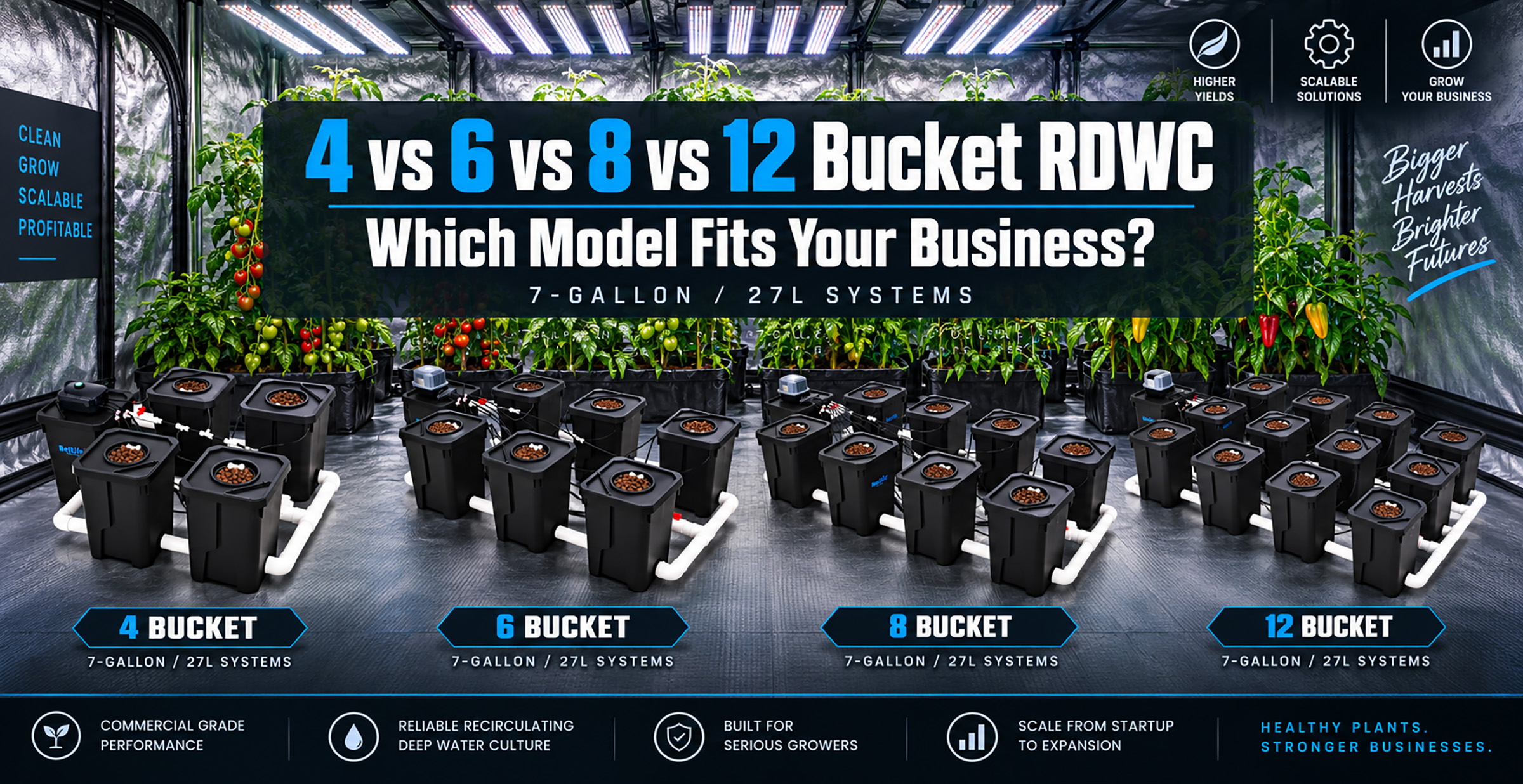
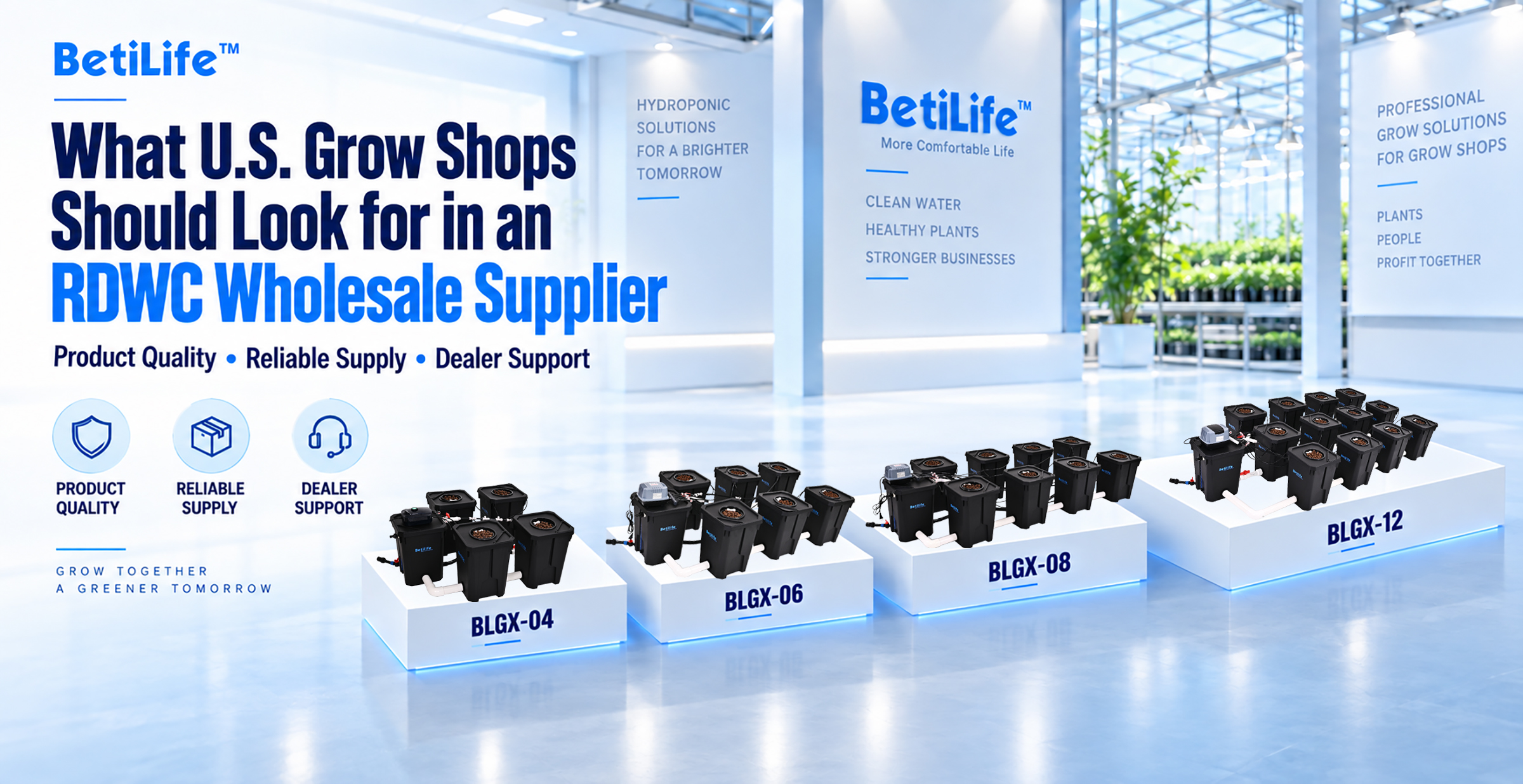
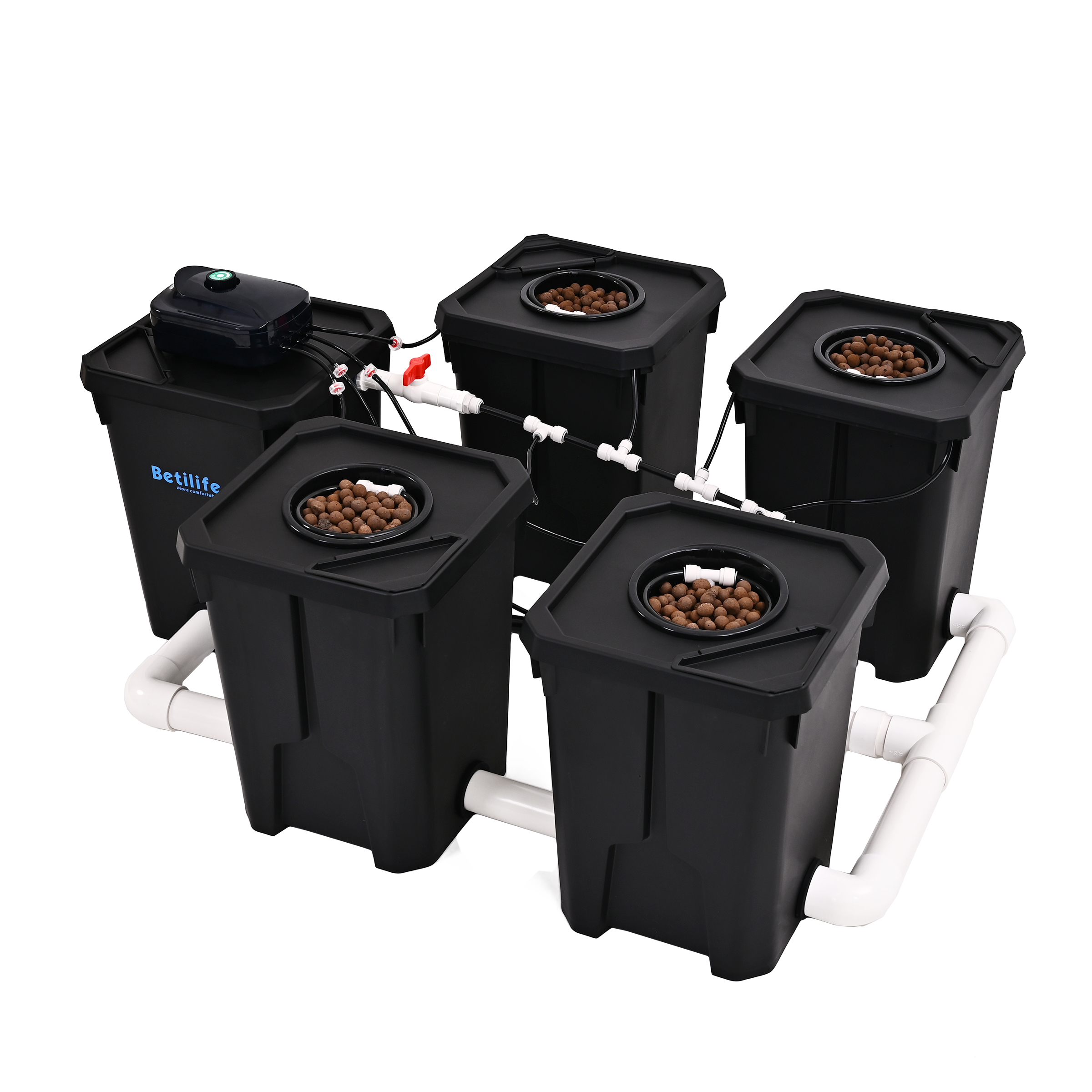
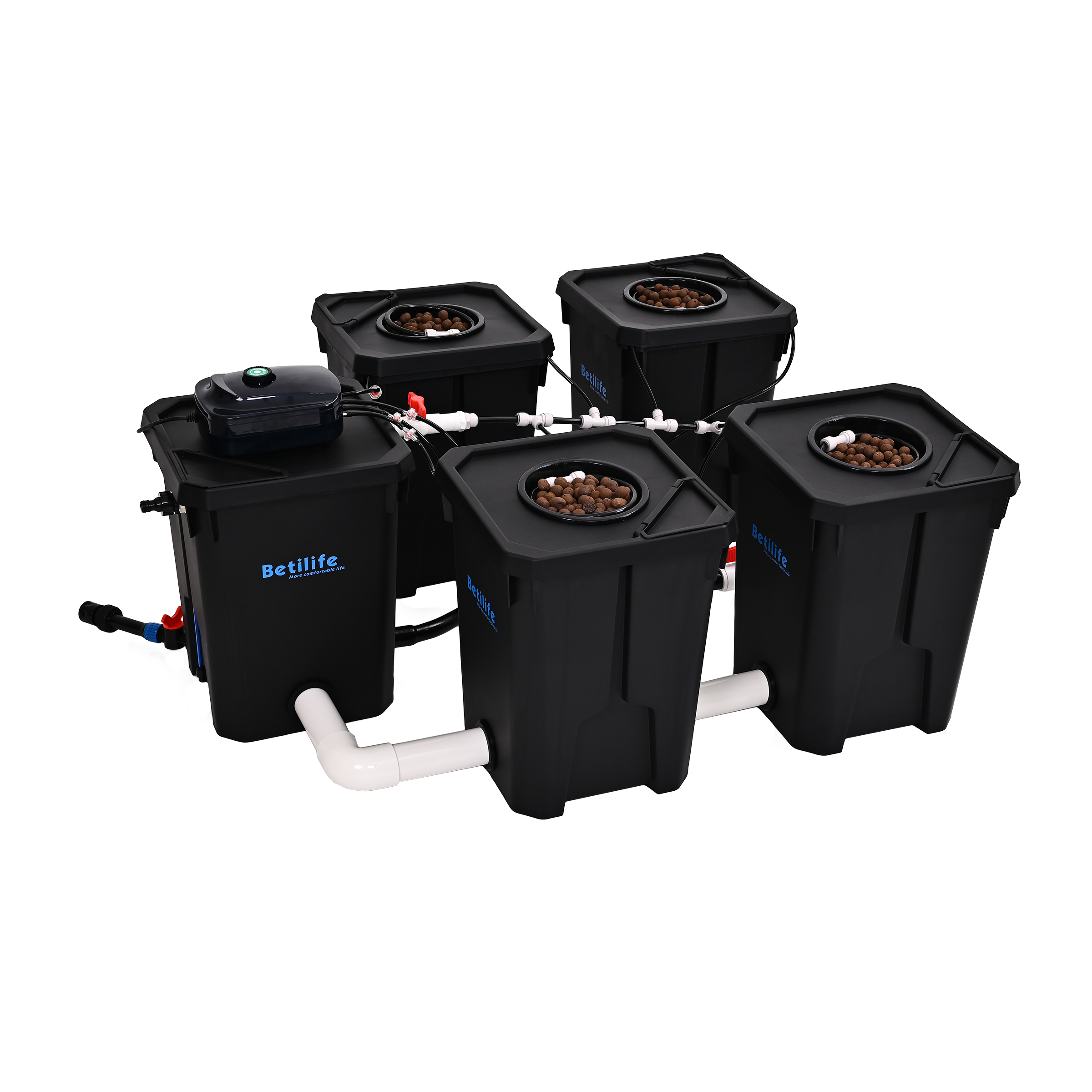
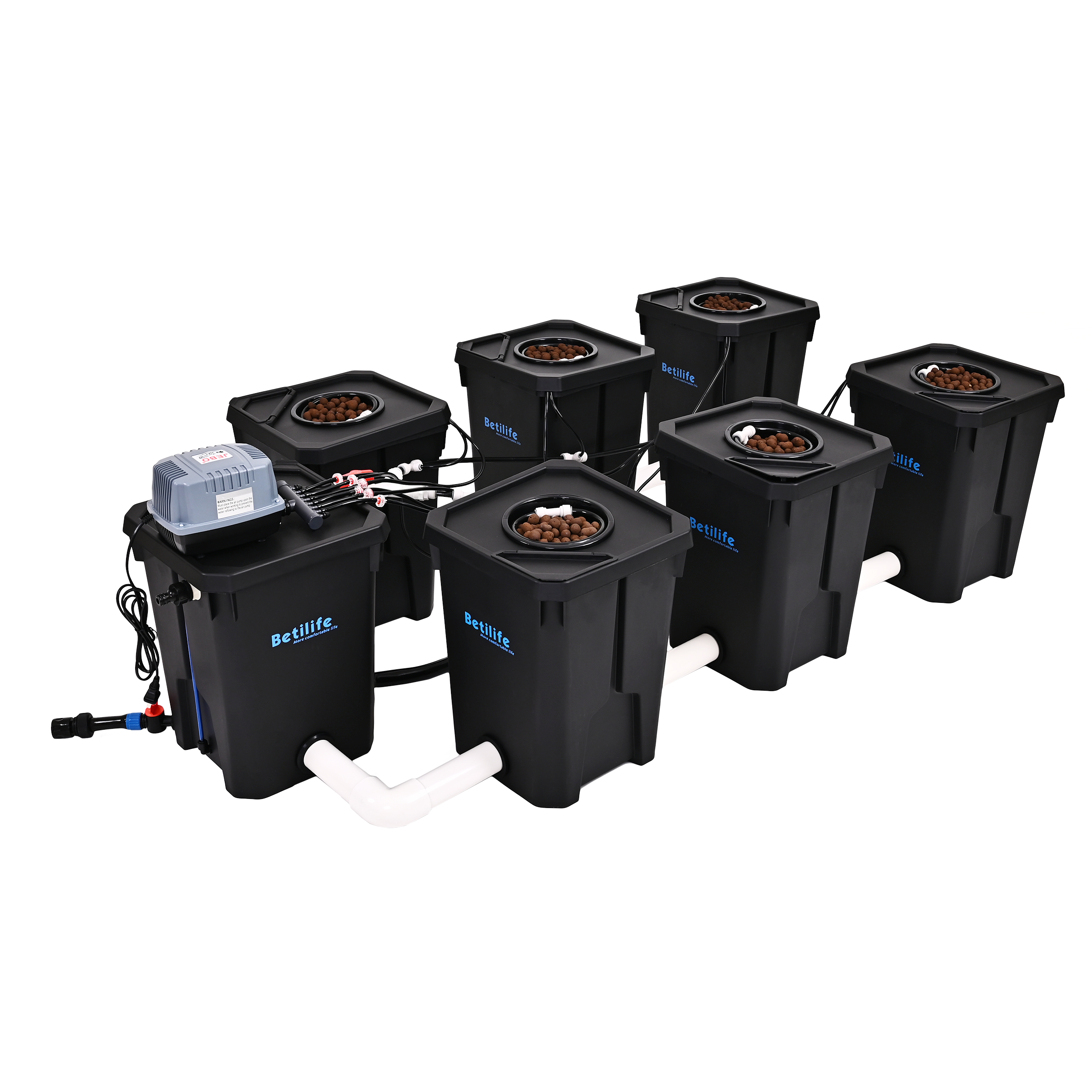
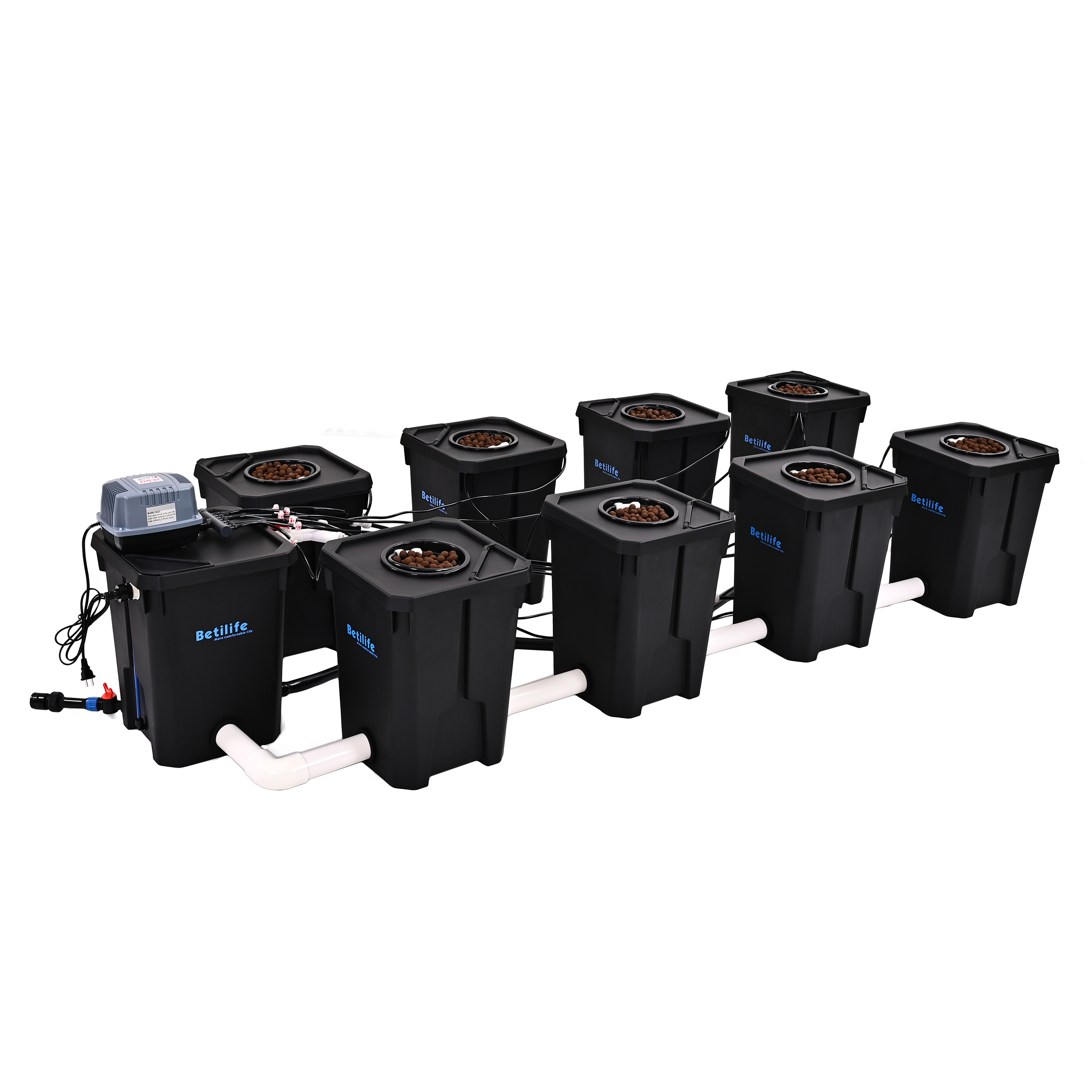
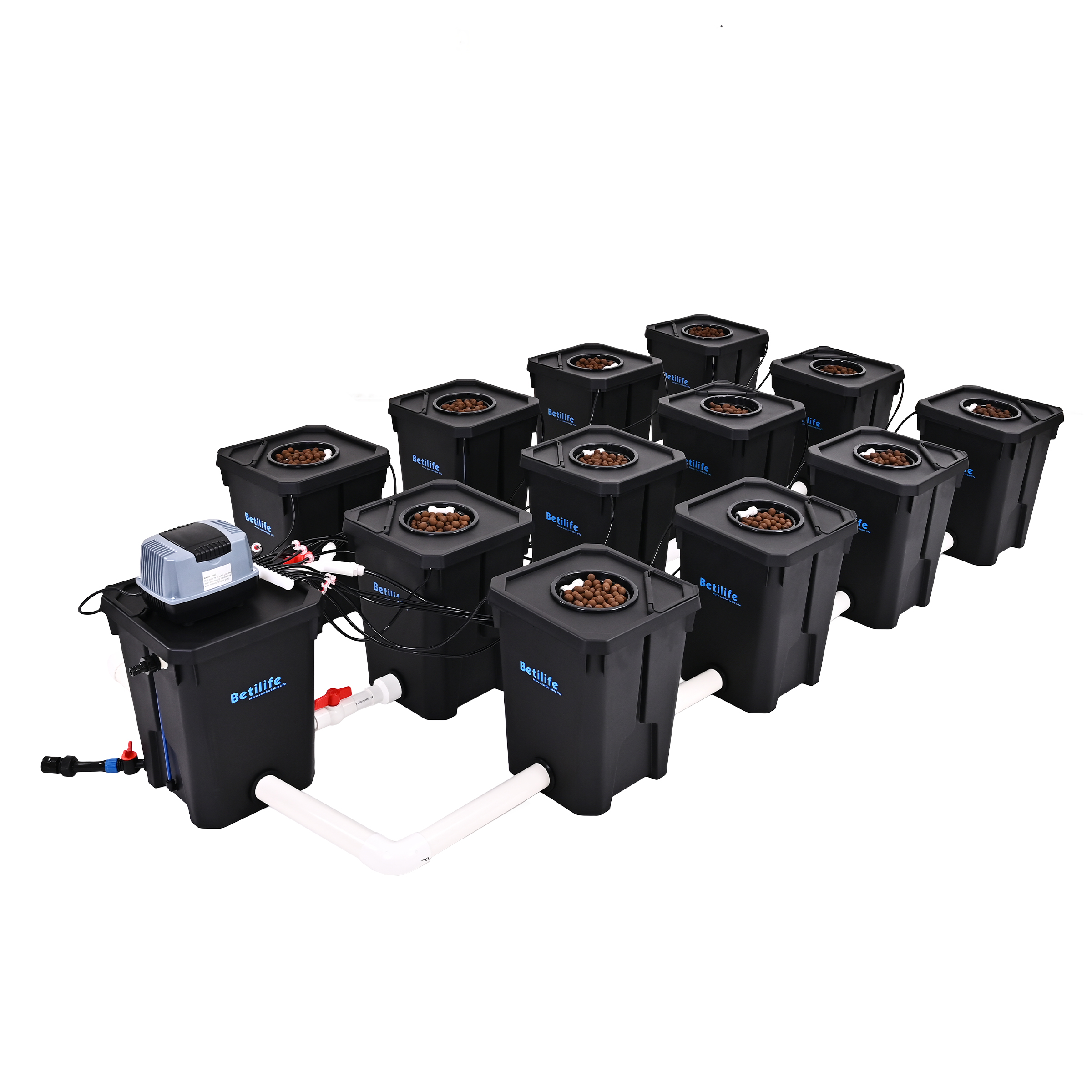
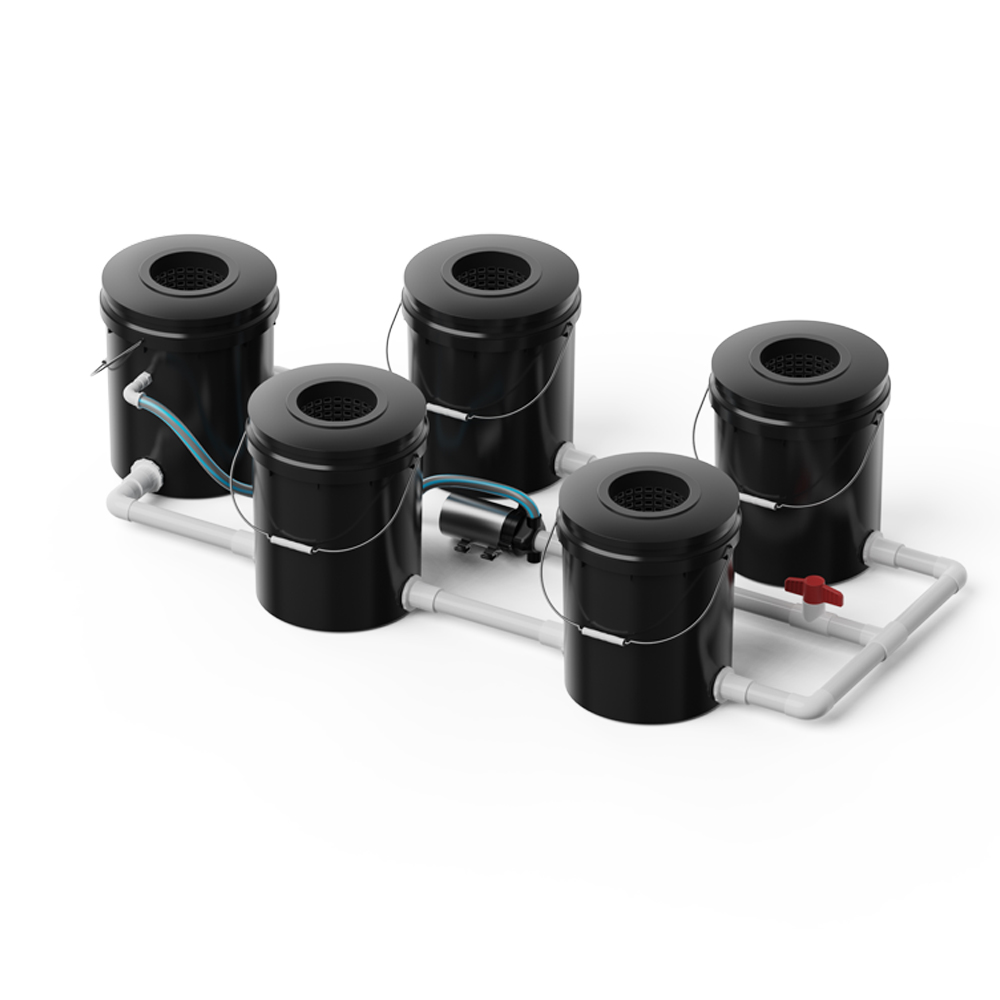
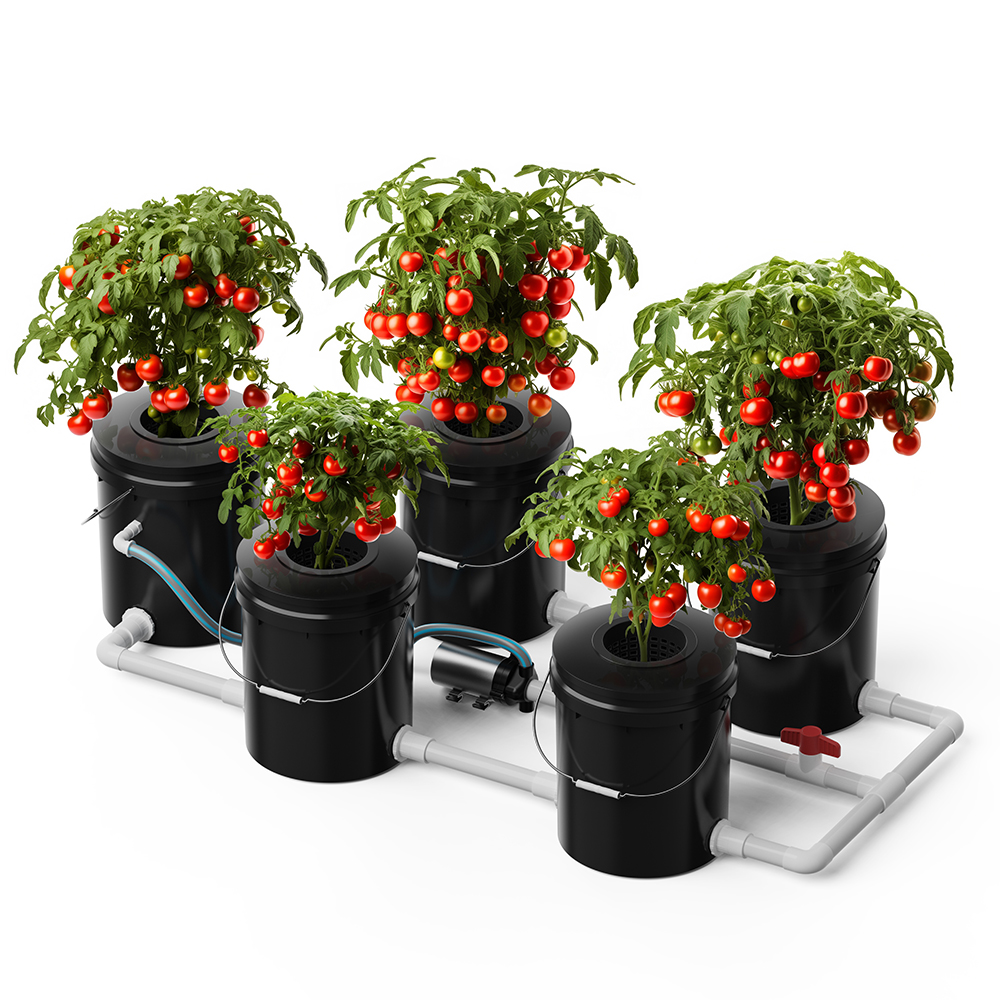
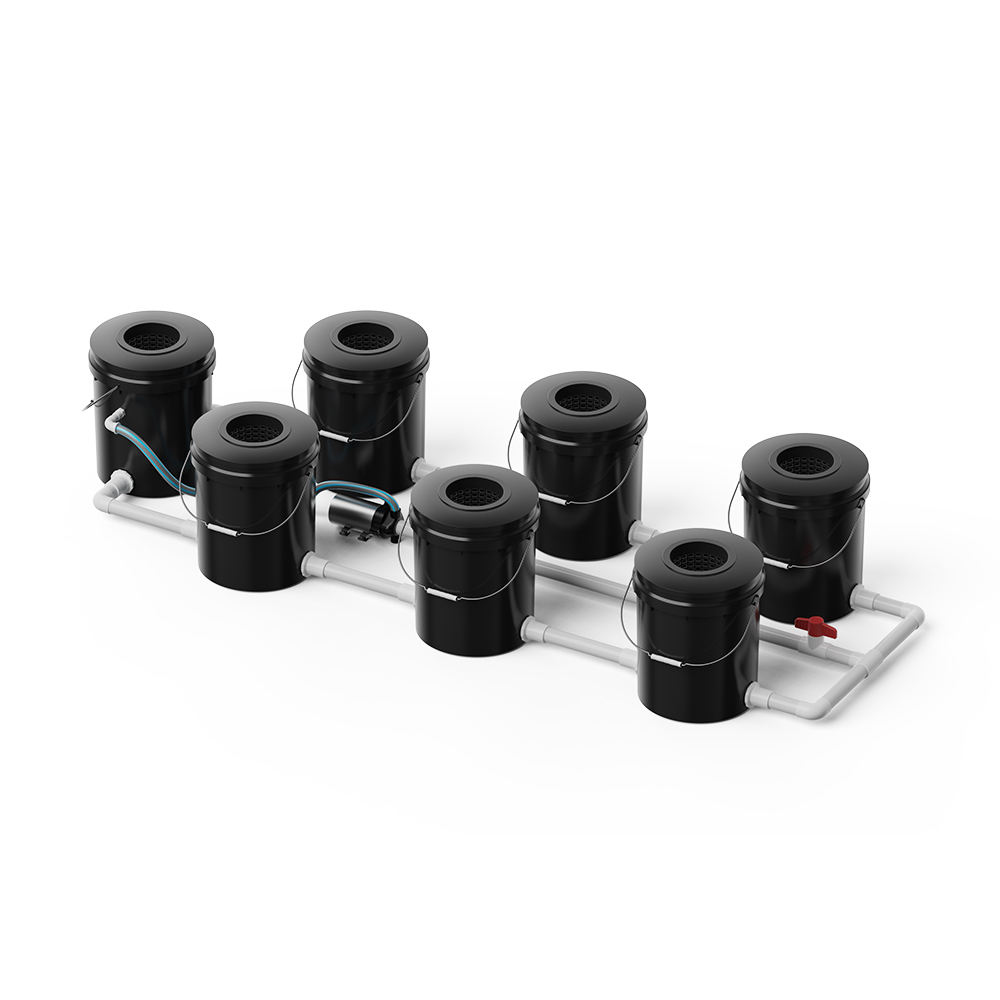
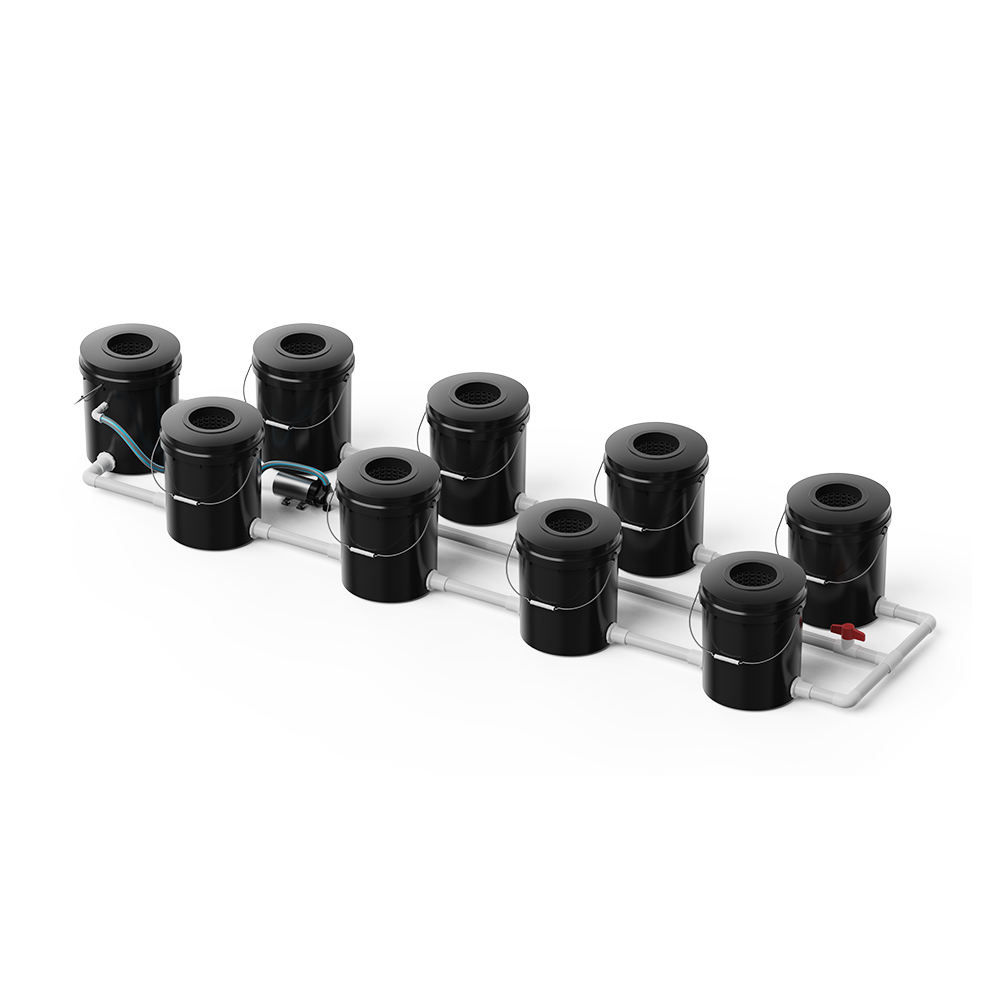
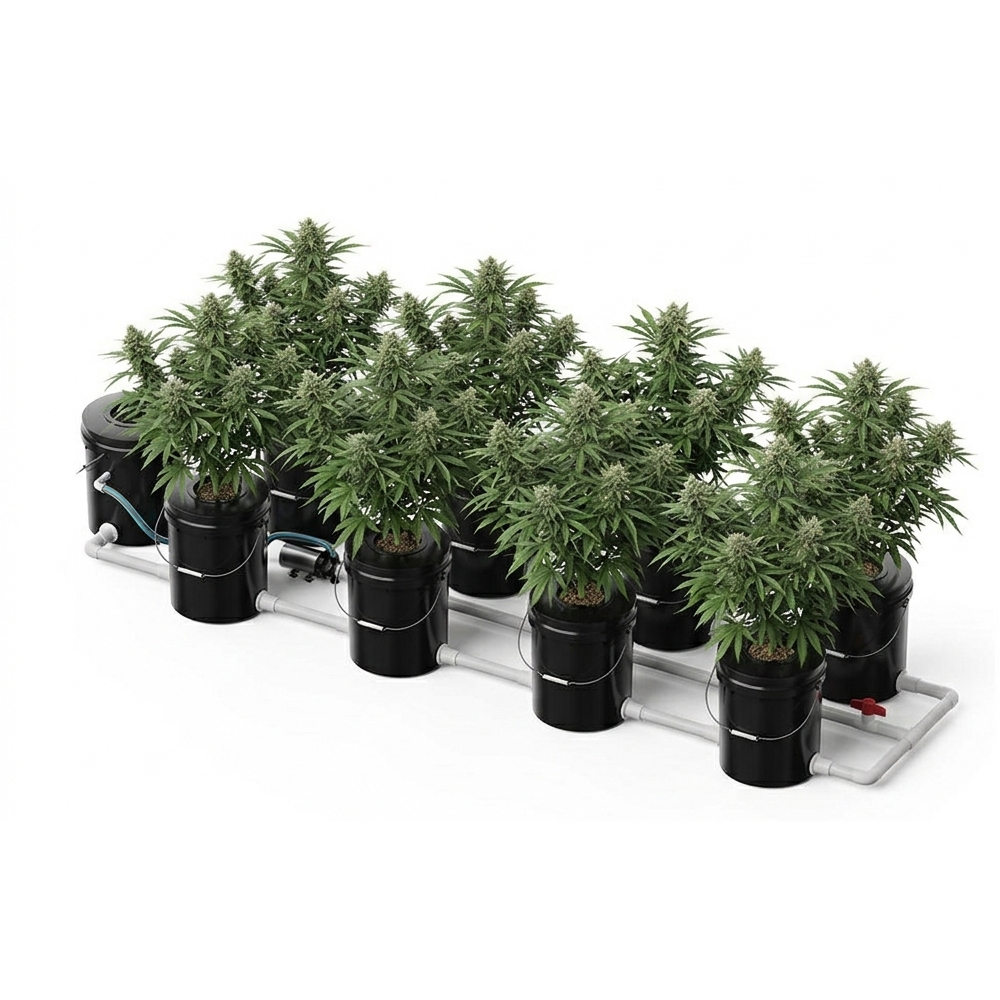
BetiLife's standard 7-Gallon / 27L RDWC line includes four configurations. Each has the stated number of planting buckets, one additional reservoir bucket and an integrated drip irrigation function. The capacity designation is approximately 27 liters per planting bucket, not 27 gallons.
| Model and configuration | Retail reference | Possible role in your shop |
|---|---|---|
| BLGX-04 4 planting buckets + 1 reservoir |
$599 | Compact evaluation, a smaller display or confirmed four-site demand. |
| BLGX-06 6 planting buckets + 1 reservoir |
$799 | Evaluation for a mid-size customer base and six-site requirements. |
| BLGX-08 8 planting buckets + 1 reservoir |
$949 | An eight-site offer where customer and display spaces accommodate the longer layout. |
| BLGX-12 12 planting buckets + 1 reservoir |
$1,499 | Demand-led project quotations or larger-system orders rather than automatic opening stock. |
Prices are published retail references reviewed September 20, 2026, not dealer acquisition costs, evaluation quotations or delivered prices. Confirm current pricing, included charges and order terms. The suggested roles are selection guidance, not sales rankings.
For mid-size demand, compare BLGX-06 with BLGX-08 first. Their published footprints are 170 × 90 cm and 230 × 90 cm respectively. The six-site model has a lower reference price and shorter layout; the eight-site model represents customers who need two additional planting positions. Allow room for access and maintenance beyond the equipment footprint.
Choose BLGX-04 if four sites or limited display space better represent your market. Consider BLGX-12 first only when larger installations are already relevant. More buckets do not automatically make a better demonstration.
You can display one representative model while discussing other configurations to order, provided availability and delivery expectations are confirmed. Do not advertise immediate local availability for products you have not stocked. For the detailed size comparison, see 4 vs 6 vs 8 vs 12 bucket RDWC systems.

Give Customers Reasons to Buy From Your Shop
A customer comparing online prices needs to understand what your store adds. Make that value specific enough to demonstrate and price. General promises of “better service” leave both the customer and your staff guessing.
| Store activity | Customer benefit | Evidence or deliverable |
|---|---|---|
| Configuration guidance | A shortlist matched to planting sites and available space. | A dimensioned layout and explanation of access requirements. |
| Product demonstration | A clearer understanding of the reservoir, connections and circulation. | An assembled display or genuine operating video. |
| Scope explanation | Clarity about supplied equipment and additional purchases. | A current component list and separately identified optional items. |
| Agreed handover | A known collection, delivery or setup-guidance process. | A checklist specifying what is included and any separate charge. |
| Issue coordination | A clear route for reporting product problems. | A named contact and documented supplier escalation process. |
A useful counter conversation starts with “How many planting sites do you need, and what usable space do you have?” Show the corresponding layout, explain the separate reservoir and identify anything outside the equipment package. That is a service a customer can evaluate before buying.
A complete RDWC system is not a complete grow room. Do not assume lights, nutrients, meters, cooling equipment or plant material are included. Recommend compatible additions only when the customer's requirements justify them, and show their prices separately.
A store with suitable staff may offer an optional paid handover or local setup service. Define travel, time, tasks and exclusions before quoting it. Do not bundle unlimited support into the equipment price without costing the work. A clear equipment-only option should remain understandable alongside any service package.
Evaluate Hydroponics Dealer Pricing Beyond the Discount Percentage
The right question about dealer pricing is whether the order can support the business you intend to run. A large percentage discount is not enough if freight, fulfillment or support consumes the difference.
Separate Retail, Evaluation and Inventory Prices
- Retail reference: a public price used to understand positioning, not proof of the price your store will achieve.
- Evaluation quotation: the cost and terms of testing a particular system before deciding on inventory.
- Dealer inventory quotation: a written offer for the intended quantities, model mix, destination and delivery scope.
Evaluation pricing should not be treated as the permanent resale price structure. Equally, do not assume a future bulk tier applies to a single evaluation unit. Ask for the relevant quotation and its validity before planning a launch promotion.
Calculate Contribution per Sale
Contribution per sale = net sales revenue − allocated landed product cost − transaction and fulfillment costs − direct service and expected claims-handling costs.
Use revenue after discounts and expected refunds, excluding tax collected for remittance. Build landed cost from the actual quotation, adding only freight, duties and other acquisition charges not already included. Avoid double-counting transport included in a delivered quote.
This contribution is not net profit: rent, management and other fixed overhead still need to be covered. If you use a claims allowance, update it from experience rather than presenting an invented failure rate as fact.
A Small Retail Discount Can Have a Larger Effect on Contribution
Illustrative example only: assume a $949 selling price and $700 in combined landed product cost and direct per-sale expenses. The $700 is hypothetical, not BetiLife dealer pricing or an observed retailer cost. Keep that assumed cost unchanged to isolate the effect of a 5% retail discount.
| Measure | No discount | 5% retail discount |
|---|---|---|
| Net selling price | $949.00 | $901.55 |
| Assumed combined cost | $700.00 | $700.00 |
| Contribution before fixed overhead | $249.00 | $201.55 |
The $47.45 discount reduces contribution by approximately 19.1% in this example. Actual outcomes depend on your costs, selling price and any change in demand. Discounting may be justified, but assess what it must achieve rather than treating it as the default response to every price objection.
Discuss a Representative Evaluation Model. Tell us the model and delivery ZIP code, and whether you are evaluating the product or planning opening inventory.
Clarify Direct-Sales and Dealer Terms Before You Commit
Customers can compare your offer with a brand's website. BetiLife publishes retail prices online, so a prospective dealer should assess that comparison directly. Do not build the business case on the assumption that customers will never find a lower advertised price.
Compare equivalent offers: the exact model, included equipment, delivery charges, timing and any genuine local services. If your store provides a separately priced service, describe it plainly. If the customer wants equipment only, the equipment price still needs to be credible.
Before placing a stock order, ask:
- How do the current evaluation and inventory quotations differ?
- What public promotions are relevant, and is any dealer promotional support available in writing?
- Which shipping charges and service obligations remain with the store?
- What ordering, replenishment and customer-issue terms apply to this order?
Do not assume exclusivity, protected margins or automatic price protection. Any specific channel arrangement needs written confirmation. This guide does not create one.
If a realistic selling price does not cover acquisition, fulfillment and necessary support, adding service language will not solve the shortfall. Revisit the order structure, service scope or model choice before committing to stock. Some opportunities are better handled as confirmed customer orders than speculative inventory.
Define Support Before the First Customer Sale
Support becomes manageable when each party knows its role. Specify the store's sales and handover tasks, the supplier's product-support process and the user's operating responsibilities. Do this before staff make promises to customers.
- The shop: explain the sold configuration, record the order and provide the local services it has agreed to deliver.
- The supplier: address product and component questions through the applicable support and warranty process.
- The operator: follow instructions and manage routine monitoring, cleaning and crop care.
BetiLife's published warranty and after-sales policy describes setup guidance, troubleshooting and replacement-parts support. Eligible components have a one-year limited warranty from the applicable delivery date unless the relevant order or agreement states otherwise. Coverage depends on the policy's conditions and review of the reported issue.
That does not promise unlimited onsite labor, immediate local spare-parts availability, crop performance or financial return. Confirm replacement-part lead times, freight responsibilities and any store-provided labor before describing coverage to a customer.
A practical escalation record includes the model, order reference, affected component, photos or video and the symptoms reported. Follow the product instructions when troubleshooting; an unsafe or leaking installation should not remain in operation merely to complete a demonstration.
For the broader procurement review, use the RDWC wholesale supplier checklist for U.S. grow shops.
Test One Representative System Before Expanding Inventory
A first evaluation should answer a buying question: can your team receive, explain and support this product, and is there enough suitable customer demand? It is not evidence of future sales simply because the system has been assembled.
- Check the delivery. Compare cartons and components with the packing list, documenting shortages or damage under the agreed process.
- Review assembly and operation. Follow the manual, check connections and test the specified functions before use.
- Practice the sales explanation. Have a colleague identify planting sites, reservoir, footprint, included equipment and separately required items.
- Record customer response. Capture requested sizes, budgets, room constraints and purchase timing, not just favorable comments.
- Review outcomes and labor. Track quotations, orders, reasons for non-purchase and time spent answering questions.
- Set the next order from evidence. Expand a model that fits demonstrated demand, change the assortment or defer additional stock.
| What to track | How to record it | Decision it informs |
|---|---|---|
| Qualified inquiries | Model, sites, usable space, budget and timing. | Which configurations deserve attention. |
| Quote conversion | Orders divided by quotes over a defined period; note pending quotes. | Whether interest is becoming purchases. |
| Contribution per sale | Actual revenue less landed cost and direct expenses. | Whether the offer is economically workable. |
| Support time | Staff time and the issue type for each case. | Training, documentation or service-pricing changes. |
| Inventory commitment | Units on hand, paid costs, age and expected replenishment time. | When to reorder and how much cash to commit. |
Set a review date appropriate to your sales cycle, but do not mistake a short observation period for proof of long-term demand. A slow result may reflect the wrong model, unclear presentation, timing or weak local demand; record the reason before deciding to discount.
Where BetiLife's 7-Gallon RDWC Line Fits
The four-model range gives a shop specific products to evaluate and quote without presenting an unlimited custom catalog. Start with the model that matches your customers, confirm the equipment and support scope, then discuss inventory quantities if the evaluation supports that decision.
BetiLife's RDWC wholesale supply page covers trial-order review, model-mix discussions and DDP or FOB quotation options. Availability, quantities, delivery scope and cooperation terms are confirmed through the quotation process. Request the product images, specifications and setup resources available for your proposed resale arrangement.
A larger model can remain a quoted option while the store evaluates a smaller one. For example, BLGX-12 may be relevant when a customer brings a defined twelve-site requirement. Confirm the layout, delivery and support work for that order rather than assuming every shop needs a twelve-site display.

Frequently Asked Questions About RDWC Systems for Grow Shops
Do grow shops need to stock all four RDWC models?
No. A shop can evaluate one representative model and use actual inquiries to plan opening inventory. Other configurations may be discussed to order once availability and delivery terms are confirmed. A complete catalog does not require equal stock of every item.
Which RDWC model should a grow shop evaluate first?
Compare BLGX-06 and BLGX-08 when mid-size systems represent your customers. Consider BLGX-04 for compact space or four-site demand, and BLGX-12 for established twelve-site requirements. The first unit should test a relevant sales and support scenario, not merely minimize its purchase price.
Is evaluation pricing the same as dealer inventory pricing?
Do not assume so. An evaluation quotation covers product testing under stated terms. An inventory quotation should reflect the actual quantities, model mix, destination and supply scope. Request both when needed, and calculate resale economics from the applicable inventory offer.
How can a local grow shop compete with online RDWC prices?
Offer useful selection guidance, genuine product demonstrations and clearly defined local services, while keeping equipment pricing credible. Compare identical models and delivery scopes. If the economics remain unfavorable, revise the offer or purchasing plan instead of relying on vague service claims.
What should a dealer quotation include?
Request model codes, quantities, included components, electrical configuration, price, payment terms, delivery scope, timing, quotation validity and support conditions. Identify excluded charges and any optional services. The quote must be specific enough to estimate the cost of receiving and reselling the order.
Who handles technical questions and replacement parts?
The store and supplier should agree on the reporting and escalation process before sales begin. BetiLife's published policy provides product-support and replacement-parts pathways subject to its conditions. Confirm the remedy, timing, freight and labor responsibilities for the actual case rather than assuming unlimited coverage.
Request an Evaluation or Opening-Inventory Quote
A useful first RDWC order should answer a clear question about product fit, demand or delivery. It does not need to cover the whole range. Once the system and its economics work for your shop, the next order can follow what customers actually request.
Already selling hydroponic equipment and considering RDWC? Send your preferred model, whether you need an evaluation unit or opening inventory, and your delivery ZIP code. If you already know the required quantities, include them. If you are still choosing, describe the gap in your current product line.
- Request a Dealer Evaluation Quote
- Request an Opening-Inventory Quote
- Discuss Your RDWC Product Line on WhatsApp
Contact JianHong Tan at jianhongtan@betilife.com, or send general product inquiries to support@betilife.com.
Product and price references: BetiLife 7-Gallon / 27L collection and the individual model pages linked above. Cooperation and support references: RDWC wholesale supply and warranty policy. Assortment recommendations and the hypothetical cost example are planning guidance, not verified retailer results or guarantees of sales, margin or return. Confirm the current written quotation and applicable agreement before ordering.