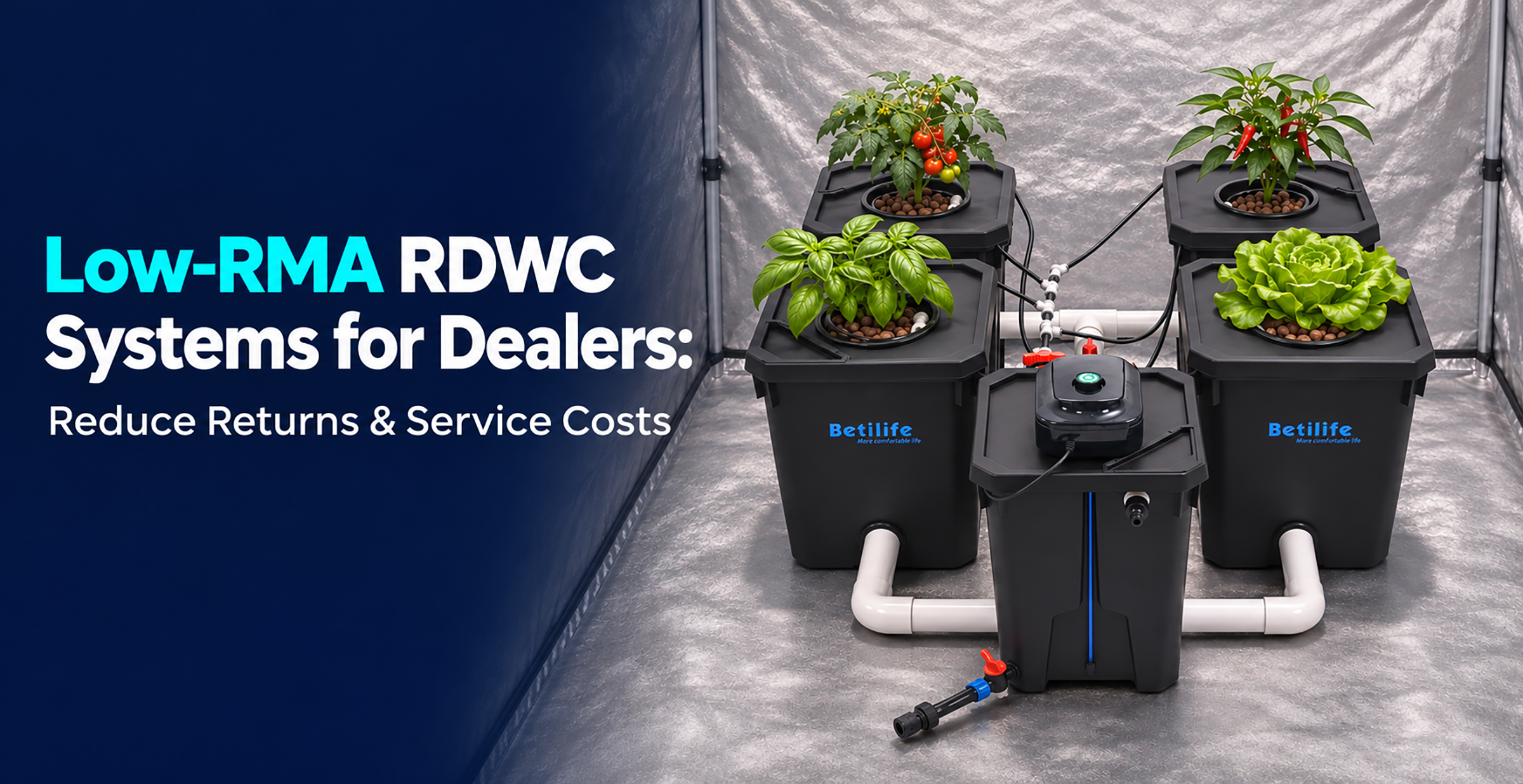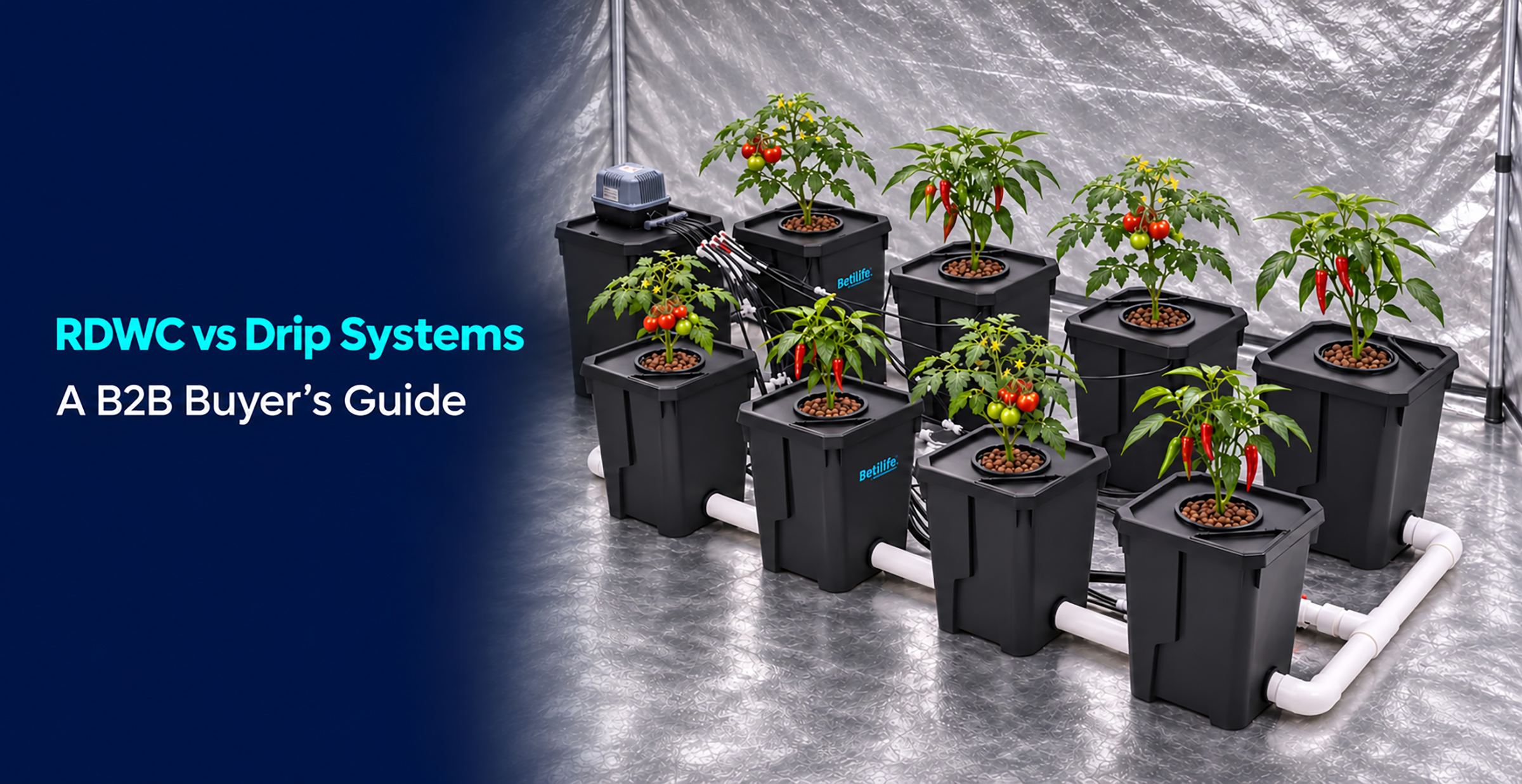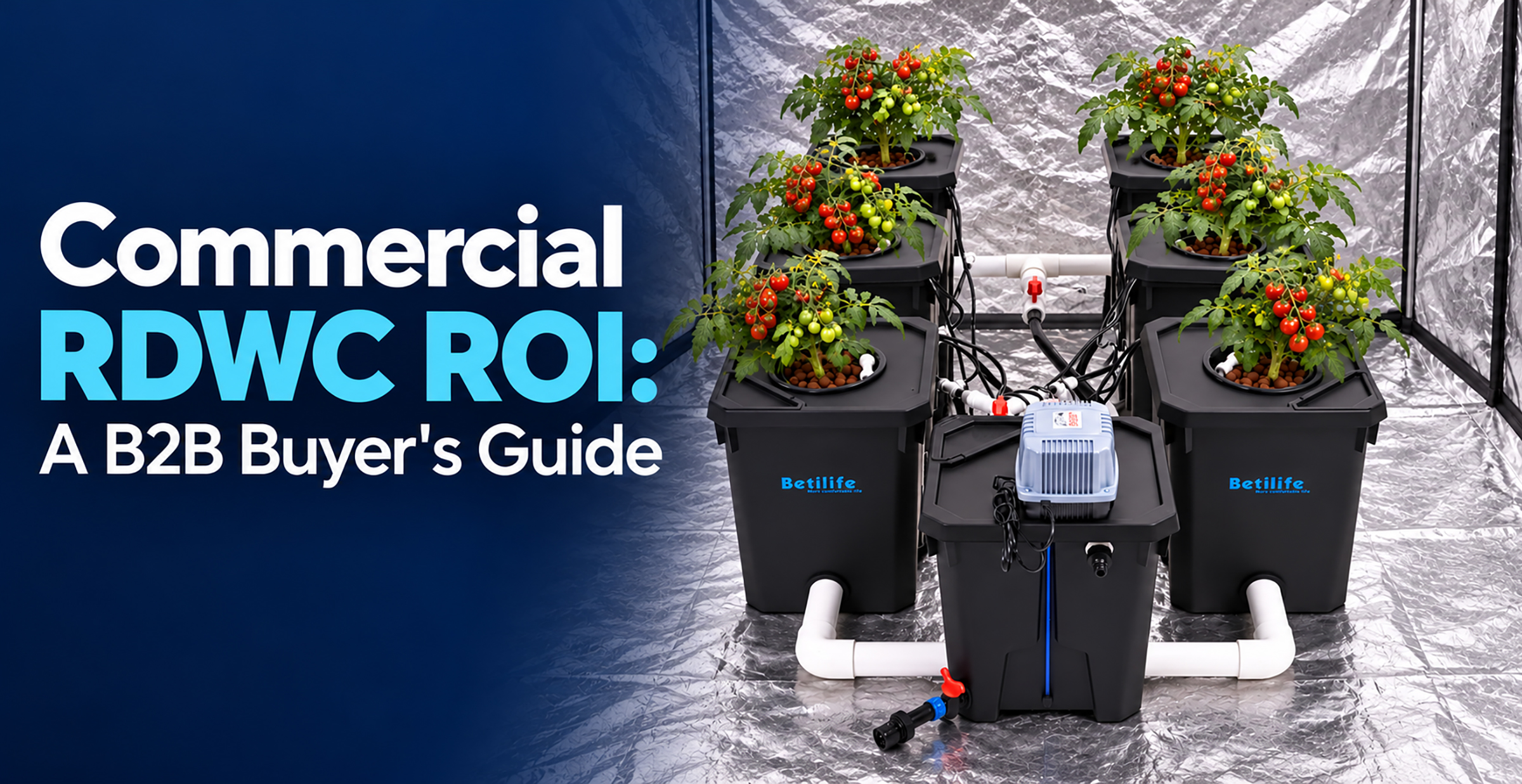

Your RDWC quotation comes from a Hong Kong company, your order contact coordinates with a team in Dongguan, and the shipment is scheduled to leave Shenzhen. For a grow shop or distributor, the useful question is how those people will carry the order from an agreed specification to delivery and customer support.
A Hong Kong hydroponic supplier model can benefit B2B buyers when it connects a clearly identified commercial partner with production coordination, documented product requirements, and an agreed export and support process. Buyers can evaluate that value through the quotation, packing list, production updates, and written after-sales terms.
This guide uses BetiLife's business structure and four standard 7-gallon RDWC systems to explain what to review before placing an evaluation, inventory, or project order.
How Does a Hong Kong Hydroponic Supplier Model Work?
A supplier can establish its commercial entity in Hong Kong while coordinating manufacturing and export activities in mainland China. Hong Kong, Dongguan, and Shenzhen are within the Greater Bay Area. For buyers, the practical question is how the commercial contact and production team exchange approved requirements and resolve changes. Greater Bay Area overview.
| Function | BetiLife's stated arrangement | Buyer check |
|---|---|---|
| Commercial entity | HONGKONG BETILIFE TECHNOLOGY CO., LIMITED, registered in Hong Kong | Identify the contracting party and reconcile the quotation, invoice, and payment instructions. |
| Operations and quality-control coordination | Dongguan, Guangdong, China | Identify the order contact, approved configuration, and inspection requirements. |
| Manufacturing | Qualified manufacturing partners in China | Agree on the supplied equipment, production scope, and acceptance requirements. |
| Export shipment origin | Shenzhen Port, Guangdong, China | Confirm the shipment plan, trade term, and shipping documents. |
The table describes commercial and operational roles. Trace the physical shipment using the agreed dispatch location and shipping documents. Confirm the goods' country of origin separately for import purposes. BetiLife's company and operations information.
Hong Kong's legal system is based on common law, supplemented by statutes. For a purchase, put the governing law, dispute-resolution arrangements, and each party's obligations into the agreement. These details give both sides a reference if a disagreement arises. Hong Kong Department of Justice overview.
Where Can This Structure Help a B2B Buyer?
The potential benefit becomes visible in everyday purchasing work. A retailer needs the right model and instructions. A distributor needs repeatable orders and clear carton records. A commercial grower needs the specified equipment delivered in time for an installation plan.
Carry the customer's requirements into the order
A useful commercial contact turns a request such as “eight planting sites for a customer project” into a documented configuration. That record should include the model, quantity, electrical requirements, supplied components, delivery destination, and any agreed changes. The operations team can then coordinate production against the approved version.
For example, if a buyer changes the destination market before production, the revised order should identify any required change to the pump or plug configuration and the supporting documents. The buyer can see what was approved before the shipment is packed.
Coordinate the checks that matter to the shipment
A production-coordination team can help move questions about packaging, components, and order status to the people handling them. Ask which checks are included and what record will be available. A component count, visual inspection, and operating check each answer a different purchasing question.
Build a record that makes reordering easier
Keep the approved specification and packing list after the first delivery. On a reorder, compare the proposed configuration with that record and review any changes before approval. This gives store staff a consistent basis for product listings, assembly guidance, and spare-part identification.
When evaluating an RDWC wholesale supplier, ask to see how those steps would work for your actual order. What grow shops should look for in an RDWC wholesale supplier.
Match the Supply Model to the RDWC Products You Need
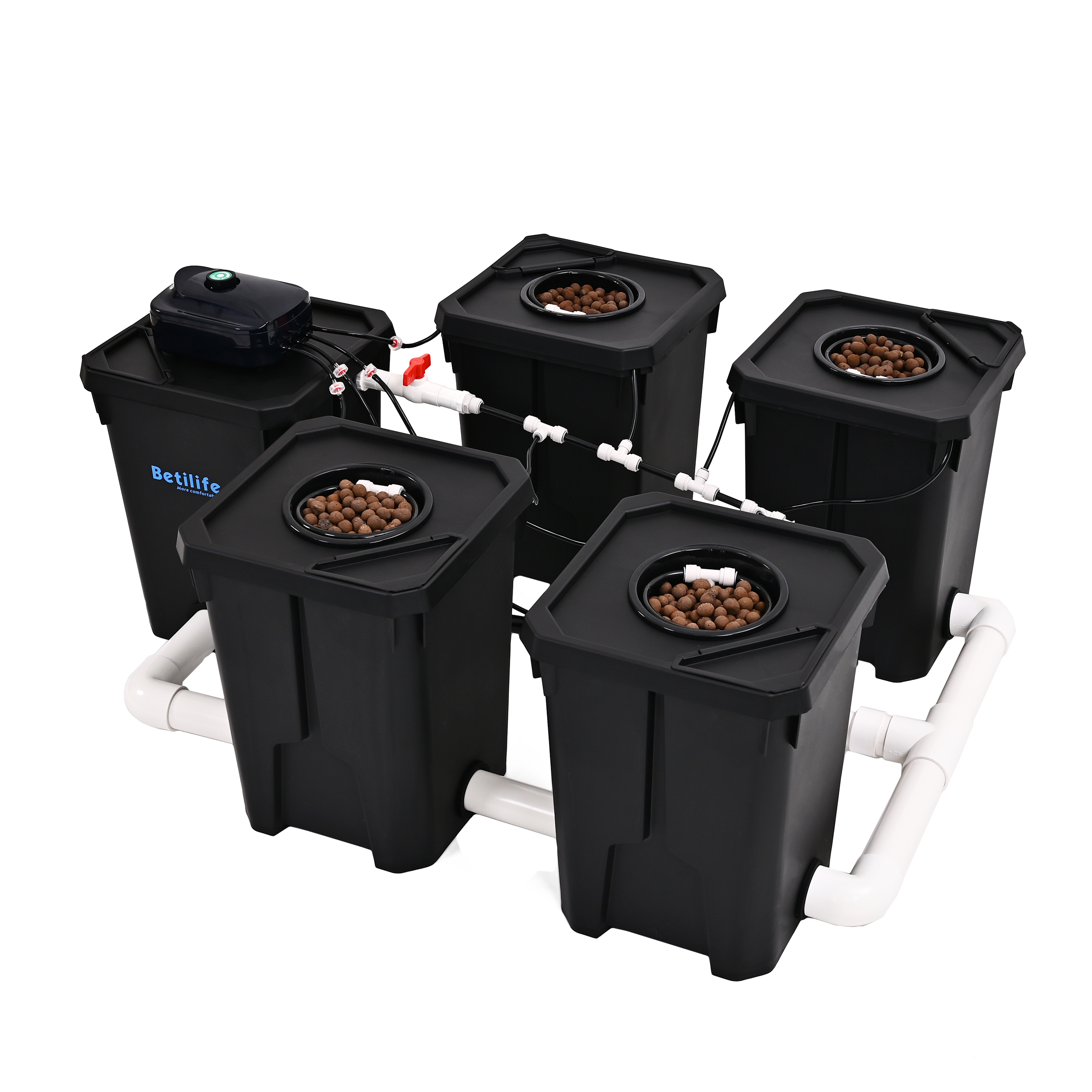
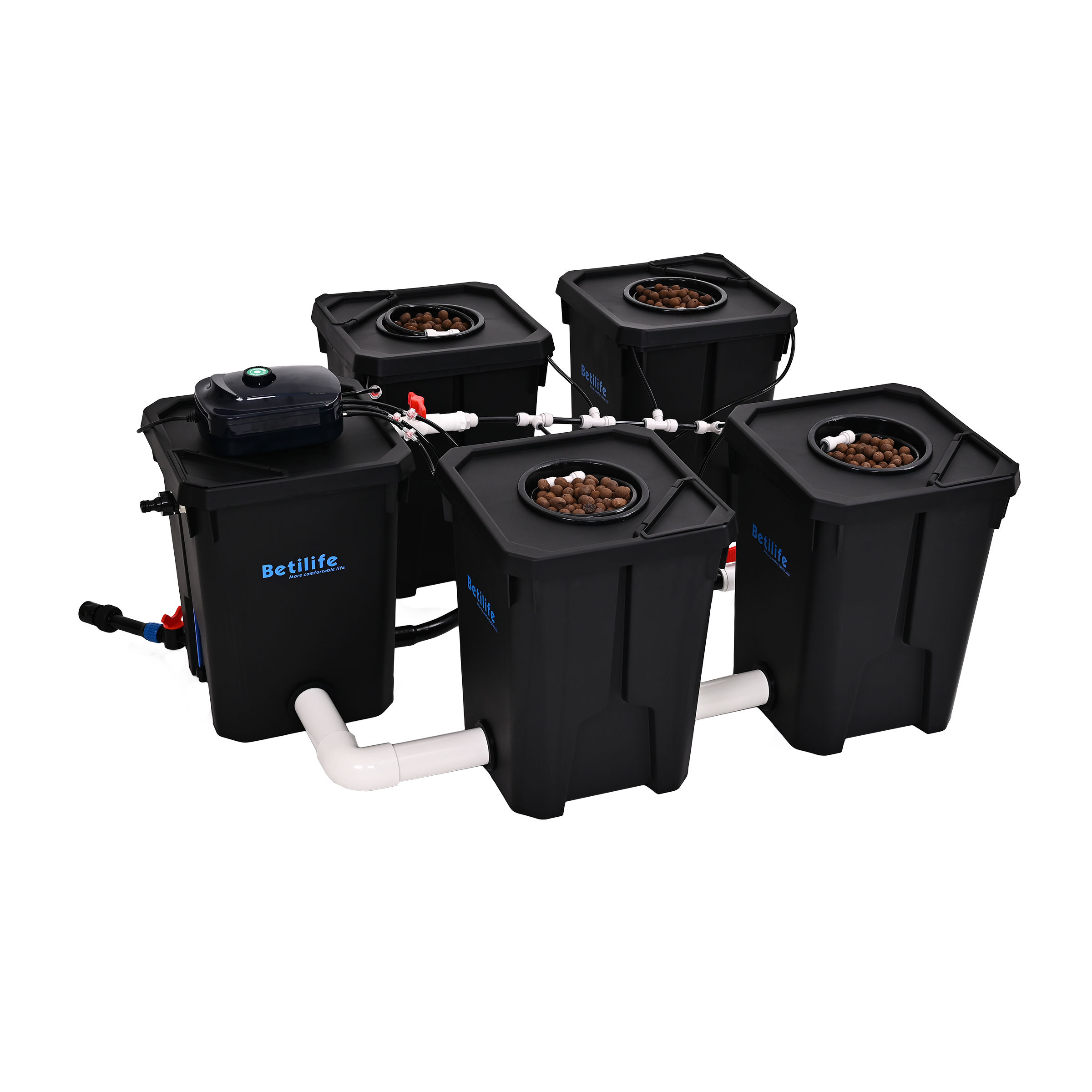
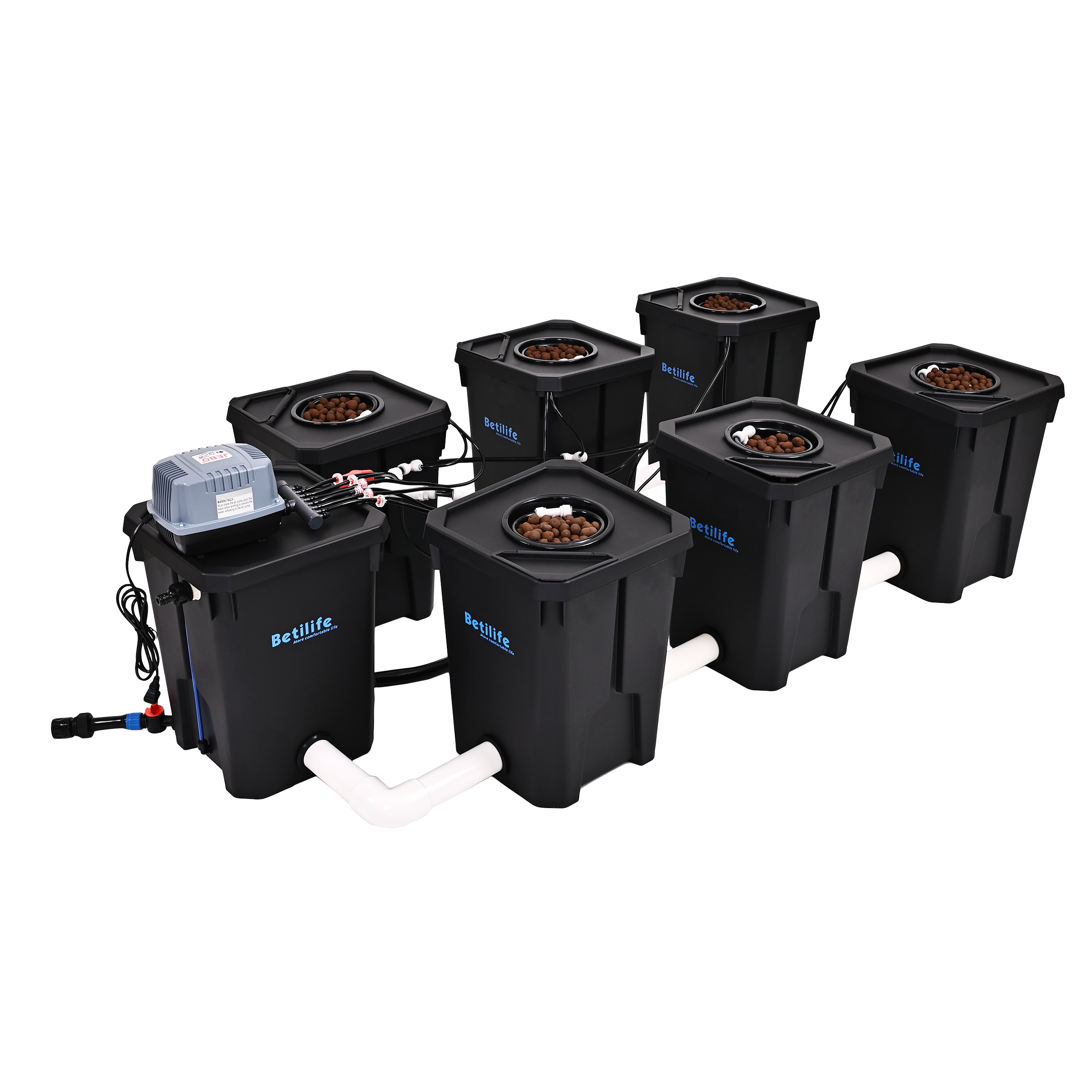
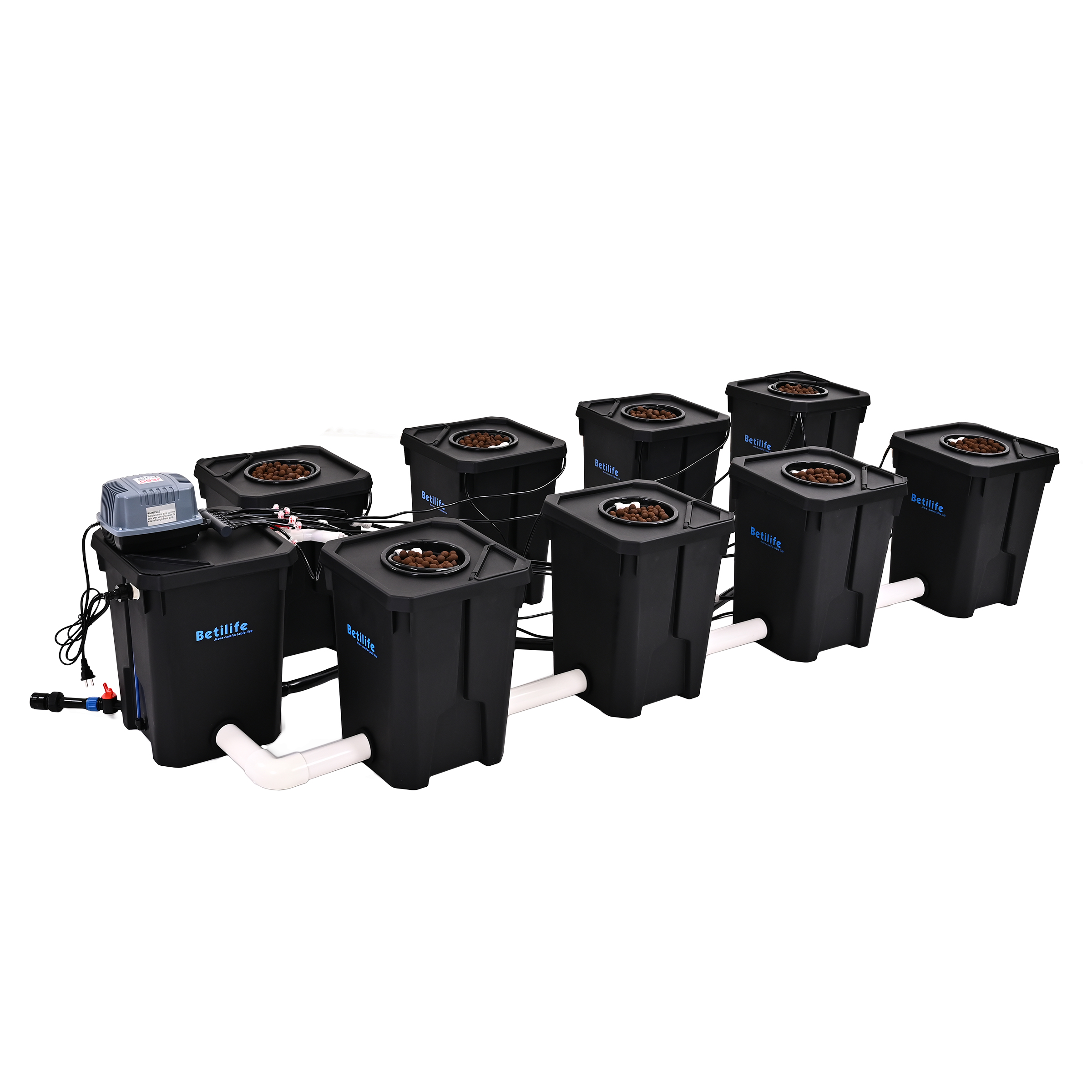
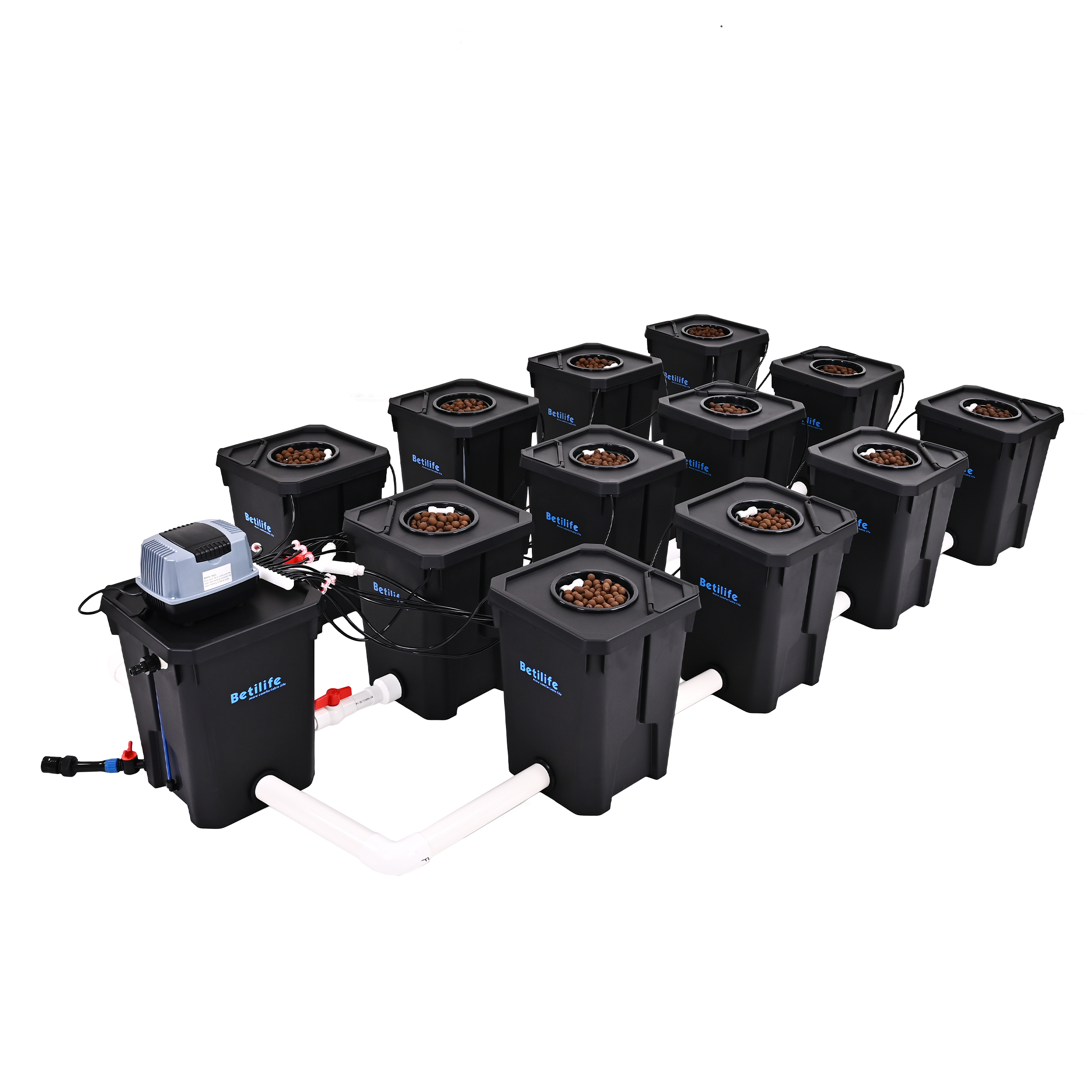
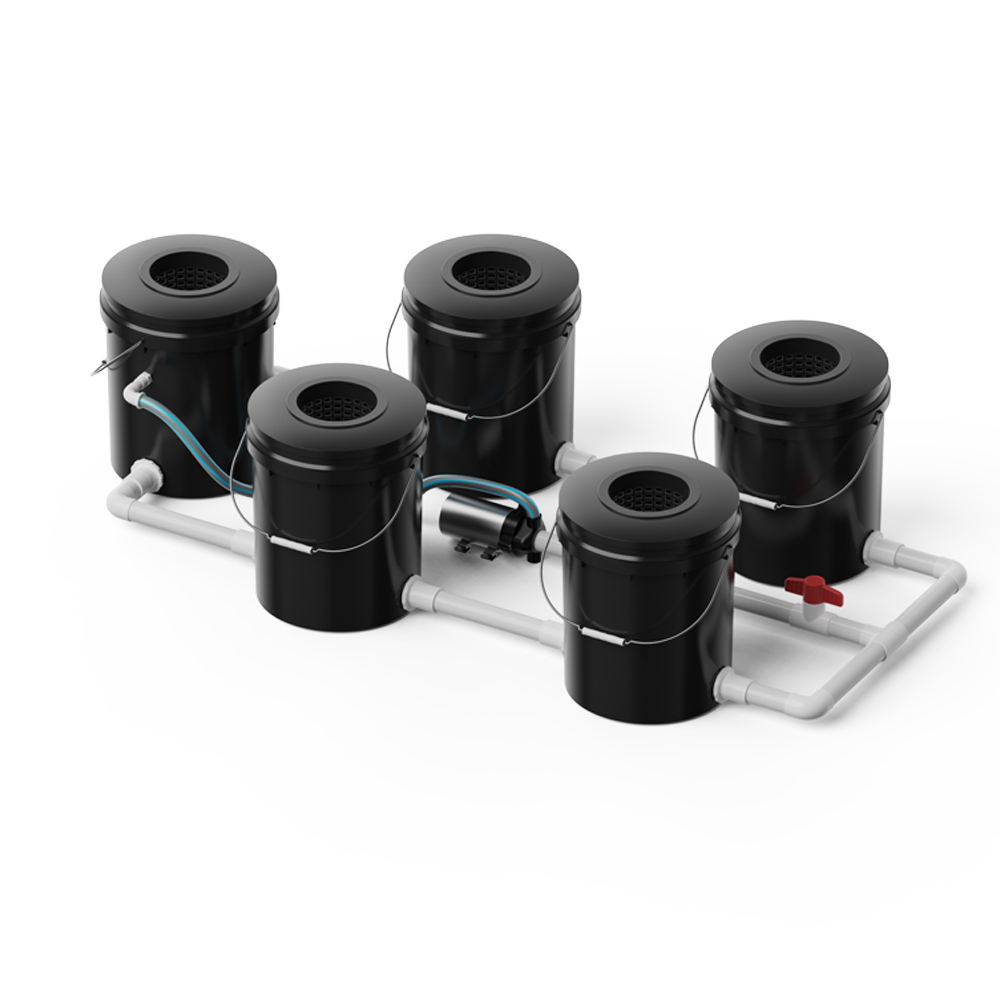
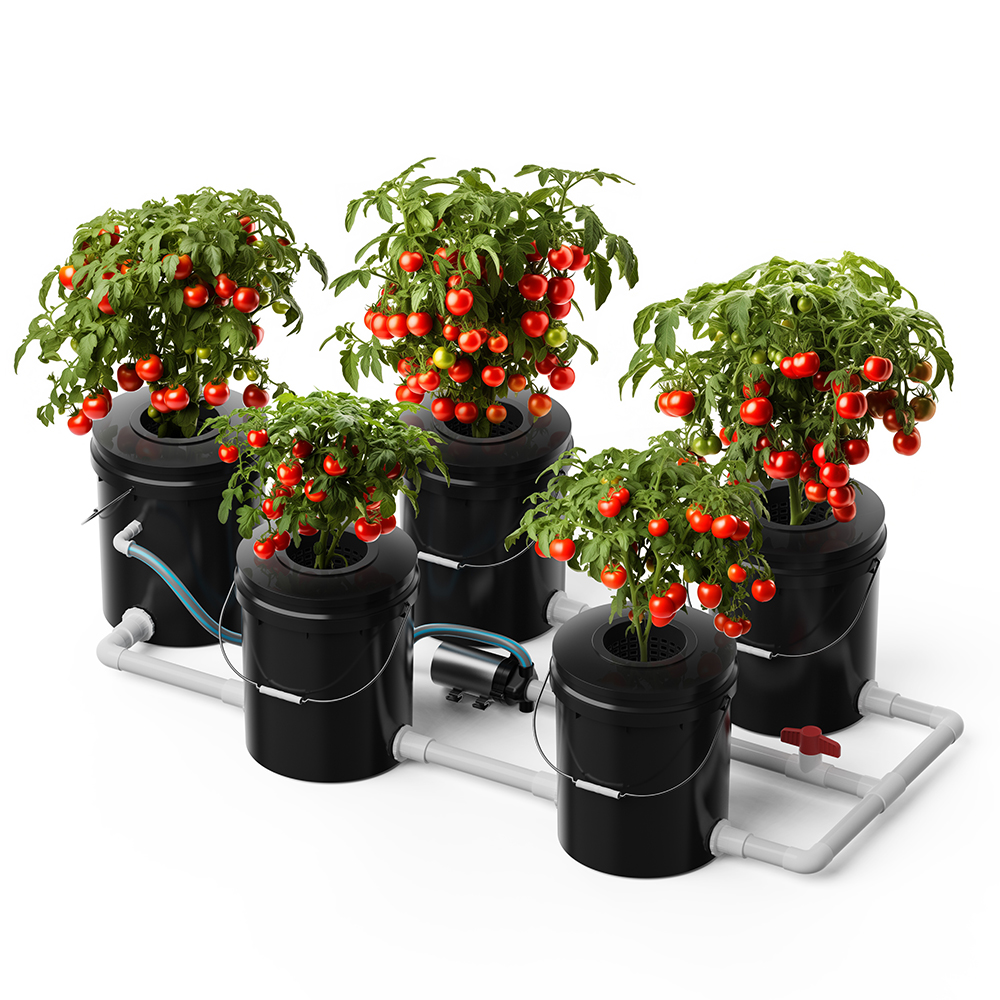
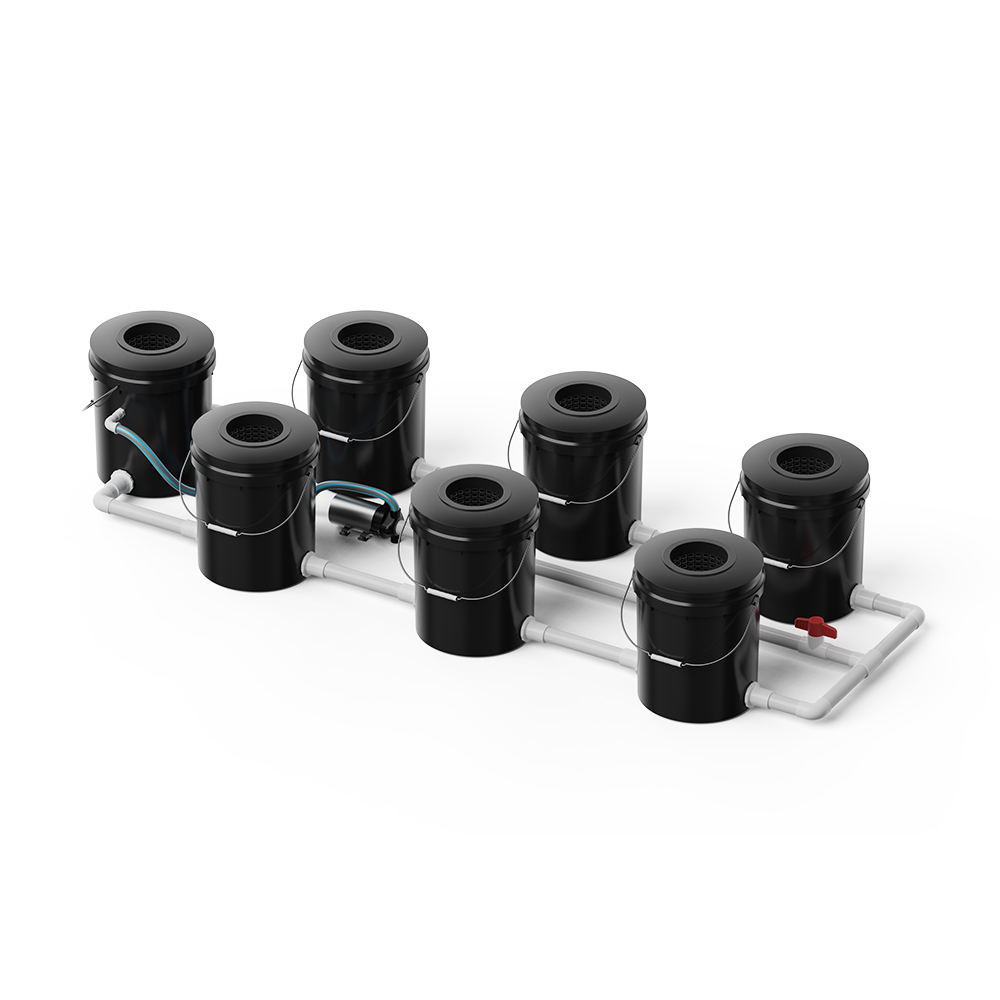
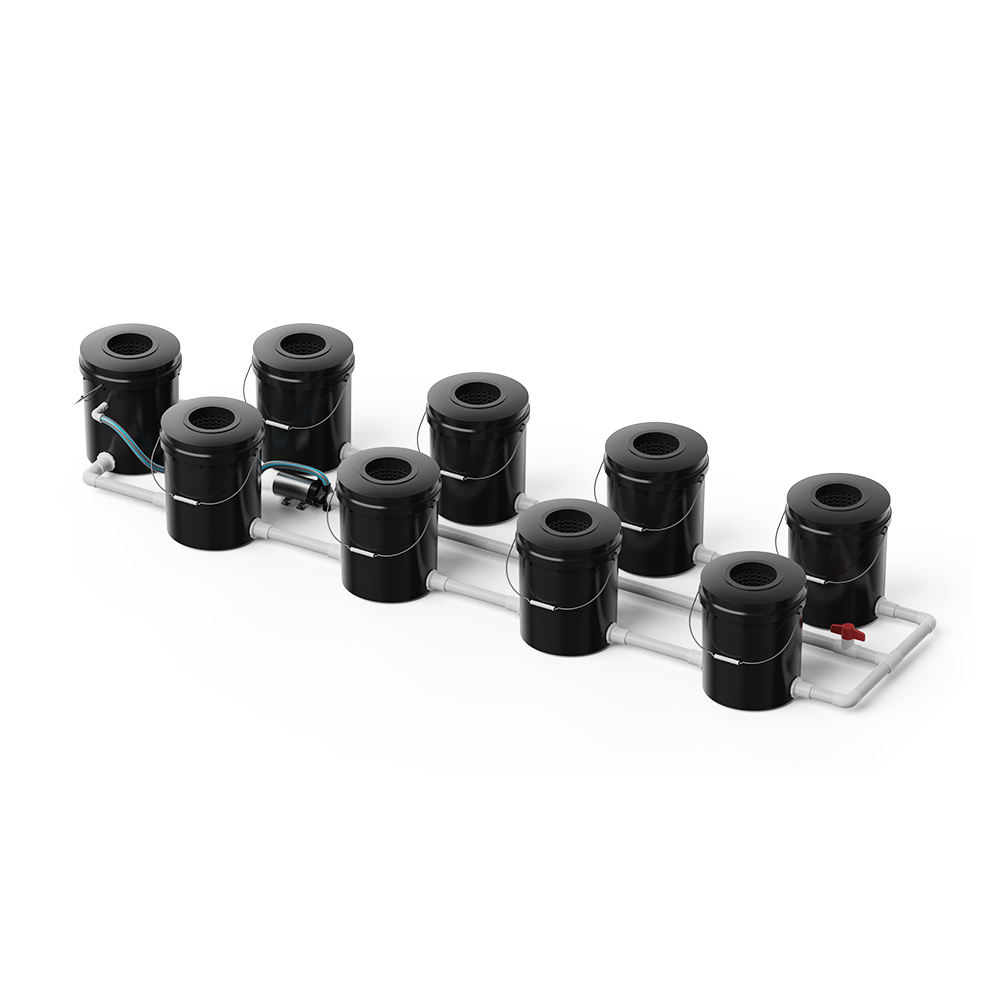
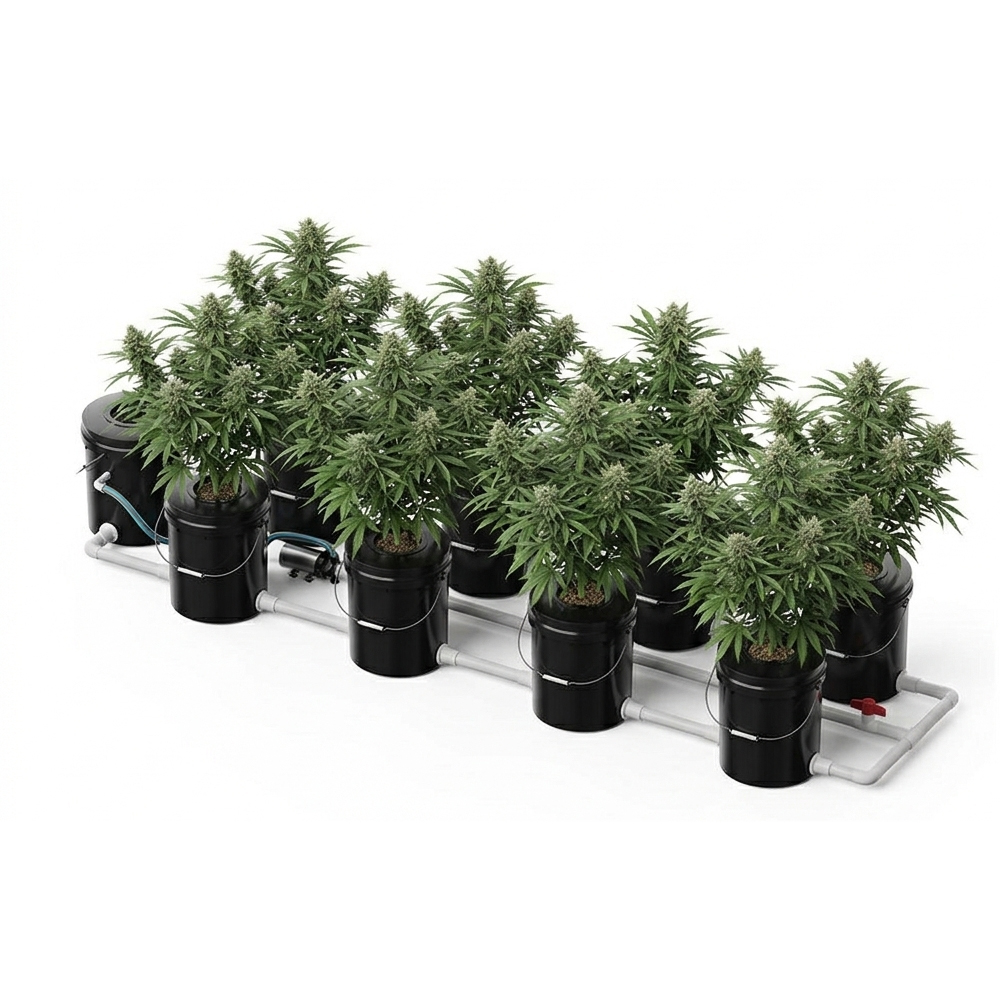
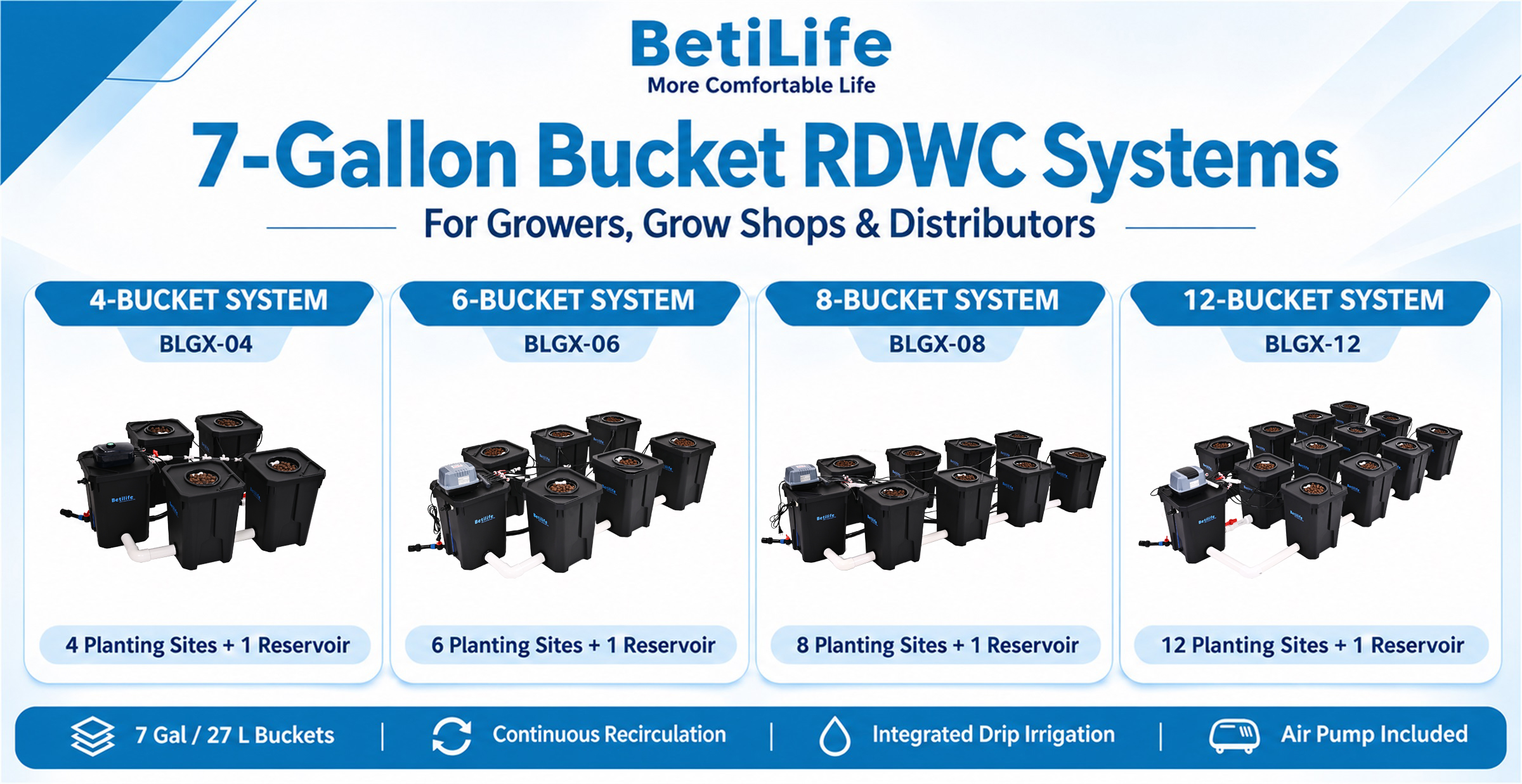
RDWC means recirculating deep water culture. BetiLife's standard line uses 7 US gallon planting buckets, approximately 27 liters each, with four choices of planting-site count. Each configuration includes one additional reservoir and an integrated drip irrigation function.
| Model and configuration | Retail reference | Possible purchasing role |
|---|---|---|
| BLGX-04 4 planting buckets + 1 reservoir |
$599 | A four-site customer requirement or a smaller-capacity evaluation. |
| BLGX-06 6 planting buckets + 1 reservoir |
$799 | Six-site retail demand, staff training, or a defined project. |
| BLGX-08 8 planting buckets + 1 reservoir |
$949 | An eight-site offer with suitable installation or display space. |
| BLGX-12 12 planting buckets + 1 reservoir |
$1,499 | A confirmed twelve-site customer order or project requirement. |
The prices provide a public retail reference for the range. Request current dealer, wholesale, or delivered pricing for your model quantities and destination before budgeting an order. Official product specifications and retail references.
For a store assessing six- or eight-site demand, BLGX-06 and BLGX-08 provide focused evaluation choices. A buyer with a confirmed four- or twelve-site requirement can request that model directly. Allow room for reservoir access, tubing, and maintenance when reviewing the layout. Compare the four BetiLife RDWC models.
The BLGX-12 also illustrates why order coordination matters at receiving. Its published packing specification includes Box A and Box B. Keep both carton references tied to one complete system through receiving, storage, and customer dispatch. BLGX-12 packing details.
Compare Delivered Cost and Shipping Responsibilities
Compare proposals for the same equipment, quantity, and delivery endpoint. A useful quotation identifies product charges, packaging requirements, freight scope, applicable import arrangements, and any delivery services that need separate confirmation. Record which party arranges each step and where risk transfers under the agreed trade term.
BetiLife offers single-system and wholesale DDP quotation options. Buyers with an established freight forwarder can also discuss suitable alternatives. Provide the destination country and postal code, receiving requirements, and target date so the proposed route and service can be reviewed. When a DDP quote makes sense for an RDWC order.
A supplier-coordinated delivery may reduce the amount of freight coordination your team handles. Your forwarder may offer a suitable route or consolidation opportunity. Compare both against the same delivered scope and include only charges that have yet to be accounted for. Confirm availability for the destination before promising a customer a delivery date.
Understand where Hong Kong's trade policies apply
Hong Kong is a free port and generally levies no customs tariffs on imports or exports, while maintaining customs controls and specific excise duties. Destination-country charges are a separate part of an overseas purchase. Ask for the goods' origin, classification, and applicable import arrangements when reviewing the delivered quote. Hong Kong Customs cargo-clearance guidance.
CEPA's goods provisions allow qualifying Hong Kong-origin goods to receive zero-tariff treatment on import into mainland China, subject to origin rules and required certification. For an RDWC shipment from Shenzhen to an overseas buyer, evaluate the actual destination's import requirements. CEPA trade-in-goods requirements.
Plan Repeat Orders Through Written Supply Terms
Predictability comes from an agreed purchasing plan. Ask how the supplier will handle model quantities, production lead time, shipment timing, and changes between orders. Record the quotation's expiry date and the conditions for any longer-term pricing commitment.
- Demand and timing. Provide expected quantities by model and your intended ordering schedule. Identify which quantities are forecasts and which are firm orders.
- Configuration changes. Agree on how proposed component substitutions or specification changes will be submitted for review.
- Packing and shipment. Confirm carton counts, labels, mixed-model feasibility, and the documents needed by your receiving team or forwarder.
- Commercial terms. Confirm currency, payment milestones, quote validity, lead-time assumptions, and any price-adjustment provisions for repeat supply.
Consider a planning example. A retailer evaluates one BLGX-06, then wants to order both six- and eight-site systems. The next quotation should identify the quantity of each SKU, the approved configurations, and the packing plan. The retailer can review the opening inventory commitment using actual delivered costs. How to read an RDWC wholesale price list.
Define Private Label and OEM/ODM Requirements Early
A distributor building its own hydroponic product line needs an approved version that sales staff, warehouse staff, and customers can identify. Begin with the intended market and standard model, then describe the requested deliverables. Branding, packaging, documentation, and equipment changes each need a defined scope.
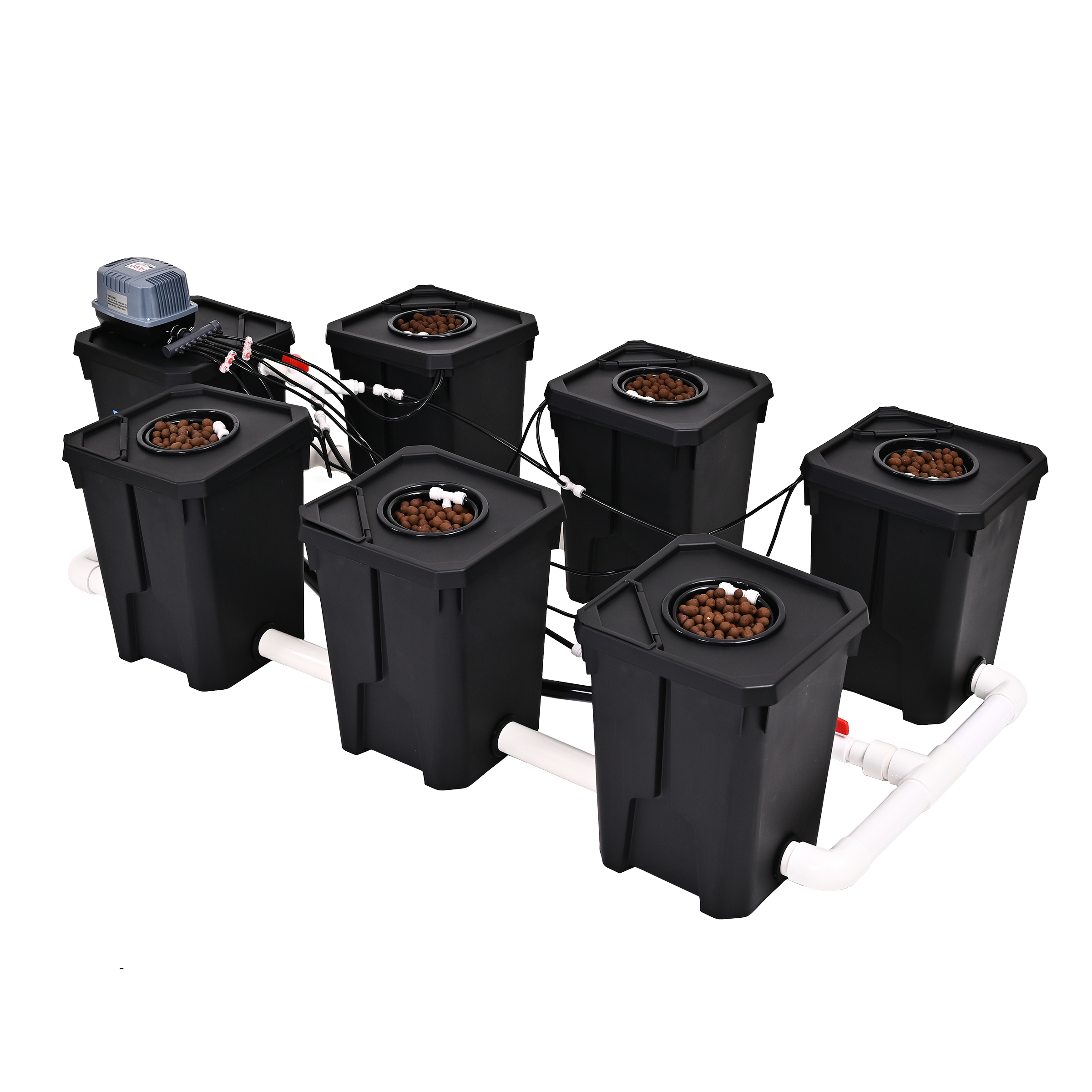
Specify where the brand will appear, which packaging and instructions are required, and whether the equipment configuration will change. Ask for feasibility, MOQ, sample requirements, one-time and recurring costs, lead time, and responsibility for support materials. Obtain separate technical review for proposed controls, sensors, or software changes.
Address ownership and permitted use of artwork, product images, designs, and any tooling in the agreement. Hong Kong trademark registration provides territorial protection, and mainland China has a separate registration system. Plan protection in the markets relevant to manufacture and sale. Hong Kong Intellectual Property Department guidance.
BetiLife accepts qualified OEM, ODM, and private-label inquiries based on the project requirements. Send the model, quantities, target market, and proposed changes for assessment. Plan a private-label RDWC product line.
Check Quality, Documentation, and After-Sales Support
Before approving an order, ask which product checks are included, which documents accompany it, and how staff will identify a replacement component. Match those requirements to your sales channel. A distributor handling several dealers needs a way to connect an issue to the original order and the affected SKU.
BetiLife's published policy describes pre-shipment inspection, installation guidance, troubleshooting, and replacement-parts support. Eligible components generally carry a one-year limited warranty from the applicable delivery date for confirmed material or manufacturing defects under normal and intended use. Check the terms applicable to your order, including the start date and responsibility for associated costs. BetiLife warranty and after-sales policy.
Make the support process part of purchasing review. Give your staff the order reference, current instructions, component identification method, and contact for escalation. For a case that requires a replacement or return, establish the approved remedy, shipping arrangements, and customer update. Retail buyers should include their expected service workload in the cost of carrying the line. Evaluate ROI and service costs in commercial RDWC systems.
If your purchasing policy includes environmental requirements, request evidence for the actual materials, packaging, or operating conditions being assessed. Quantified water-saving or carbon claims need a defined comparison and measurements. Use those records to decide which claims your own product listings can support.
Frequently Asked Questions
Where are BetiLife RDWC systems manufactured and shipped from?
BetiLife identifies qualified manufacturing partners in China, operations and quality-control coordination in Dongguan, and export through Shenzhen Port. Confirm the dispatch details for the specific order.
What should I verify when buying from a Hong Kong hydroponic supplier?
Verify the contracting party, ordered configuration, payment instructions, delivery scope, and after-sales responsibilities. Ask for matching quotation, packing, and shipping documents so each stage can be traced to the order.
How are import duties determined for an overseas order?
Have the supplier or your customs broker review the destination, goods' origin, classification, and applicable import rules. The quotation should identify responsibility for duties and taxes under the agreed delivery terms.
Can I use my own freight forwarder?
Share your forwarder's requirements with BetiLife and request a suitable quotation. Compare it with a supplier-coordinated delivery proposal using the same equipment, destination, and included services.
Can distributors request private-label RDWC systems?
Submit the target market, starting model, quantity, and requested branding or configuration changes. Feasibility, samples, MOQ, rights, costs, and support responsibilities are reviewed for the project.
How can I plan repeat orders and pricing?
Provide a forecast by model and agree on order timing, quote validity, production lead time, and change approval. Where a longer-term supply arrangement is proposed, document its quantity commitments and pricing conditions.
Request an RDWC Quote for Your Market
Tell BetiLife how the systems will be used, which models you need, the quantity of each, and the destination country and postal code. Add your target receiving date and freight-forwarder preference. This gives the team a practical starting point for reviewing product, packing, delivery, and support requirements.
A store evaluating a new RDWC category can identify the model most relevant to its customers. Buyers with a defined inventory or project requirement can request the corresponding quantity directly.
We are a [grow shop / distributor / commercial grower] in [country]. Please quote [quantity] BetiLife [model] systems for [evaluation / resale / project use], delivered to [city and postal code].
Our target receiving date is [date]. We [have / do not have] our own freight forwarder. Please include the product configuration, packing details, delivery scope, quote validity, estimated lead time, and after-sales terms.
Request an RDWC Quote for Your Market
For U.S. grow shops and distributors, review the BetiLife RDWC wholesale options.