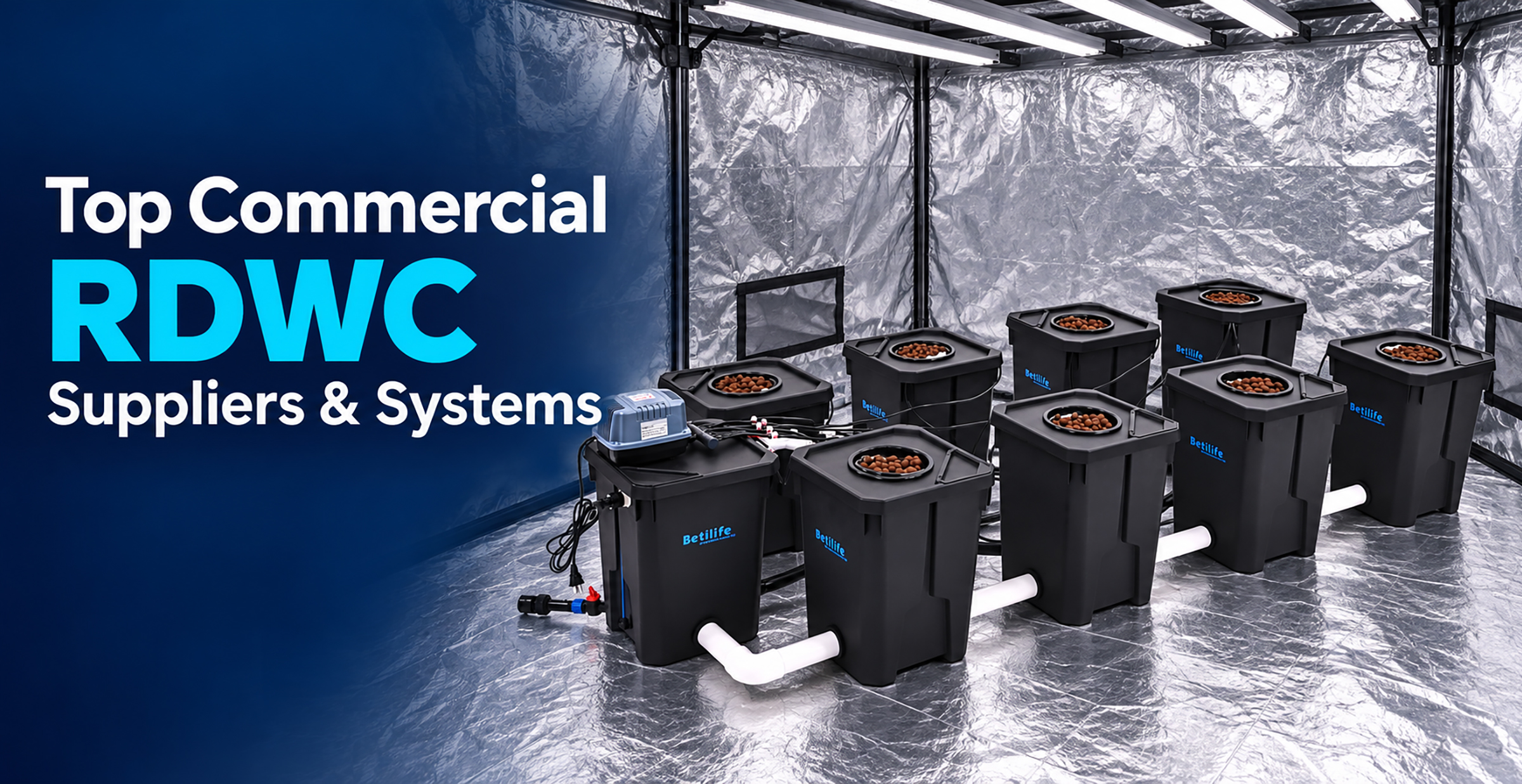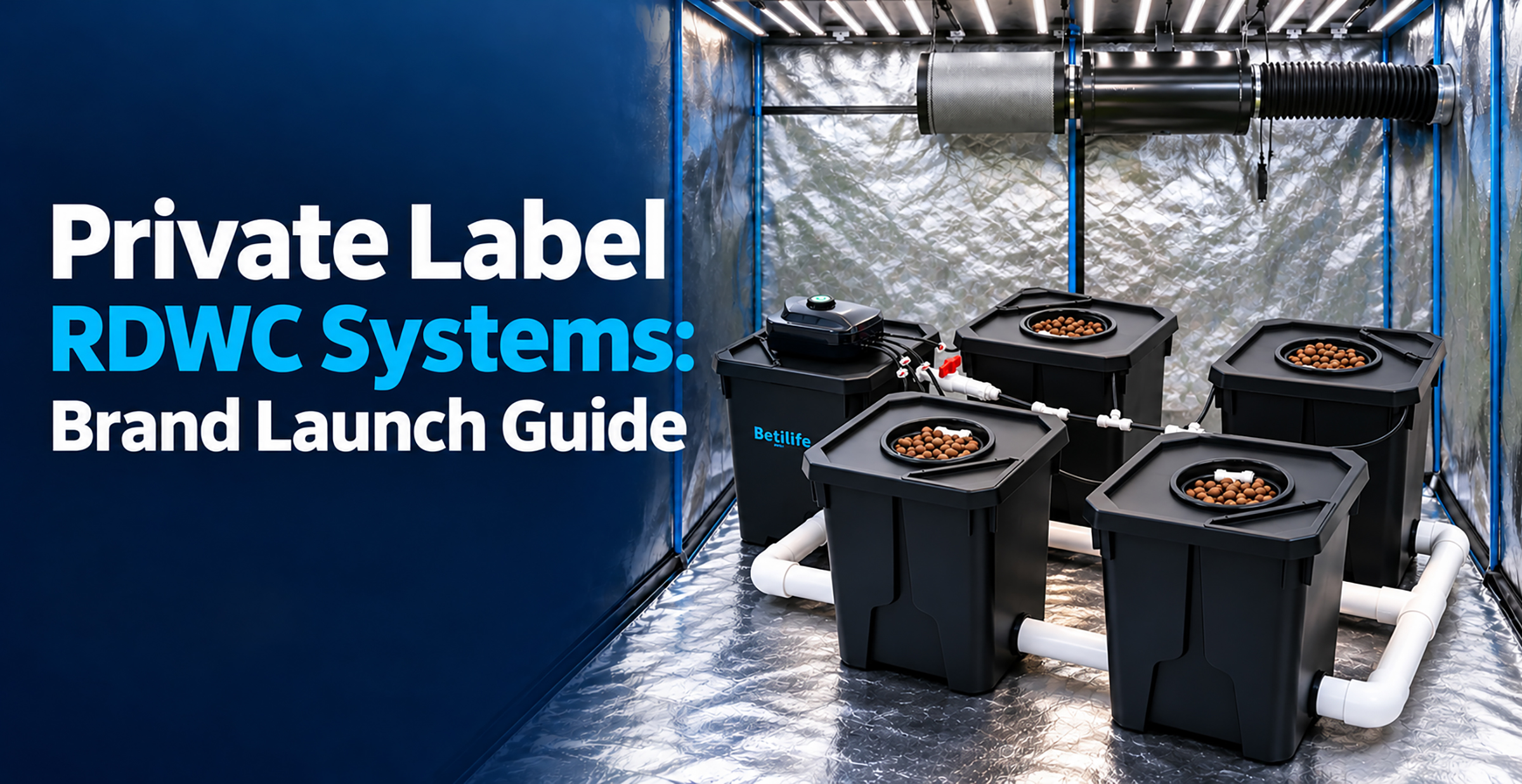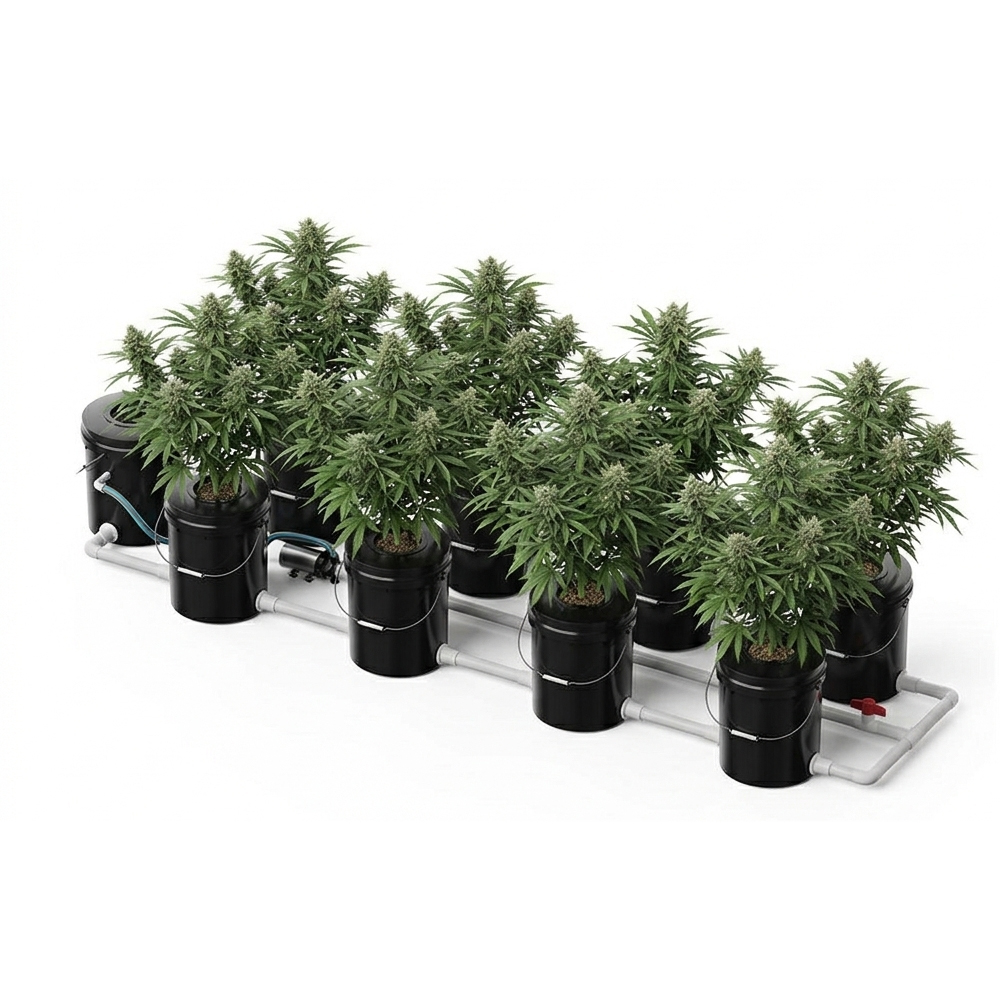
To evaluate ROI in commercial RDWC systems, start with a defined business use, a comparable delivered quotation, and realistic cash-flow assumptions. Growers should compare incremental operating results with their current setup or next-best alternative. Grow shops should evaluate contribution per sale, inventory exposure, and support costs. Bucket count and purchase price alone do not establish a return.
RDWC means recirculating deep water culture. Choosing this equipment is a purchasing decision and an operating commitment. This guide shows how to assess both, using BetiLife's four 7-gallon models as a product-selection example.
By BetiLife · Public product and price references reviewed . This supplier-published guide provides general business-planning information, not personalized financial advice or an earnings forecast.

1. Define What ROI Means for Your Business
Return on investment needs a defined investment, measurement period, and calculation method. A retailer's gross margin on one sale is not the same as a grower's project return. Neither tells you, by itself, when the cash invested will be recovered.
Commercial growers: compare the change in your operation
Specify whether you are replacing equipment, adding capacity, or building a new operation. For a retrofit, compare the proposed system with the existing arrangement. For a new project, assess the complete required setup against a realistic alternative, including not proceeding.
Do not credit the RDWC purchase with all future crop revenue. Identify the revenue and costs that change because of the decision. Iowa State University Extension's partial budgeting guide organizes this comparison around added income, reduced costs, added costs, and reduced income. Its framework is useful for identifying changes; a cash-flow model must also account for when money moves.
Start with a feasible layout. Equipment that does not leave adequate operating access is not made suitable by an attractive forecast. See how to choose the right commercial RDWC system.
Grow shops and distributors: compare the category's economics
For resale, evaluate the money earned on completed orders, the costs of serving those orders, and the capital tied up before customers pay. Decide whether you are assessing a display unit, opening inventory, replenishment, or a specific customer order. These purchases serve different purposes and should not share an assumed return.
2. Build the Full Cost Picture Before Estimating Returns
A system quotation is one input to the investment budget. Keep initial spending, recurring costs, and working capital separate so that an expense is neither omitted nor counted twice.
Initial investment and working capital
- Equipment: the confirmed system configuration and necessary options.
- Delivery and receiving: costs outside the agreed quotation, assessed to the same receiving point.
- Setup: installation, commissioning, training, and required site preparation.
- Supporting equipment: items the project actually needs and does not already have.
- Working capital: cash tied up in supplies, inventory, or receivables before related cash is collected.
A complete RDWC system is not a complete grow room. Confirm the bill of materials before budgeting additional pumps, monitoring equipment, lighting, or temperature-management equipment. Our complete RDWC system versus DIY parts kit guide explains why component scope and assembly responsibilities matter.
Use an order-specific price. A public retail listing, dealer quotation, and delivered total are different inputs. See how to read an RDWC wholesale price list.
Recurring operating and support costs
Budget applicable electricity, monitoring, cleaning, consumables, maintenance labor, and replacement parts. Retailers should also consider handling, customer support, and returns. Use records or documented estimates, not a generic percentage described as an industry average.
Electricity cost = power in kilowatts × operating hours × electricity rate.
Use measured consumption where possible and account for equipment duty cycles. Compare the change in electricity use between alternatives, rather than attributing every existing facility expense to the new system.
BetiLife offers single-system and wholesale DDP quotation options. Buyers with an established freight forwarder can compare suitable alternatives. Match the equipment and delivery endpoint, and do not add charges already included in the quote. Our RDWC DDP quotation guide covers delivery-scope questions.
Total cost of ownership helps compare acquisition and ongoing costs over a stated period. It is not ROI: a return calculation also needs the resulting cash benefits.
3. Estimate Grower ROI Using Incremental Cash Flow
Build a dated cash-flow schedule for the change you are considering. Include initial investment, subsequent operating receipts and payments, later equipment spending, and any supportable terminal proceeds. Keep the comparison period consistent across alternatives.
Use measurable benefits
Support revenue assumptions with your own market, operating records, and realistic saleable output. Do not insert a universal yield increase, selling-price premium, or loss-reduction percentage merely because the equipment is RDWC.
Time savings need similar care. Saving staff hours creates a cash benefit only when it reduces actual spending or supports additional, measurable contribution. Otherwise, record the freed capacity as an operational benefit separately. Unpaid owner time still matters economically even when it is not a cash payment.
Calculate payback and define the return period
Simple payback = initial incremental investment ÷ stable annual incremental net operating cash flow.
Use this shortcut only for positive, roughly constant annual cash flows. For uneven receipts, payments, or later capital spending, accumulate the dated net cash flows instead.
For this guide, a simplified, undiscounted return over a stated period is:
Period return = (total incremental net cash flows after the initial investment − initial investment) ÷ initial investment × 100%.
Include later investments and changes in working capital in those subsequent net flows. Include terminal resale proceeds or working-capital recovery only when supported. Do not describe the resulting percentage as an annualized return.
Payback does not measure benefits after recovery or the time value of money. For longer projects, consider a discounted cash-flow assessment such as net present value with an appropriate required return. See Iowa State University Extension's capital budgeting guidance.
A hypothetical calculation
Assume an initial investment of $6,000 and annual incremental net operating cash flow of $2,400 for three years. These inputs are invented for arithmetic instruction, not associated with a BetiLife model.
- Simple payback: $6,000 ÷ $2,400 = 2.5 years, assuming cash accrues evenly within each year.
- Three-year cumulative operating cash flow: $2,400 × 3 = $7,200.
- Three-year undiscounted return: ($7,200 − $6,000) ÷ $6,000 = 20%.
This example is pre-tax and unlevered, with no later investment, terminal value, or working-capital recovery. If cash arrives only at each year-end, the investment is recovered when the third year's payment arrives. It is not a quotation, customer case study, or earnings forecast.
Do not deduct depreciation as another cash payment after recording the equipment purchase. Taxes and financing need consistent treatment in a separate, appropriately constructed model; loan proceeds are not operating income. Have your accountant review a material investment decision.
4. Evaluate RDWC Returns for Grow Shops and Distributors
For a hydroponic retailer, start with the economics of a completed sale, then assess the inventory and launch investment needed to generate those sales.
Calculate contribution per system sold
Contribution per sale = net sales revenue − landed product cost − variable selling and support costs.
Use revenue after discounts and refunds, excluding sales tax collected for the authorities. Match related delivery revenue and costs consistently. Include relevant payment fees, fulfillment, order-specific labor, and expected support or return costs without double-counting items already netted from revenue.
For illustration only, a generic equipment sale with $1,000 in net revenue, $700 in landed product cost, and $100 in variable selling and support costs contributes $200. That is not net profit: fixed payroll, rent, and other overhead remain. These are not BetiLife prices or dealer terms.
A wholesale discount does not establish a margin. Neither an advertised price nor an assumed resale price proves what your shop will collect.
Separate launch-cost recovery from whole-business break-even
Units to recover fixed launch costs = fixed launch costs ÷ positive contribution per unit.
If a hypothetical launch costs $1,000 and each sale contributes $200, five sales recover those specified costs. This does not establish whole-store profitability. Include all relevant fixed costs for a full break-even calculation; use a supportable sales mix when model contributions differ. The U.S. Small Business Administration explains the break-even approach.
Track inventory and cash timing
Record how long stock remains unsold, when suppliers must be paid, and when customer money is received. In a cash-flow model, do not subtract both the inventory purchase payment and the same goods' cost of sales as separate cash outflows. Maintain a clear distinction between the contribution calculation and the cash schedule.
A display unit, stocked model, and special-order offer can serve different roles. You do not need equal inventory across every capacity. See where RDWC fits in a grow shop's product assortment.
Helpful selection advice and clearly scoped support can differentiate the offer, but they must be costed. Read how grow shops can add RDWC without competing only on price.
5. Compare BetiLife's Four 7-Gallon Models in the Right Context
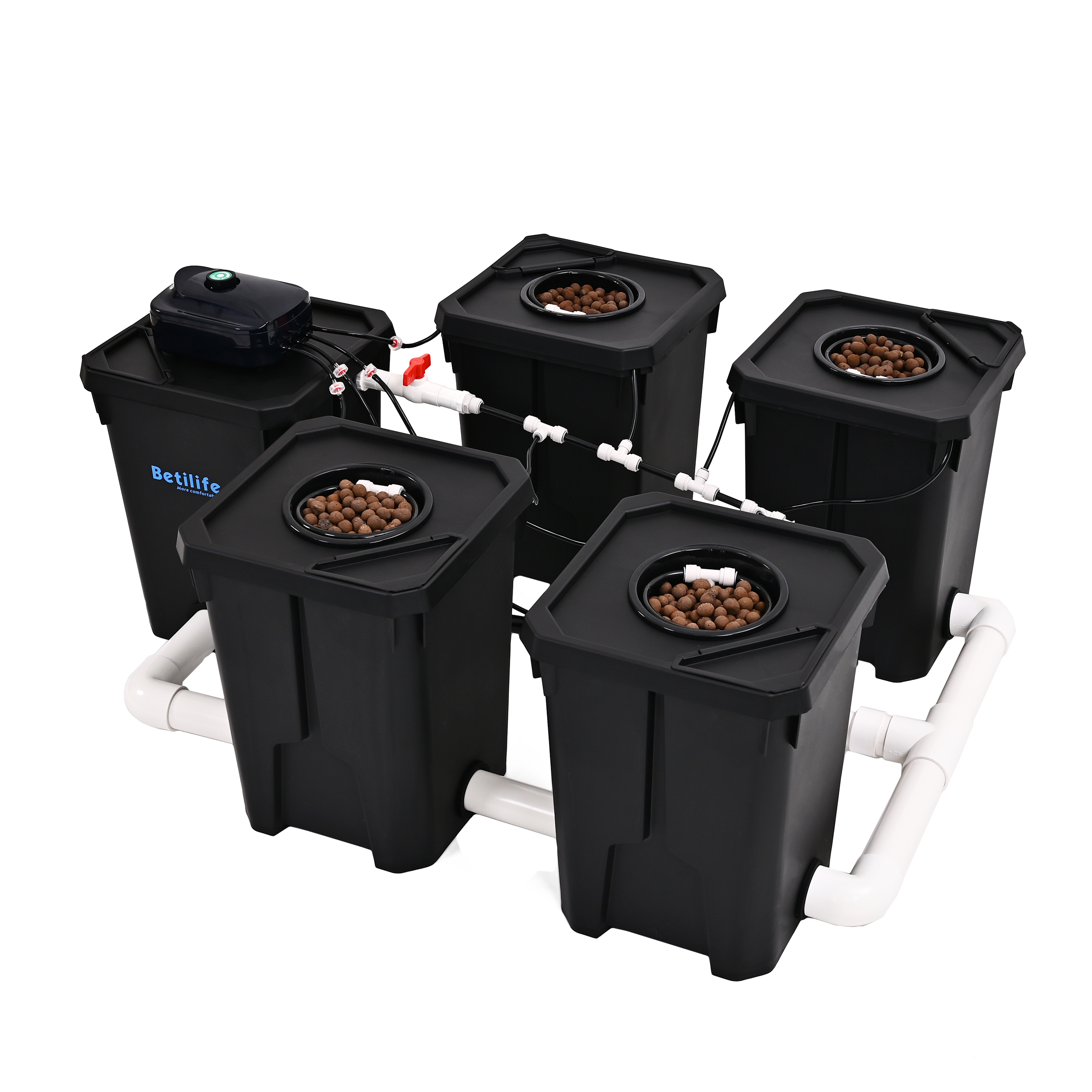
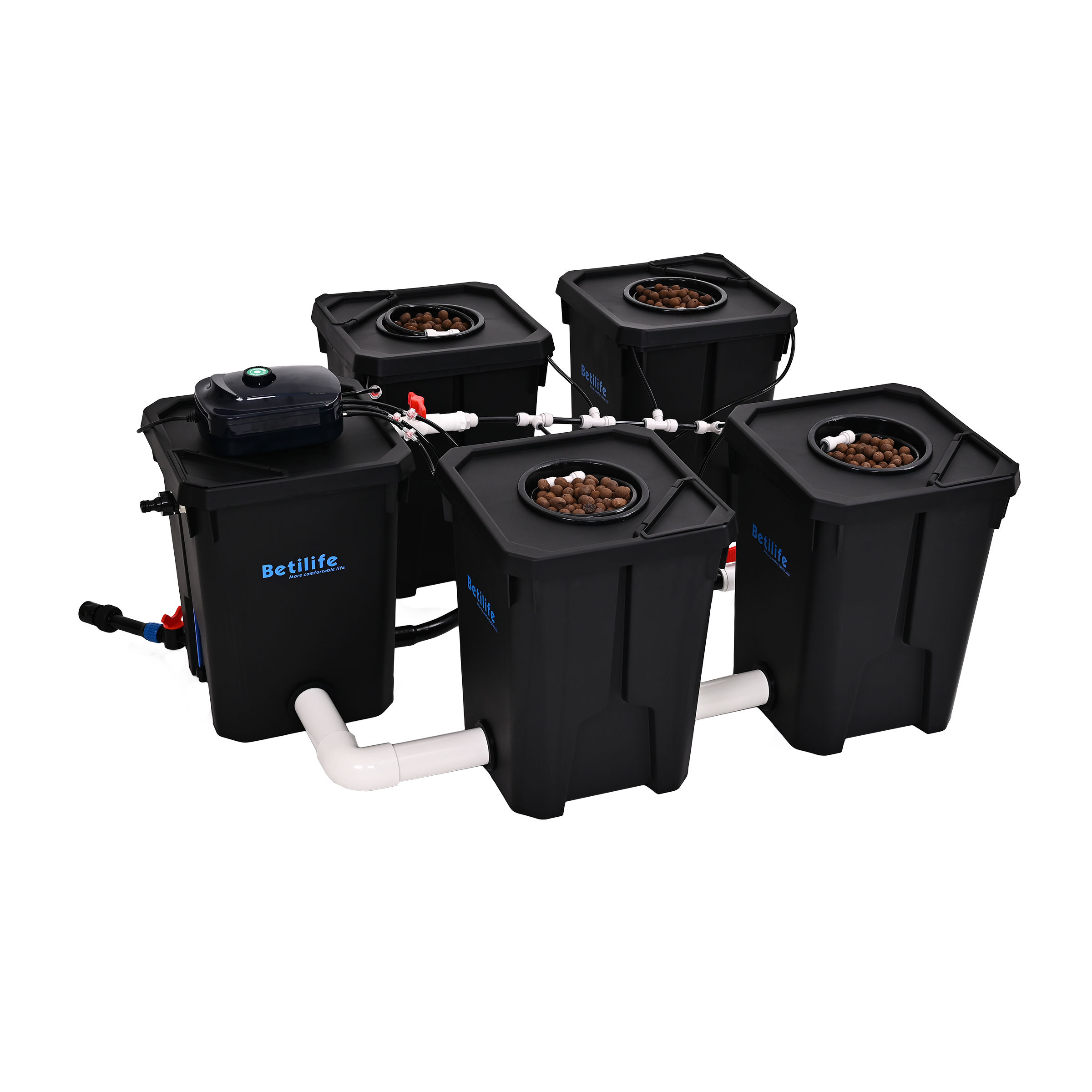
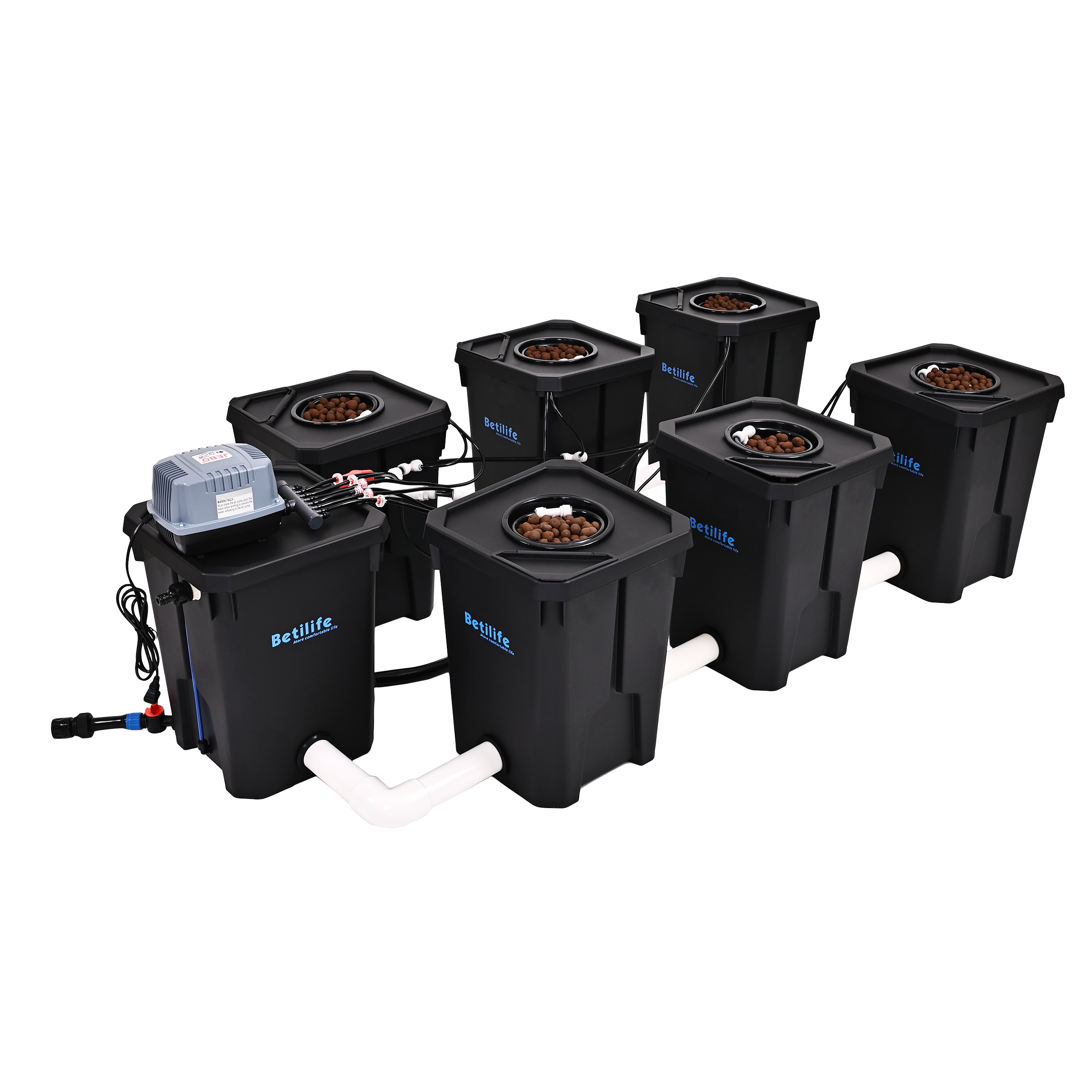
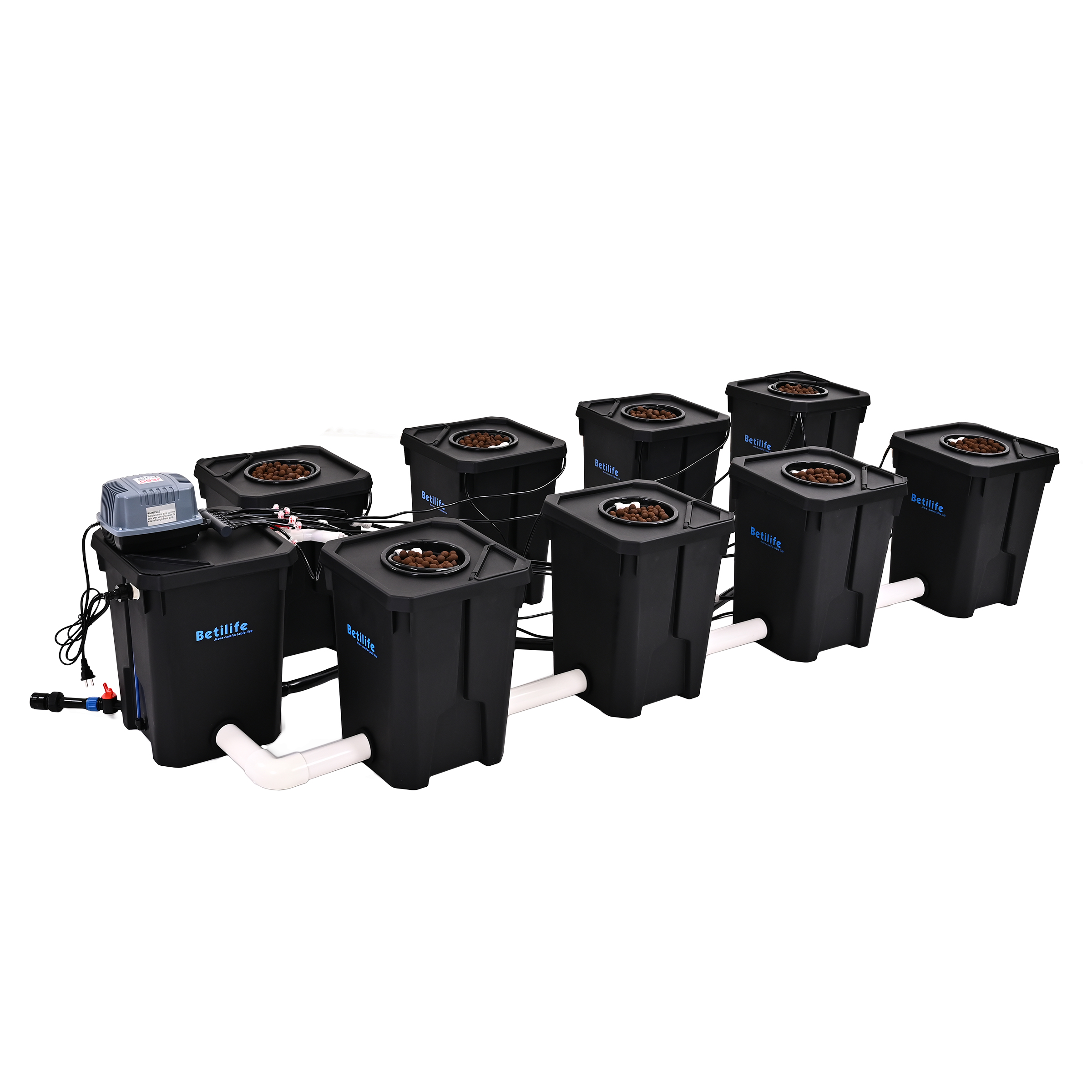
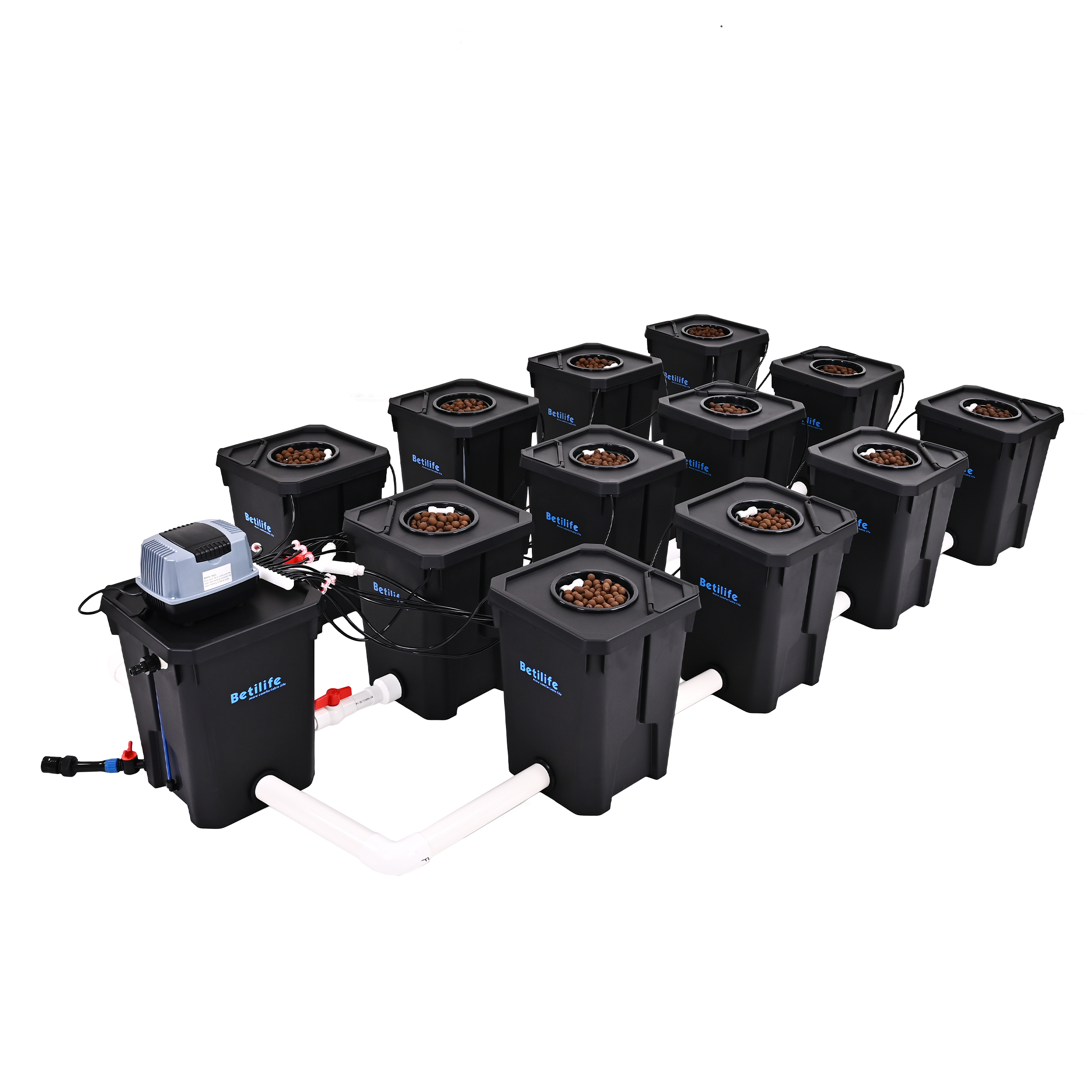
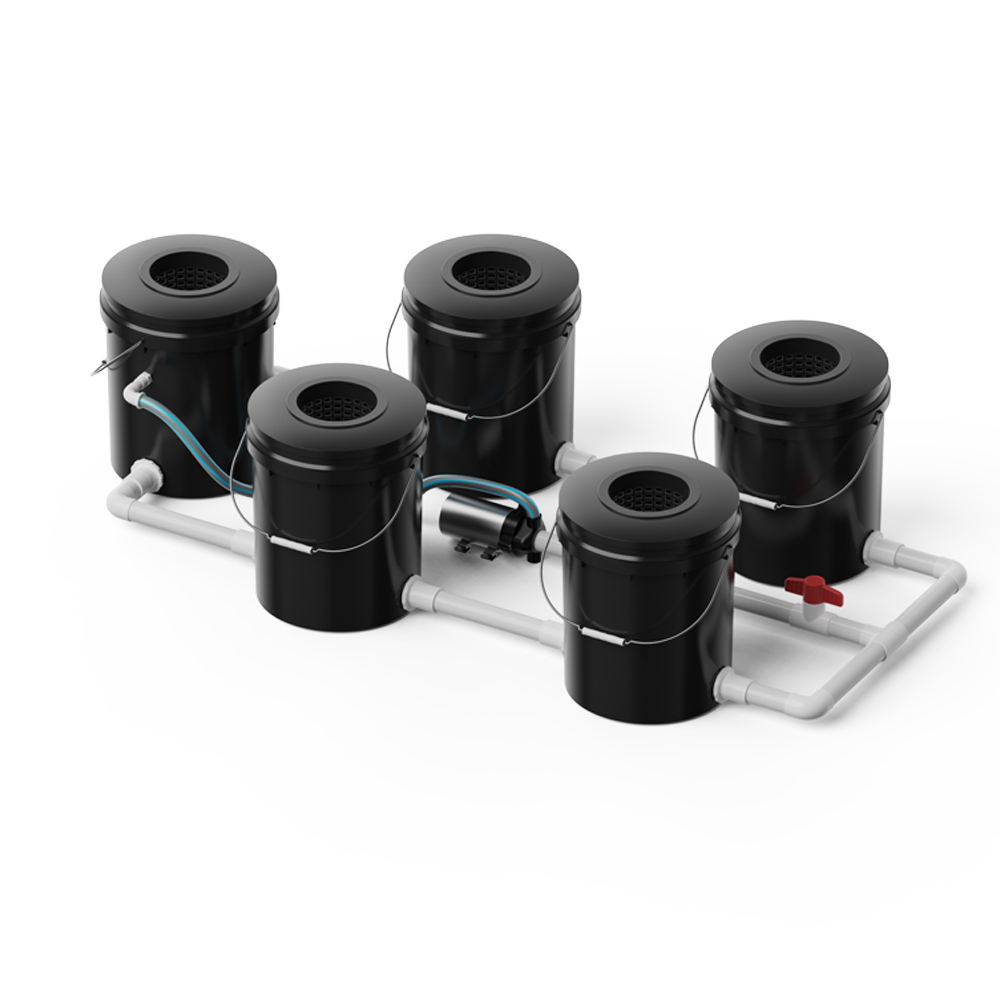
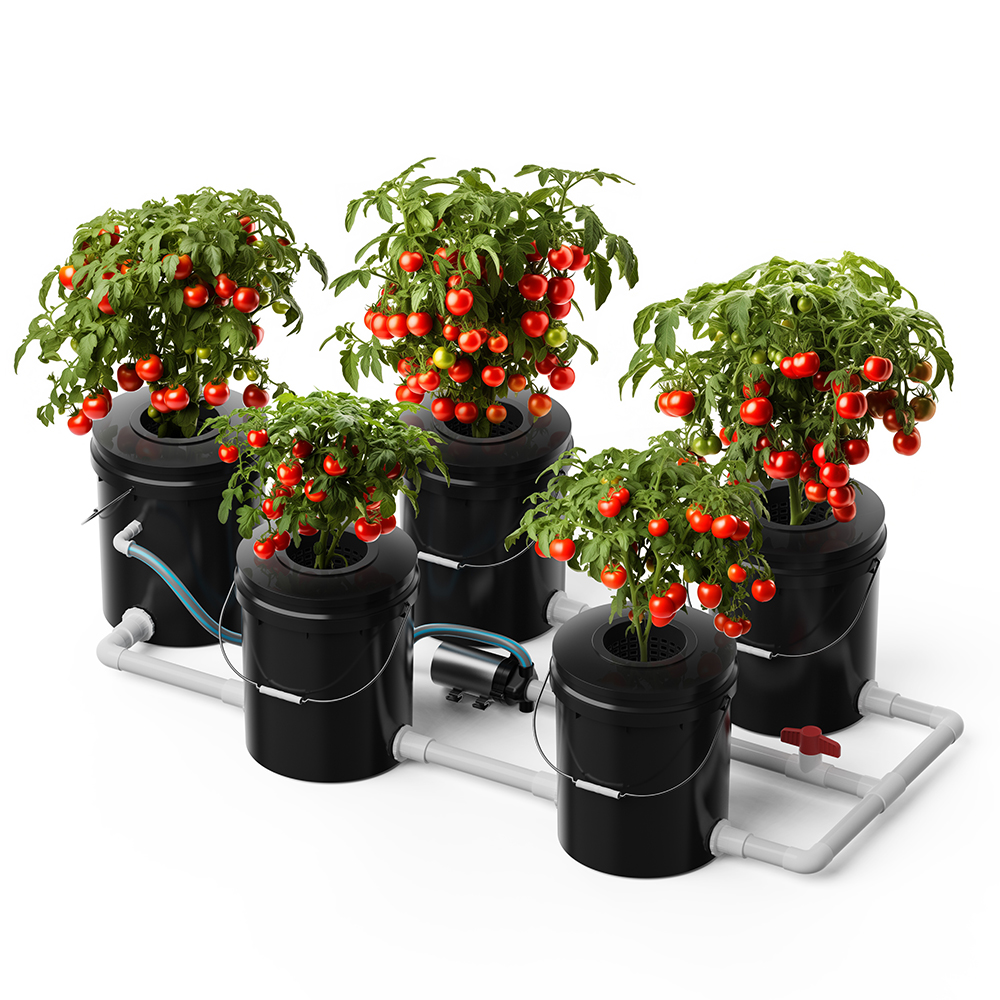
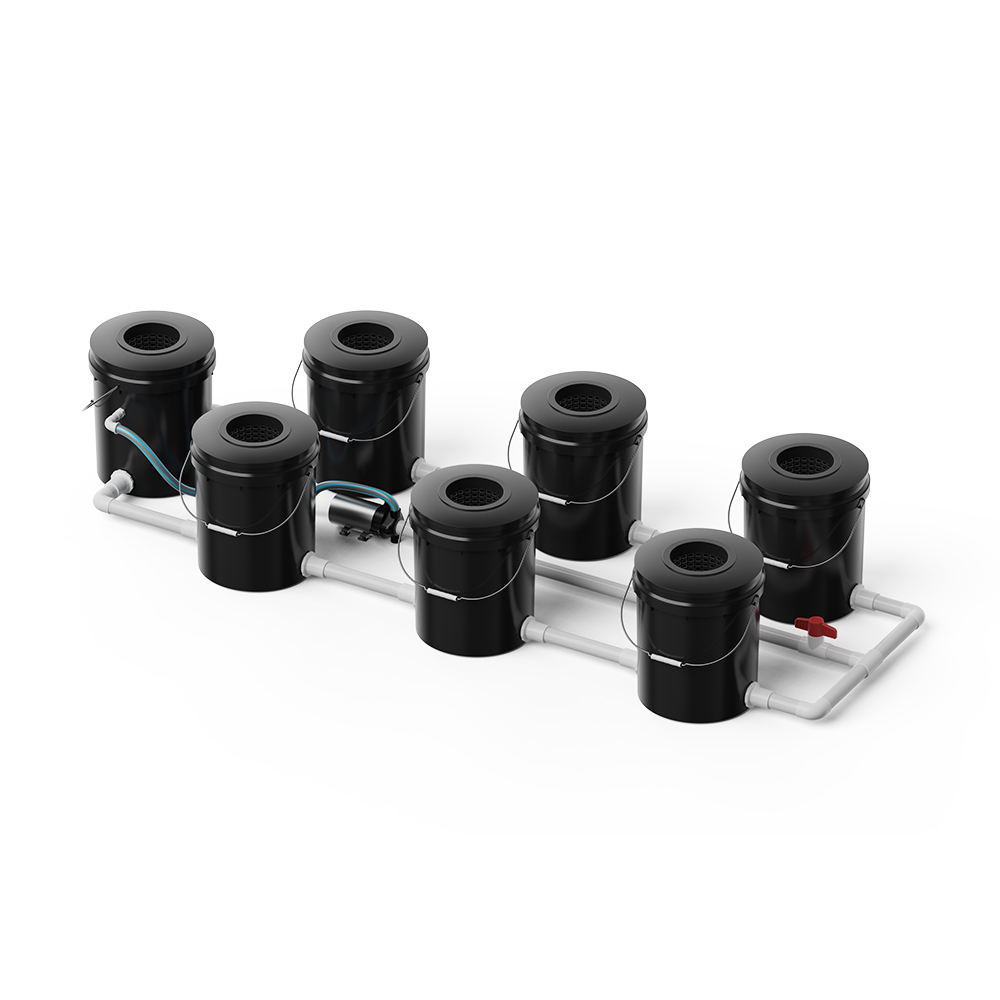
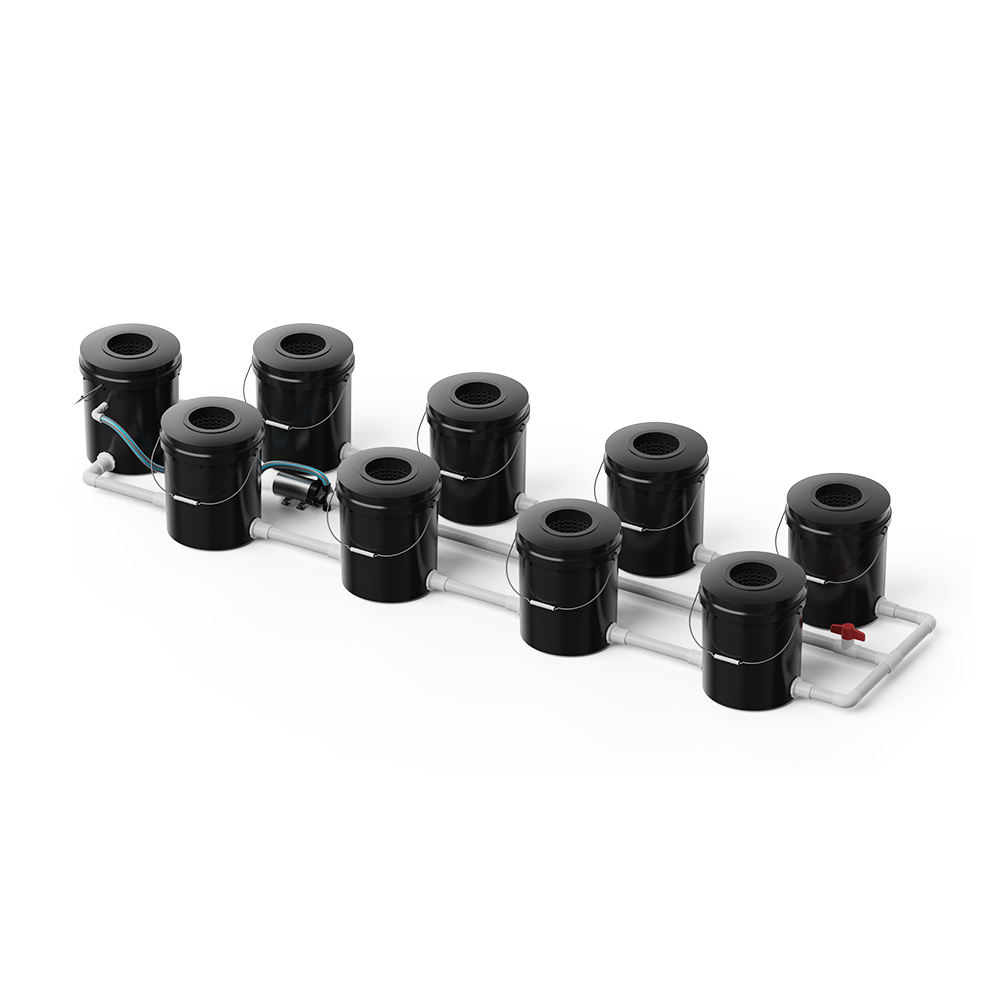
BetiLife's standard line includes BLGX-04, BLGX-06, BLGX-08, and BLGX-12, with four, six, eight, and twelve planting buckets respectively. Each has one additional reservoir and an integrated drip irrigation function. The nominal 7-gallon size is approximately 27 liters per bucket, not the system's operating fill volume.
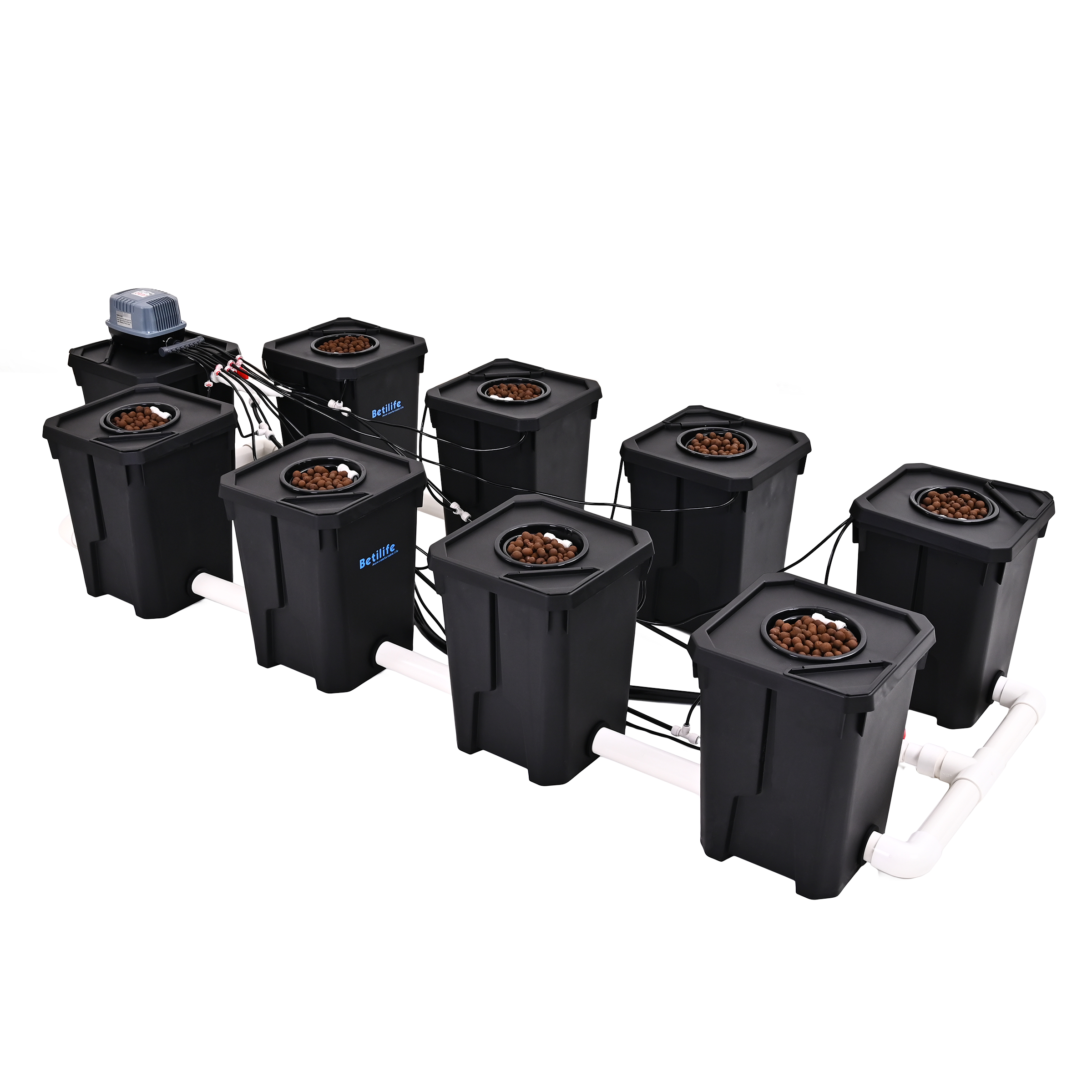
| Model / planting sites | Retail reference | Reference per site |
|---|---|---|
| BLGX-04 / 4 sites | $599 | $149.75 |
| BLGX-06 / 6 sites | $799 | $133.17 |
| BLGX-08 / 8 sites | $949 | $118.63 |
| BLGX-12 / 12 sites | $1,499 | $124.92 |
Source: BetiLife's 7-gallon collection. Per-site figures divide the system reference by planting-site count and round to cents. The reservoir is excluded. Prices can change; request current order-specific terms.
At these references, BLGX-04 has the lowest single-system price and BLGX-08 the lowest price per planting site. Neither result establishes the highest ROI. A wholesale quote may also change the comparison.
- BLGX-04: consider it when four-site use or a smaller-capacity demonstration matches the requirement.
- BLGX-06: evaluate it against actual six-site demand and available installation or display space.
- BLGX-08: assess whether all eight sites, or the corresponding resale offer, have a practical use.
- BLGX-12: confirm a twelve-site requirement and the resources to receive, install, and support it.
These are planning questions, not sales rankings. Unused capacity has no automatic revenue value. For dimensions and layout choices, use the 4-, 6-, 8-, and 12-bucket RDWC comparison.
6. Test the Assumptions That Can Change the Result
Build conservative, base, and upside scenarios from plausible inputs. Keep equipment scope and measurement periods consistent. A scenario is a planning exercise, not a prediction or an assigned probability.
- Growers: test a delayed start, lower cash receipts, higher utility or maintenance costs, and unplanned downtime.
- Retailers: test slower sales, a lower realized selling price, higher support costs, and longer inventory holding.
- Both: identify how much cash is needed before receipts cover payments, not just the eventual projected return.
In the earlier $6,000 illustration, reducing annual net cash flow from $2,400 to $1,200 doubles simple payback from 2.5 to five years, assuming those flows persist. Over the original three-year horizon, the undiscounted return becomes negative 40%. The equipment price has not changed; the operating assumption has.
Include sanitation and maintenance work in the budget. Do not invent a disease-loss probability or assume a specific system eliminates crop risk. If an interruption reduces receipts and adds repair spending, record those distinct effects once.
If the investment only works under optimistic assumptions, identify what must be validated before committing more capital.
7. Validate the Business Case Before Scaling
An evaluation should answer specific uncertainties, with a review period that matches the operating or sales cycle.
- Document the baseline. Keep the current cost, labor, sales, and purchasing records relevant to the comparison.
- Define the test. Identify the model, scope, delivery arrangement, and questions to resolve.
- Record actual results. Growers can log setup hours, consumption, maintenance, and operating cash flows. Retailers can track qualified inquiries, completed orders, contribution, support time, and stock movement.
- Reconcile differences. Explain where actual costs or receipts departed from the estimate before changing the purchasing plan.
- Choose the next step. Proceed, adjust the configuration, retain a quote-based offer, or defer expansion.
A short equipment check cannot establish long-term financial performance. Conversely, buyers who already have a defined model, quantity, and purchasing requirement can request a formal quotation directly. An evaluation order is an option, not an automatic prerequisite.
8. Request a Quote That Supports an ROI Comparison
Give BetiLife the business use, model quantities, destination ZIP code, receiving requirements, and target timing. State whether you want DDP delivery or an appropriate alternative using your freight forwarder.
Ask the quote to identify the equipment list, electrical configuration, exclusions, delivery scope, payment terms, validity, estimated lead time, and written warranty and replacement-part arrangements. These details make the investment inputs usable.
Please quote [quantity] complete BetiLife [model] RDWC systems for [our growing project / resale inventory / evaluation], delivered to [city, state, ZIP code, country]. Our target receiving date is [date]. Please include the equipment contents, delivery scope, quote validity, payment terms, estimated lead time, and warranty and replacement-part arrangements. We [have / do not have] our own freight forwarder.
Request a Delivered Quote for Your ROI Comparison
Compare BetiLife's Four 7-Gallon Models · Email Your Requirements
Frequently Asked Questions About Commercial RDWC ROI
How do you calculate ROI for a commercial RDWC system?
Define the alternative, initial investment, subsequent incremental cash flows, and evaluation period. State the calculation method and assumptions. Do not divide total crop revenue by the equipment price and call the result ROI.
What costs should be included beyond the system price?
Include applicable delivery, receiving, setup, necessary accessories, working capital, and ongoing operation or sales-support costs. Confirm the quotation's contents first so included charges are not counted again.
Is the lowest price per planting site the best investment?
No. It is one acquisition-cost measure. Usable capacity, installation requirements, operating workload, customer demand, and the actual delivered quotation determine whether that configuration fits the business.
How is RDWC ROI different for growers and retailers?
Growers assess changes in operating cash flows. Retailers assess sales contribution, category launch spending, inventory, and cash timing. A retailer's product margin is not a grower's project return or a complete category ROI.
Does DDP pricing automatically improve ROI?
No. Compare total costs and responsibilities for the same order and destination. Supplier-coordinated delivery may fit one buyer, while an established forwarder may suit another. Neither arrangement guarantees savings.
Should a grow shop stock all four BetiLife models?
No. Select stock depth from observed demand, cash availability, space, and replenishment conditions. Offering other models by confirmed customer order may be appropriate, with fulfillment arrangements agreed separately.
Can maintenance and sanitation affect the business case?
Yes. They require time, supplies, and a workable routine. Budget these activities and assess interruption scenarios without assuming a particular bucket count or product guarantees disease prevention.
Can BetiLife guarantee a specific payback period?
No specific payback is promised in this guide. BetiLife can provide product and quotation inputs; results depend on the buyer's actual costs, sales, operating performance, and timing.
Make the RDWC Investment Case Specific
A useful commercial RDWC ROI analysis connects a defined requirement with a complete cost budget and realistic cash flows. Compare the configuration your business needs, test the assumptions, and update the forecast with actual results. The next step is an order-specific quote that supports that decision.
Methodology references are linked beside the relevant discussion: Iowa State University Extension for incremental budgeting and capital investment analysis, and the U.S. Small Business Administration for break-even analysis. These sources do not validate BetiLife product performance or the hypothetical examples. Confirm current product specifications and commercial terms before ordering.