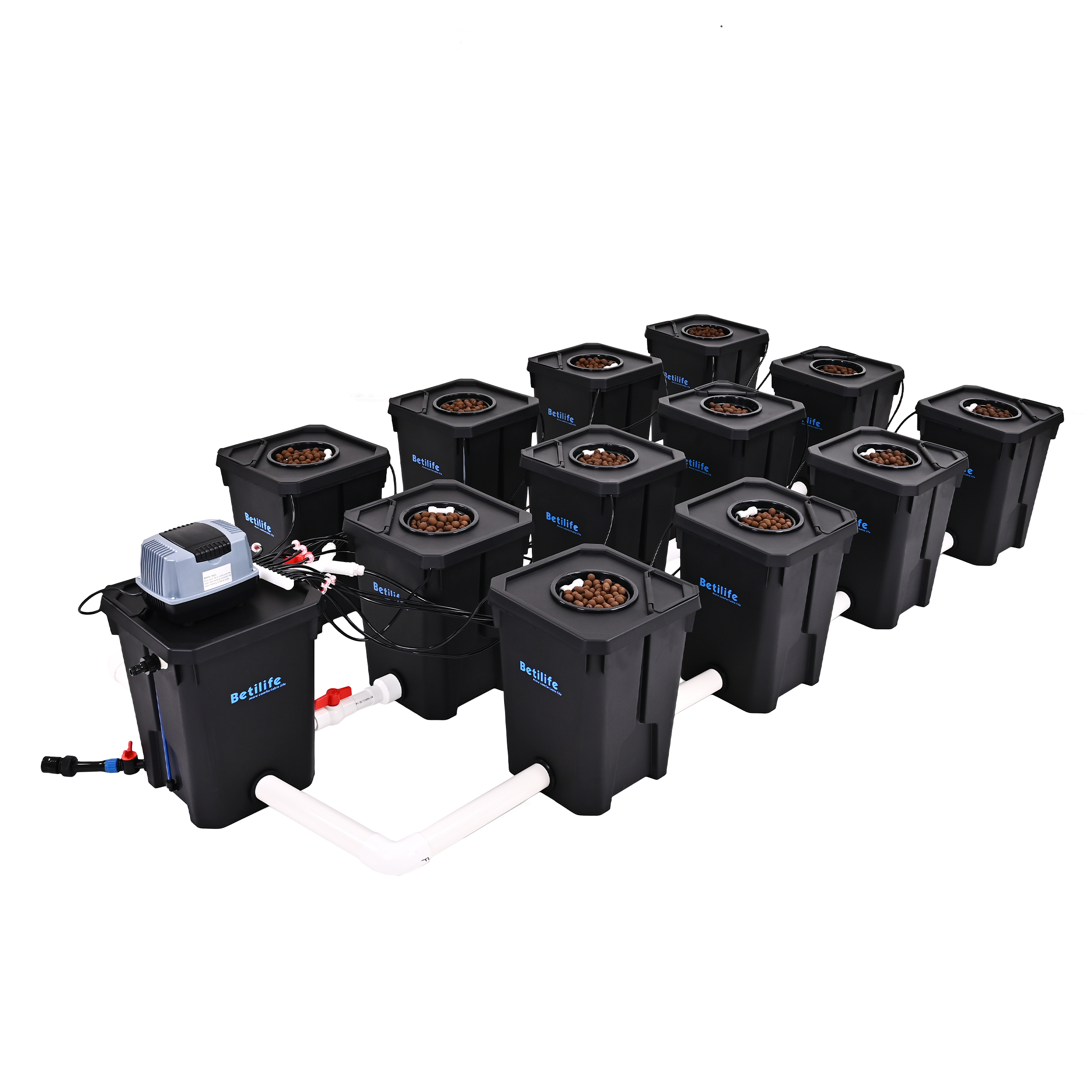
To help prevent pathogens in RDWC systems, limit contamination at entry points, reduce cross-contamination, monitor equipment and root-zone conditions, and follow a documented cleaning and maintenance plan. Shared water makes these responsibilities system-wide. No bucket size, treatment product, or equipment layout guarantees a pathogen-free crop.
For commercial growers, the question is whether the operation can carry out that plan consistently. For grow shops and hydroponic retailers, it is whether customers understand the equipment, its maintenance requirements, and the support available after purchase. This guide connects RDWC disease prevention with those practical purchasing decisions.

This supplier-published guide discusses general hydroponic crop management and equipment selection. It is not a diagnosis, treatment prescription, or claim that BetiLife equipment prevents infection.
1. Why Shared Water Changes RDWC Disease Risk
RDWC stands for recirculating deep water culture. Plant roots extend into nutrient solution, and connected containers exchange water with a reservoir. This arrangement supports centralized solution management instead of treating every container as an independent reservoir. It does not mean that someone must manually dilute and rebalance the solution after every pass. See the University of Minnesota Extension overview of hydroponic systems.
That connection also matters when contamination enters the water. Penn State Extension identifies water as a route for plant pathogens including Pythium and Phytophthora, and discusses plant material, tools, and other contamination sources. A shared circuit can therefore expose more than one plant to a problem introduced at one location. See Sources of Plant Disease in Nurseries.
Exposure is not the same as confirmed infection or inevitable crop loss. The organism, crop, operating conditions, and response all matter. A purchasing guide should not promise that an infection will reach every plant within a fixed number of hours, or that dividing equipment into a certain number of groups will cap losses at a particular percentage.
The practical question is: what shares water, and what else connects those areas? Ask about the actual water circuit, shared tools, receiving practices, and maintenance routines. Counting buckets alone does not answer that question.
2. Root Stress and Root Disease Are Not the Same
Changes in root appearance, wilting, or uneven growth deserve investigation, but they do not identify a pathogen by themselves. Colorado State University notes that several hydroponic root diseases produce similar symptoms and that a trained diagnostician may be needed to identify the cause. See its guide to root disease problems in hydroponic systems.
Collect evidence before drawing conclusions
Useful records include when a change was first noticed, where it appeared, whether it is spreading, and whether equipment alarms or other operating changes occurred at the same time. Photos can document progression, but a photo is not a laboratory test. Keep observations separate from assumptions in support requests.
USDA Agricultural Research Service summarizes a peer-reviewed diagnostic guide specifically addressing Pythium root rot in hydroponic leafy greens and herbs. It emphasizes the difficulty and importance of accurate diagnosis. That crop-specific evidence is a reason to seek appropriate expertise, not to label every RDWC root problem as Pythium. See the USDA research summary.
Separate equipment support from plant diagnosis
A supplier can help clarify a component specification or investigate an equipment fault. A plant diagnostic service or qualified crop adviser may be needed to identify disease. Establish both contacts before an urgent problem occurs, and do not interpret an equipment warranty as a crop-health guarantee.
3. Build a Layered RDWC Disease Prevention Plan
A prevention plan needs defined responsibilities, not just a list of products. Organize it around what enters the growing area, how people work, what is monitored, and what happens when something falls outside expectations.
Review incoming plants, water, and materials
Keep supplier and batch records for incoming materials, document your receiving checks, and know which questions require testing rather than visual inspection. UMass Extension recommends evaluating irrigation water through reputable laboratory analysis. Water chemistry testing and pathogen testing answer different questions; ask the laboratory which analysis fits the concern. See UMass guidance on water analysis.
Reduce cross-contamination during routine work
Include hands, gloves, tools, reusable containers, and the surrounding work area in the hygiene plan. University of Minnesota Extension highlights clean materials, hand and glove hygiene, regular plant inspections, and removal of plant debris as preventive measures. These responsibilities extend beyond the reservoir itself.
Monitor conditions without assuming a universal safe zone
Water temperature, dissolved oxygen, pH, and electrical conductivity provide different information. USGS shows that oxygen solubility depends on temperature, pressure, and salinity. A theoretical saturation value is not a measurement of oxygen at every root zone. See USGS dissolved oxygen solubility guidance.
Likewise, removing most growing media does not eliminate nutrient-related stress. Oklahoma State University explains that excessive nutrient concentrations can cause osmotic stress and nutrient imbalance. Operating targets should be appropriate to the crop and system, rather than copied from a universal RDWC chart. See its electrical conductivity and pH guide.
Assign ownership and record exceptions
Name the person responsible for checks, documentation, and escalation. Keep instrument maintenance and calibration requirements with the relevant equipment records. A log should show what changed and what action followed, not merely that someone completed a checklist.
4. RDWC System Sanitation Starts with Cleaning
Cleaning removes material; disinfection addresses microorganisms under specified conditions. These are different tasks. UMass Extension warns that organic matter can interfere with disinfectants and advises cleaning reusable items before disinfection. See its greenhouse preparation and sanitation guidance.
Distinguish between-crop work from in-crop management
An empty-system maintenance procedure should not be assumed suitable for equipment containing living plants and nutrient solution. The intended use, exposure conditions, component materials, and product instructions need to match the situation. Avoid treating the words clean, disinfected, and sterile as interchangeable.
Ask what can actually be accessed
Before buying, review access to the reservoir, connecting pipework, fittings, and serviceable pump components. Ask which items are removable, which require replacement, and which procedures could damage seals or other materials. Request instructions for the exact model and component version rather than assuming every RDWC system is maintained in the same way.
A useful inspection checks whether staff can carry out the documented work in the intended room. Equipment that physically fits a space may still be difficult to service once surrounding equipment and plants occupy that space.
Follow the applicable product instructions
For pesticide products used for disease control or disinfection, follow the container label and applicable approved supplemental labeling. EPA explains that these directions govern use; a generic internet recipe is not a substitute. Confirm the intended site, application conditions, protective measures, and any rinse or disposal requirements. See EPA pesticide labeling questions and answers.
Do not assume that a food-grade description establishes suitability for continuous exposure to living roots. Do not improvise mixtures of cleaning, disinfection, or biological products.
5. Evaluate Water Treatment and Biological Products Carefully
Hydroponic pathogen control may involve more than one management measure. The purchasing question is not which treatment sounds strongest, but what evidence supports its intended use and what the operation must do to keep it effective.
Match performance claims to operating conditions
For example, Oregon State University's summary of irrigation-water treatments explains that UV effectiveness depends on factors including dose, exposure time, and turbidity, while lamp performance changes with age. A single advertised UV number does not establish performance in a particular nutrient solution or at a particular flow rate. See its water-treatment comparison.
Ask the treatment provider to identify the intended target, validated conditions, monitoring requirements, and maintenance obligations. Distinguish treatment of water passing through a device from claims about every surface or root elsewhere in the system.
Review compatibility rather than choosing a slogan
Terms such as sterile system and living system are not complete operating specifications. If biological products are being considered, request evidence for the exact product and application. Review compatibility with any other treatment using the manufacturers' instructions and qualified advice. Neither a microbial product nor an oxidizing treatment replaces source control and equipment maintenance.
Do not assume that UV equipment, chemical dosing, chillers, or automatic controls are included with a standard RDWC purchase. Any additional equipment should be explicitly identified in the approved configuration and quotation.
6. Review Water-Circuit Boundaries and Equipment Reliability
Understand what actually shares water
Ask for a diagram identifying the connected containers, reservoir, and any shared supply or return arrangements. Separate equipment sets are not automatically separate hygiene zones if staff, tools, or other handling practices connect them.
Where a project uses independent circuits, review the actual boundaries with the system provider. Do not infer isolation from a product photograph or assume a valve can safely be closed without affecting the rest of the circuit. Isolation and service procedures need to be supported by the design.
Plan for faults before they become urgent
Equipment reliability is distinct from pathogen control, but it belongs in the same operational review. Identify which failures require prompt attention, how staff will become aware of them, and which replacement components are available. Backup equipment or monitoring may be appropriate to a project; neither should be prescribed solely from the number of buckets.
Confirm service contacts, component identification, and any required specialist work. A backup plan is incomplete if nobody knows who will respond or where the correct part is stored.
A pre-purchase supplier checklist
- Can you provide the assembly, water-circuit, and maintenance information for this exact configuration?
- Which components can be inspected, removed, serviced, or replaced?
- What material-compatibility information is available for cleaning?
- Which pipe and fitting standards apply to this order?
- What replacement-part identifiers, availability information, and warranty terms can you provide?
- Which controls and accessories are included, optional, or outside the quotation?
These questions are evaluation criteria, not a claim that every supplier offers every feature.
7. What to Do When Root Disease Is Suspected
Use a documented response process instead of guessing at a treatment. The first support conversation should distinguish observations, equipment findings, and any confirmed diagnostic results.
- Document the concern. Record the affected locations, timing, visible changes, and relevant equipment events.
- Limit unnecessary movement. Avoid transferring suspect materials or water into other areas while the issue is being assessed.
- Contact the appropriate specialist. Ask a plant diagnostic service or qualified crop adviser what information and samples are needed.
- Address equipment questions separately. Use the manufacturer's instructions and qualified service support for mechanical or electrical concerns.
- Record the outcome. Document the diagnosis, professional recommendations, and any changes to the maintenance plan.
Do not add a sequence of unfamiliar products simply because symptoms persist. If samples will be submitted, ask the diagnostic service about handling before taking actions that could affect the evidence. Removing one visibly affected plant does not, by itself, establish that the shared circuit is free of the problem.
8. Compare BetiLife's 7-Gallon RDWC Models for Your Maintenance Plan
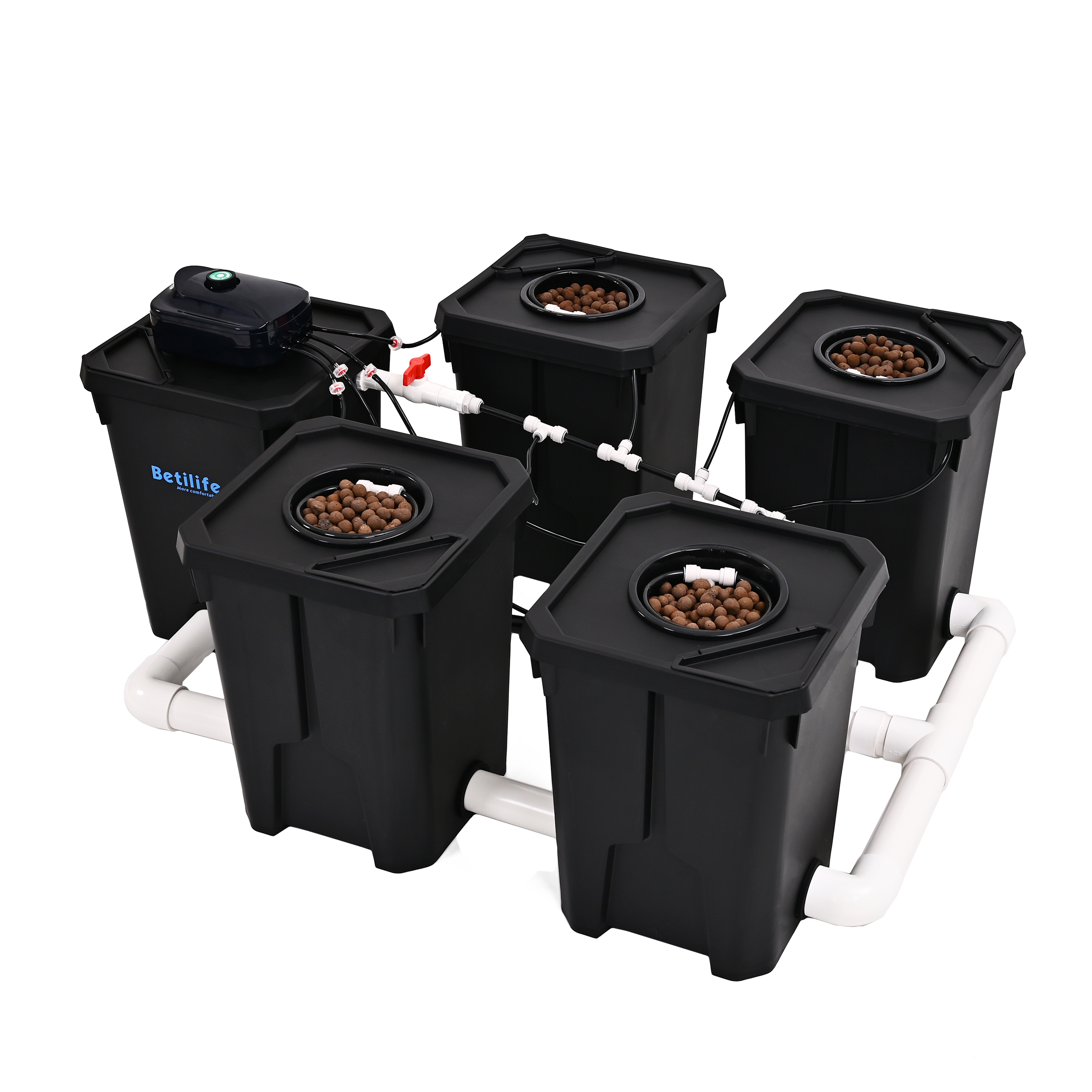
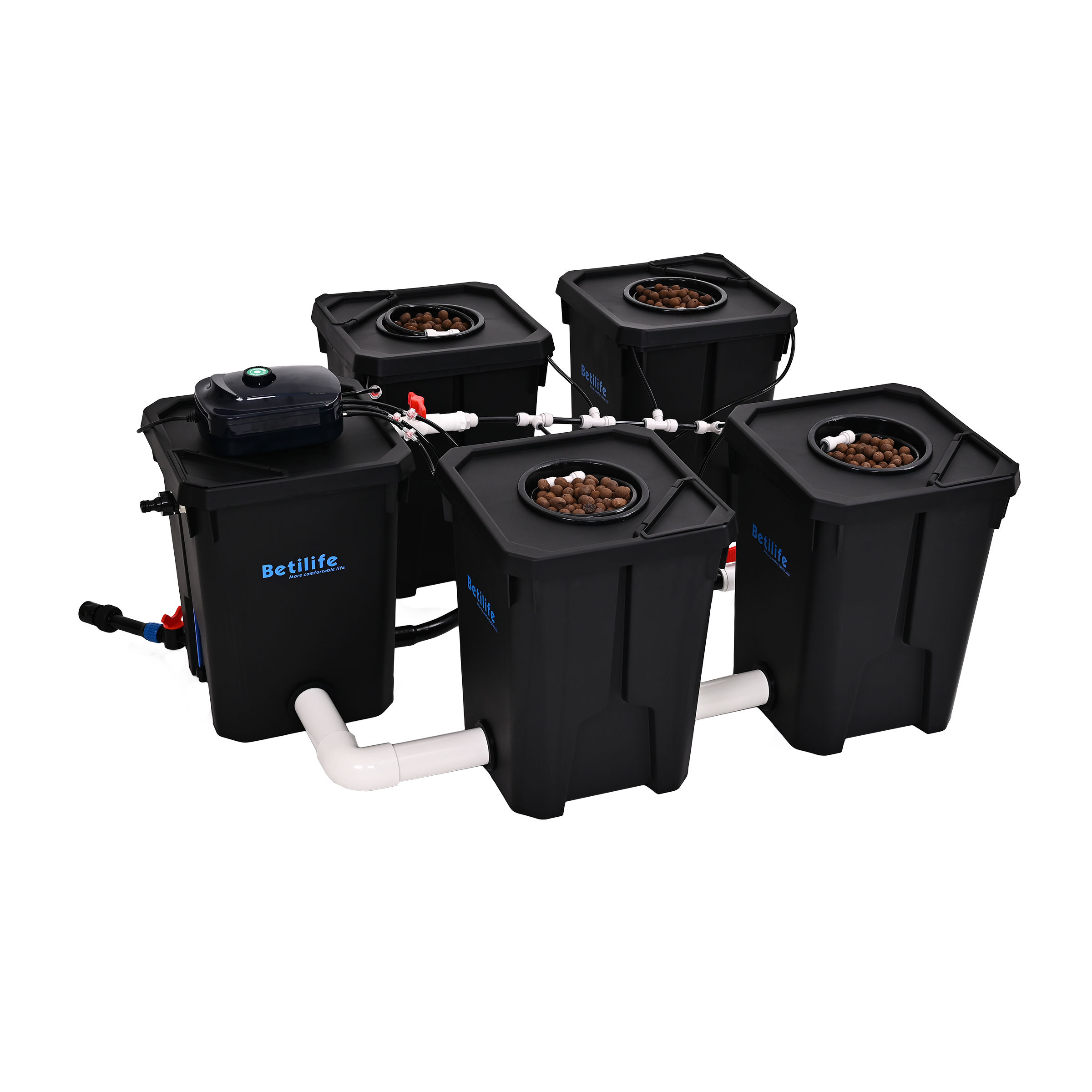
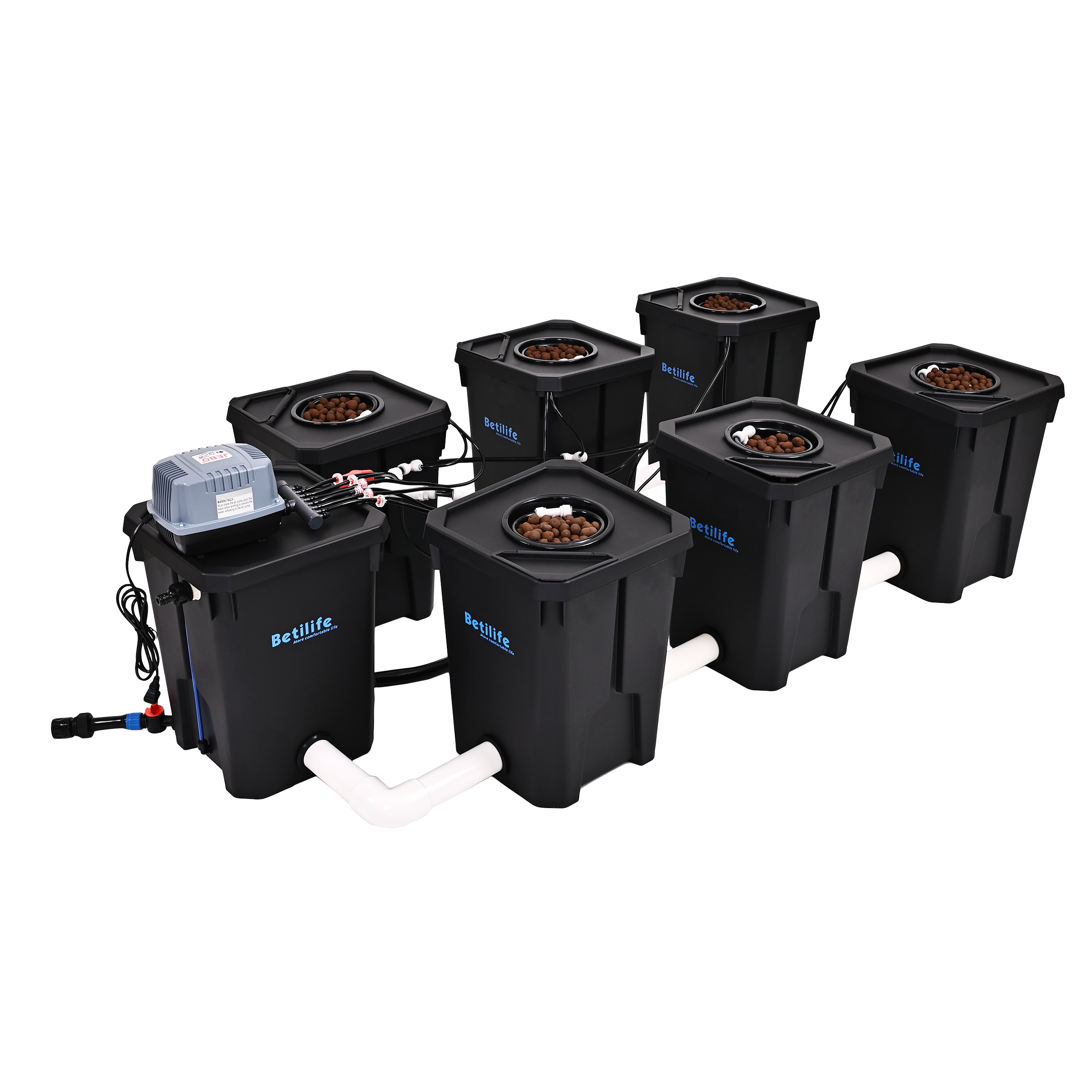
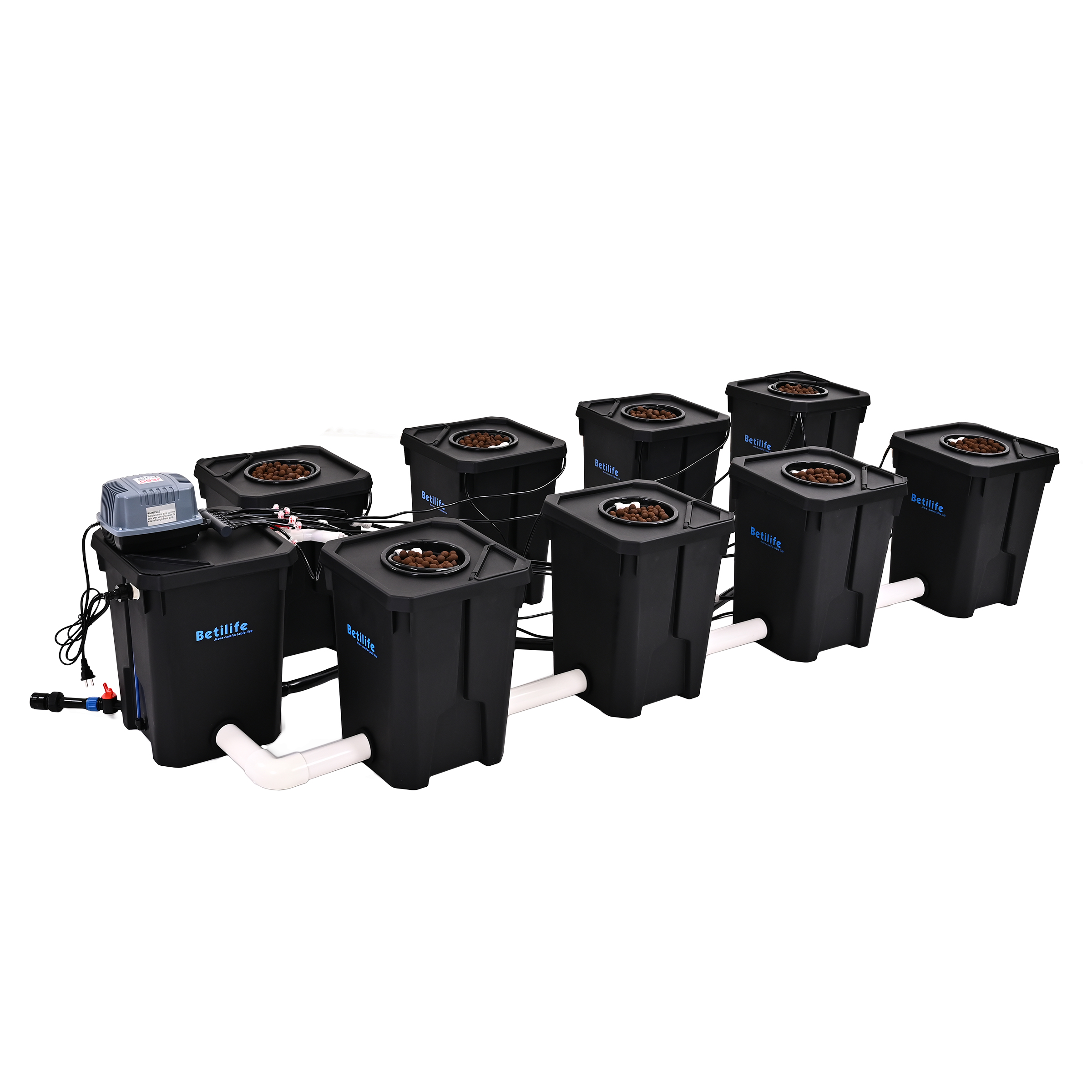
BetiLife's standard 7-Gallon / approximately 27L line includes BLGX-04, BLGX-06, BLGX-08, and BLGX-12. The configurations have four, six, eight, or twelve planting buckets, respectively, plus one reservoir. The published line also includes a drip irrigation function. See the official product specifications and retail reference prices.
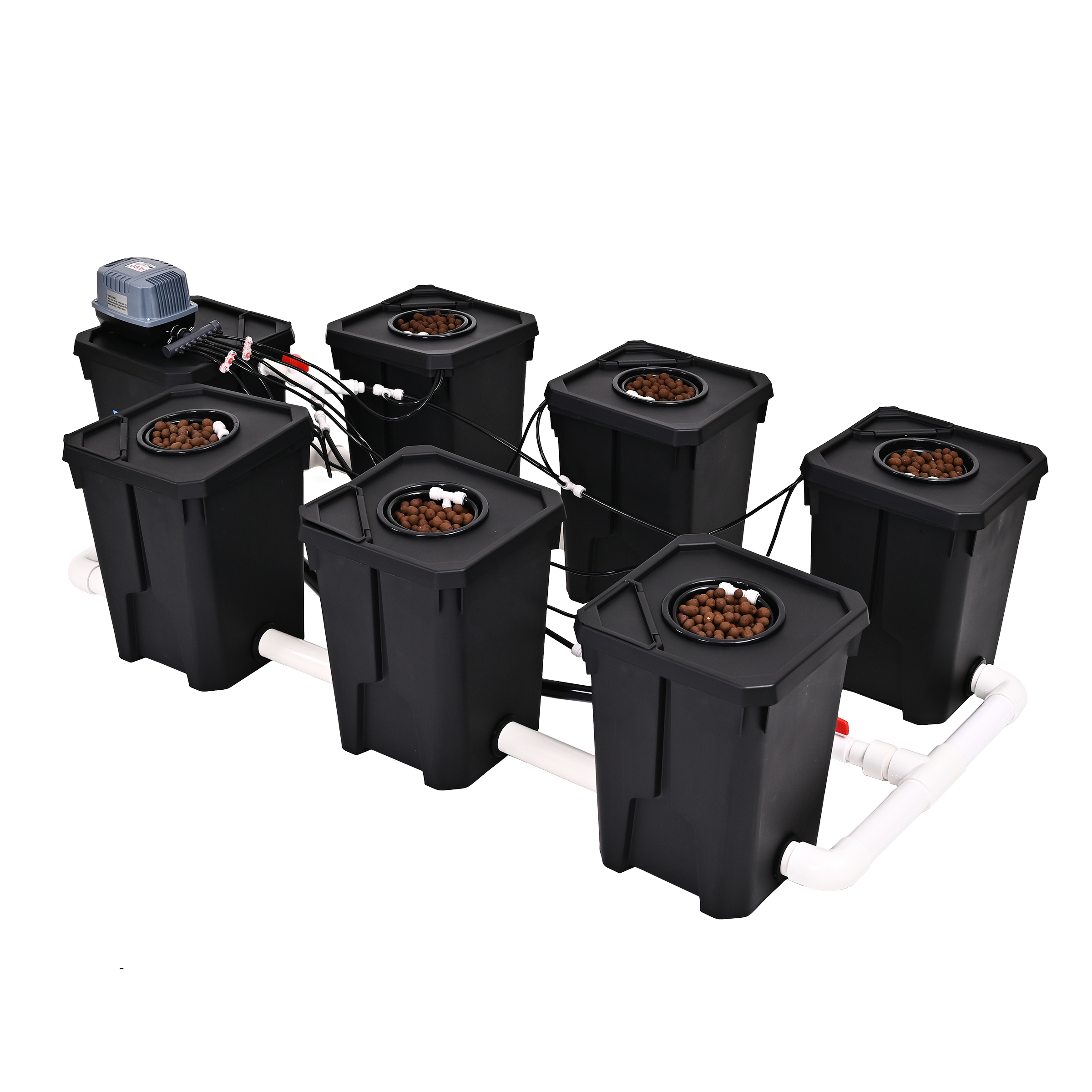
| Model and capacity | Retail reference | Suggested purchasing discussion |
|---|---|---|
| BLGX-04 4 planting sites + 1 reservoir |
US$599 | Fit for four-site requirements, including access for inspection and service. |
| BLGX-06 6 planting sites + 1 reservoir |
US$799 | Six-site needs, available workspace, and the proposed maintenance routine. |
| BLGX-08 8 planting sites + 1 reservoir |
US$949 | Access to all eight sites and the staffing and parts plan. |
| BLGX-12 12 planting sites + 1 reservoir |
US$1,499 | Twelve-site capacity, service clearance, and responsibility for maintenance. |
These are public retail references, not dealer prices, wholesale costs, or confirmed DDP totals. Prices may change. The purchasing discussions are planning suggestions, not tested disease-resistance ratings.
Choose capacity without turning it into a health claim
A larger bucket is not a pathogen-control device. Nominal container capacity is also different from the actual operating solution volume. Confirm the intended arrangement and documentation rather than calculating maintenance requirements from a product name alone.
For a grow shop, a model evaluation can help staff assess assembly, documentation, and service access. It should not be presented as proof of disease prevention. Buyers with a defined model and quantity can request a quote directly; an evaluation purchase is not an automatic prerequisite.
Compare the Four Models · Request Model and Maintenance Information
9. Budget Beyond the Equipment Price
The relevant budget includes the resources needed to use and support the system. Compare quotations with the same equipment scope and delivery destination, then assess the obligations that remain with your operation.
- Acquisition: equipment, agreed accessories, delivery, and any installation work.
- Routine management: staff time, monitoring, calibration, cleaning supplies, and training.
- Service readiness: compatible parts, maintenance tools, and qualified assistance when required.
- Incident response: diagnostic services, additional labor, and a realistic recovery plan.
Do not assume reduced use of growing media means operating costs are close to zero. Equally, do not justify expensive accessories with an invented estimate of avoided crop losses. Use documented needs and actual quotations.
Grow shops should define the handover and support scope
Explain what the customer receives, what remains to be arranged, and where to find the maintenance information. Distinguish a component walkthrough from ongoing crop consulting. Make the equipment support contact and the process for identifying replacement parts easy to find.
When requesting BetiLife pricing, specify whether the order is for project use, evaluation, display, or resale. Ask for the applicable delivery arrangement, including DDP or another suitable option if you work with a freight forwarder. Compare written scope rather than assuming one shipping term always costs less.
10. Frequently Asked Questions
Can pathogens spread between buckets in an RDWC system?
Some plant pathogens can move through shared water. That creates a potential exposure route between connected sites, but it does not establish a universal infection timeline or guarantee that every plant will become diseased.
Does clear nutrient solution mean the system is pathogen-free?
No. Appearance is not a pathogen test. Use appropriate professional assessment when contamination is suspected rather than treating clear water or normal instrument readings as proof that pathogens are absent.
Do brown roots always indicate an infectious disease?
No. Root appearance alone does not establish a specific cause. Document the symptoms and operating history, and seek diagnostic support when disease is suspected.
Can water temperature alone prevent RDWC root disease?
No. Temperature is one part of root-zone management, not a stand-alone disease barrier. Crop requirements, water conditions, contamination sources, and equipment operation also need consideration.
How often should an RDWC system be cleaned?
Use the manufacturer's maintenance guidance and a plan appropriate to the crop, operating conditions, and site history. Separate routine in-use checks from between-crop cleaning. A single interval is not suitable for every application.
Does every commercial RDWC system need UV treatment or a chiller?
Not automatically. Evaluate whether additional equipment is needed for the specific project and verify its suitability, compatibility, and maintenance requirements. Do not infer inclusion from the term commercial RDWC.
Do separate RDWC systems automatically create isolated growing zones?
No. Review the actual water connections and shared handling practices. Separate hardware does not, by itself, establish complete separation of contamination pathways.
What maintenance information should buyers request before ordering?
Ask for model-specific assembly and maintenance instructions, component identification, cleaning compatibility information, replacement-part arrangements, and support terms. Confirm which requested information is available before committing to the order.
Choose an RDWC System You Can Maintain Consistently
Protecting crops starts with understanding the operating responsibilities. A useful RDWC purchase matches capacity with workable maintenance access, clear documentation, staff readiness, and an agreed support process.
To discuss BetiLife's four standard models, send your business type, preferred model or site count, quantity, delivery ZIP code, and target purchasing date. Include any documentation or service questions that must be resolved before ordering.
Please quote [quantity] units of [BetiLife model] for [project use / resale / evaluation], delivered to [ZIP code]. Include the configuration, delivery scope, available maintenance information, replacement-part arrangements, warranty terms, and estimated lead time.
Request Model Details and a Quote · Email Your Requirements
- RDWC Suppliers & Wholesalers for U.S. Grow Shops
- Commercial RDWC Systems for U.S. Grow Rooms
- How to Choose the Right Commercial RDWC System for Your Grow Room
- What U.S. Grow Shops Should Look for in an RDWC Wholesale Supplier
- 4 vs 6 vs 8 vs 12 Bucket RDWC: Which Model Fits Best
- Complete RDWC System vs DIY Parts Kit: Which Is Better for Grow Shops and Commercial Buyers?
- How Grow Shops Can Add RDWC Systems Without Competing Only on Price?
- Best RDWC Systems for Grow Shops and Hydroponic Retailers
- DDP Quote for RDWC Hydroponic Systems: When It Makes Sense for B2B Buyers
- RDWC Wholesale Price List: A Buyer's Guide
- Private Label RDWC Systems: A Practical Guide for Growing Your Brand
- Top Commercial RDWC Suppliers & Systems: Buyer's Guide
- Best Hydroponic Products for Grow Shops: Why RDWC Deserves a Place
Technical references support the general discussion of hydroponics, sanitation, and plant health. They do not constitute independent testing or endorsement of BetiLife products. Actual system contents and commercial terms are subject to the confirmed quotation.