RDWC vs DWC Pros and Cons Compared
Hydroponic growing has transformed modern indoor agriculture by allowing plants to grow faster, healthier, and with greater yields than traditional soil methods. Among the many hydroponic systems available today, Deep Water Culture (DWC) and Recirculating Deep Water Culture (RDWC) are two of the most widely used methods.
But many growers ask the same question:
Is RDWC better than DWC?
The short answer is yes for most multi-plant or high-yield setups, but understanding why requires looking closely at how these systems work.
In this guide, we’ll compare RDWC vs DWC, explain the pros and cons of each system, and help you determine which one is best for your grow operation.
What is a DWC System?
A Deep Water Culture (DWC) system is one of the simplest hydroponic setups. In this method, plant roots are suspended directly in a nutrient-rich water solution.
An air pump and air stone continuously supply oxygen to the water, preventing root suffocation and promoting rapid nutrient absorption.
Basic DWC Components
A typical DWC setup includes:
-
Grow bucket or container
-
Net pot and growing medium
-
Air pump and air stone
-
Nutrient solution
-
Optional water level indicator
Plants remain suspended above the nutrient reservoir while their roots grow deep into the oxygenated solution.
Because the system is so simple, DWC is often recommended for beginners learning hydroponics.
What is an RDWC System?
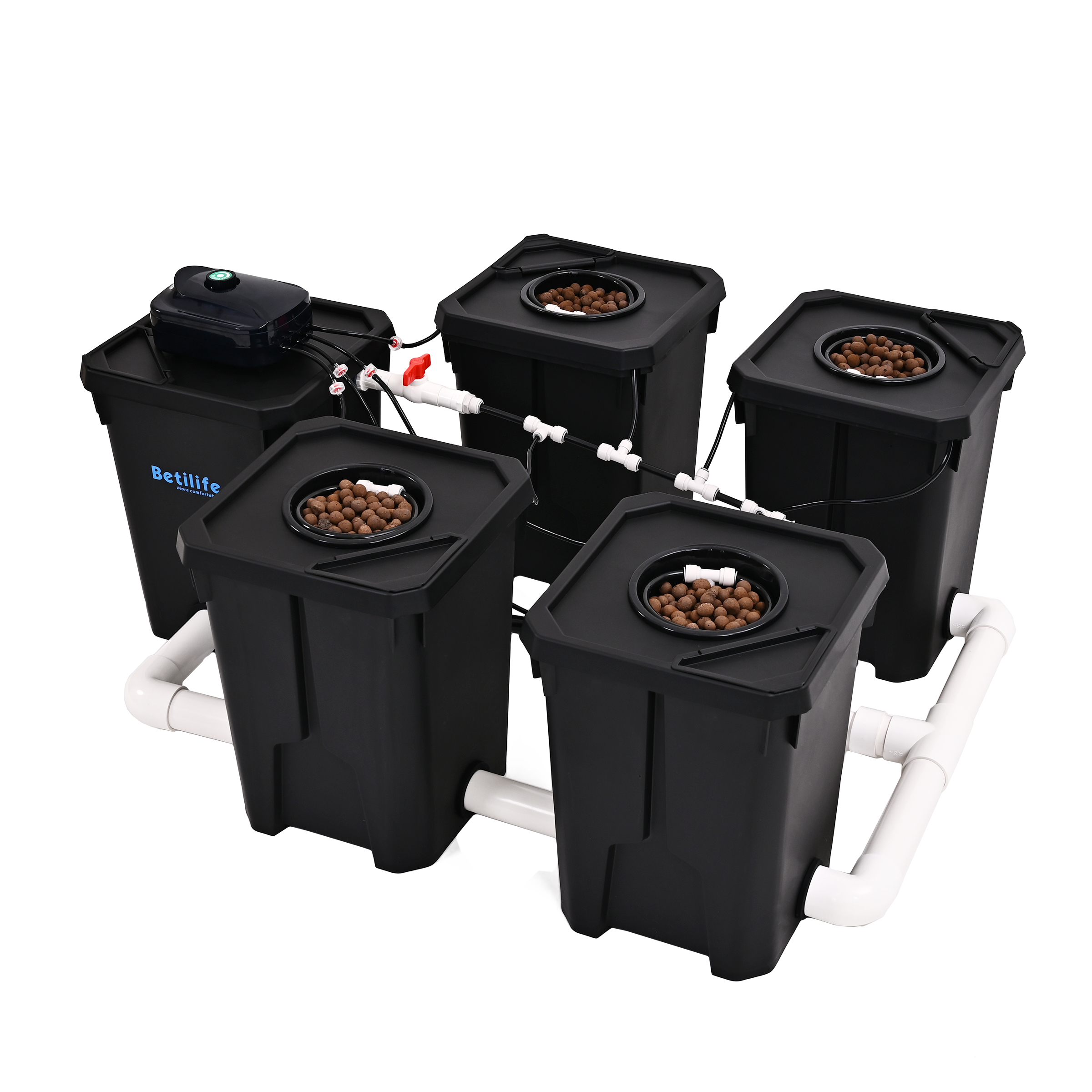
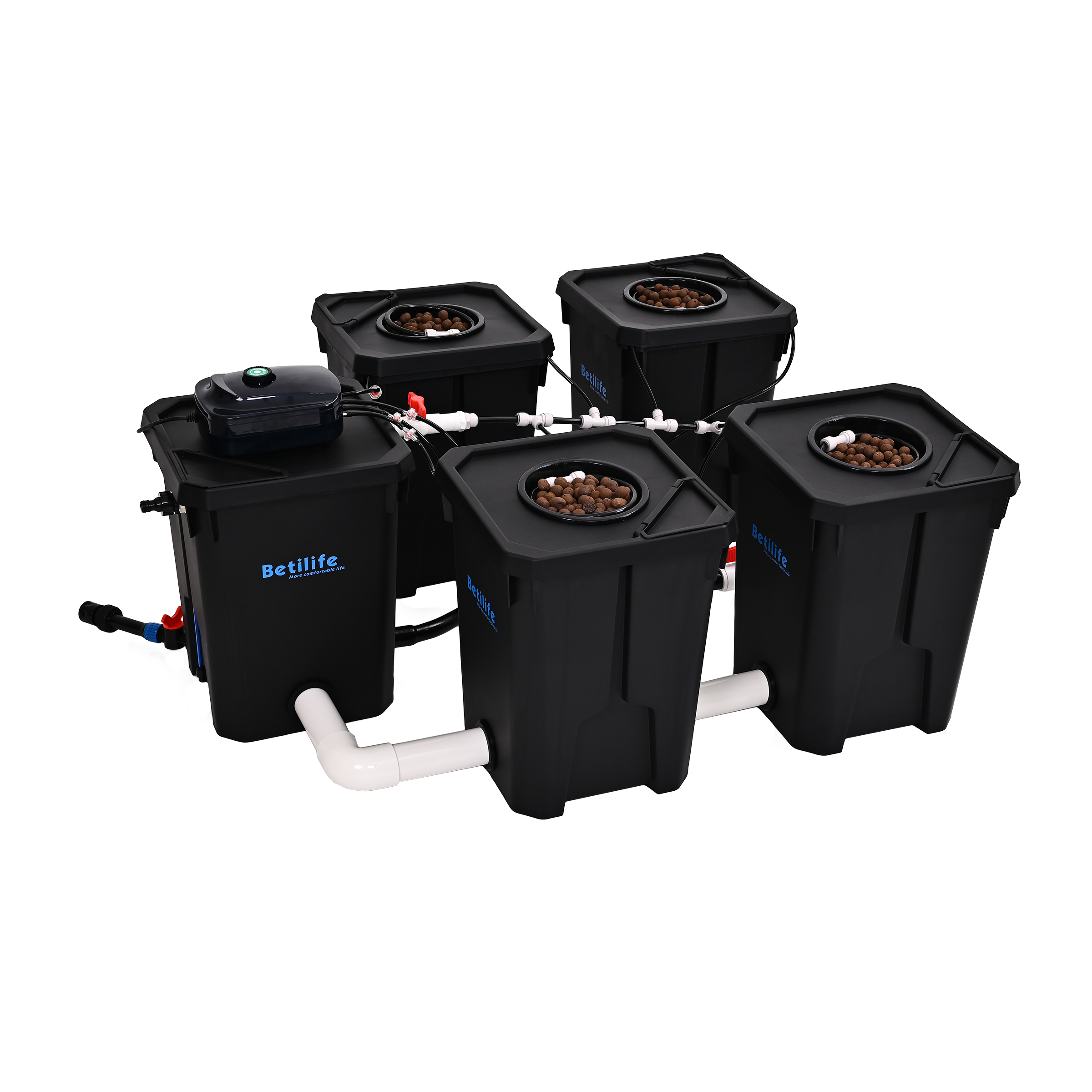
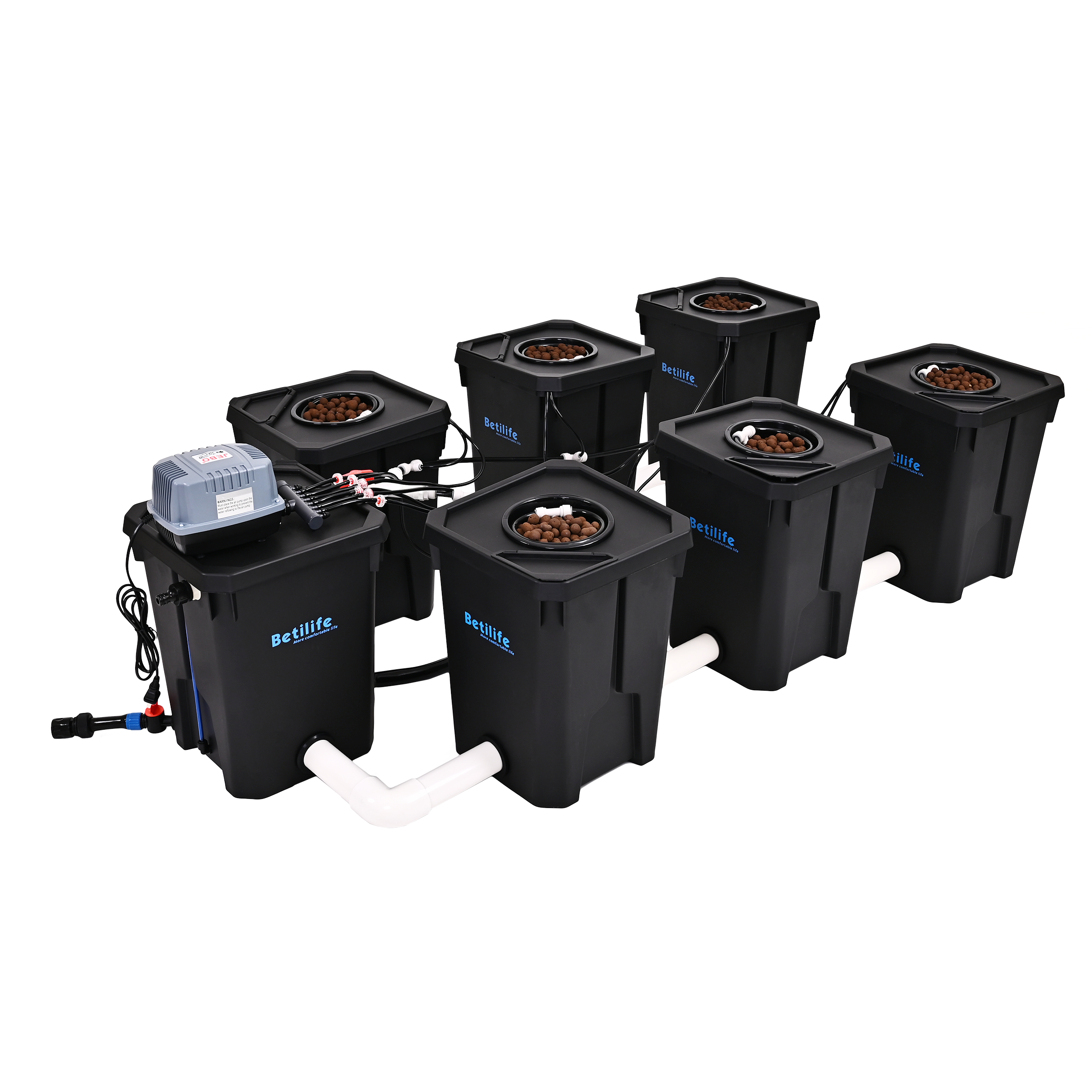
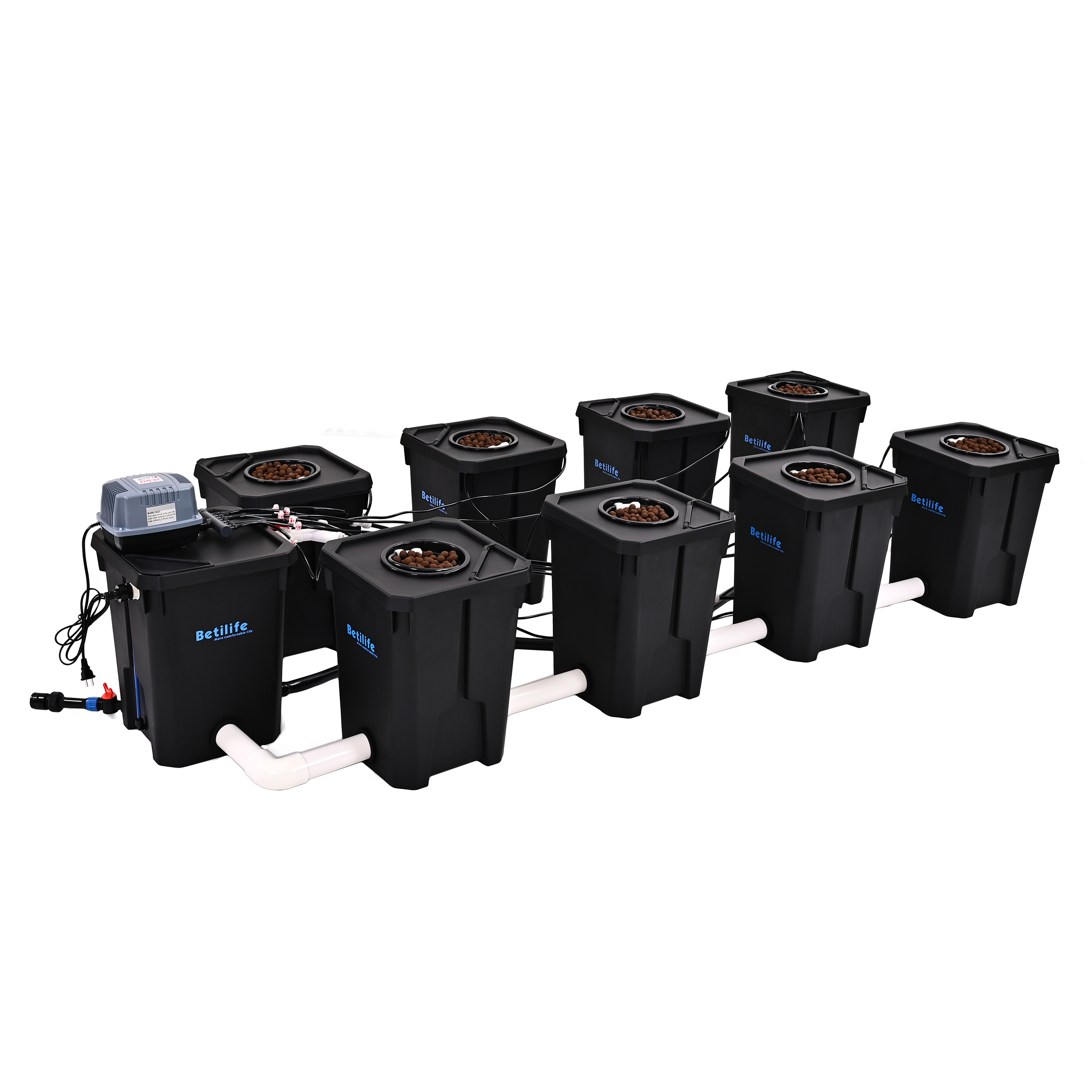
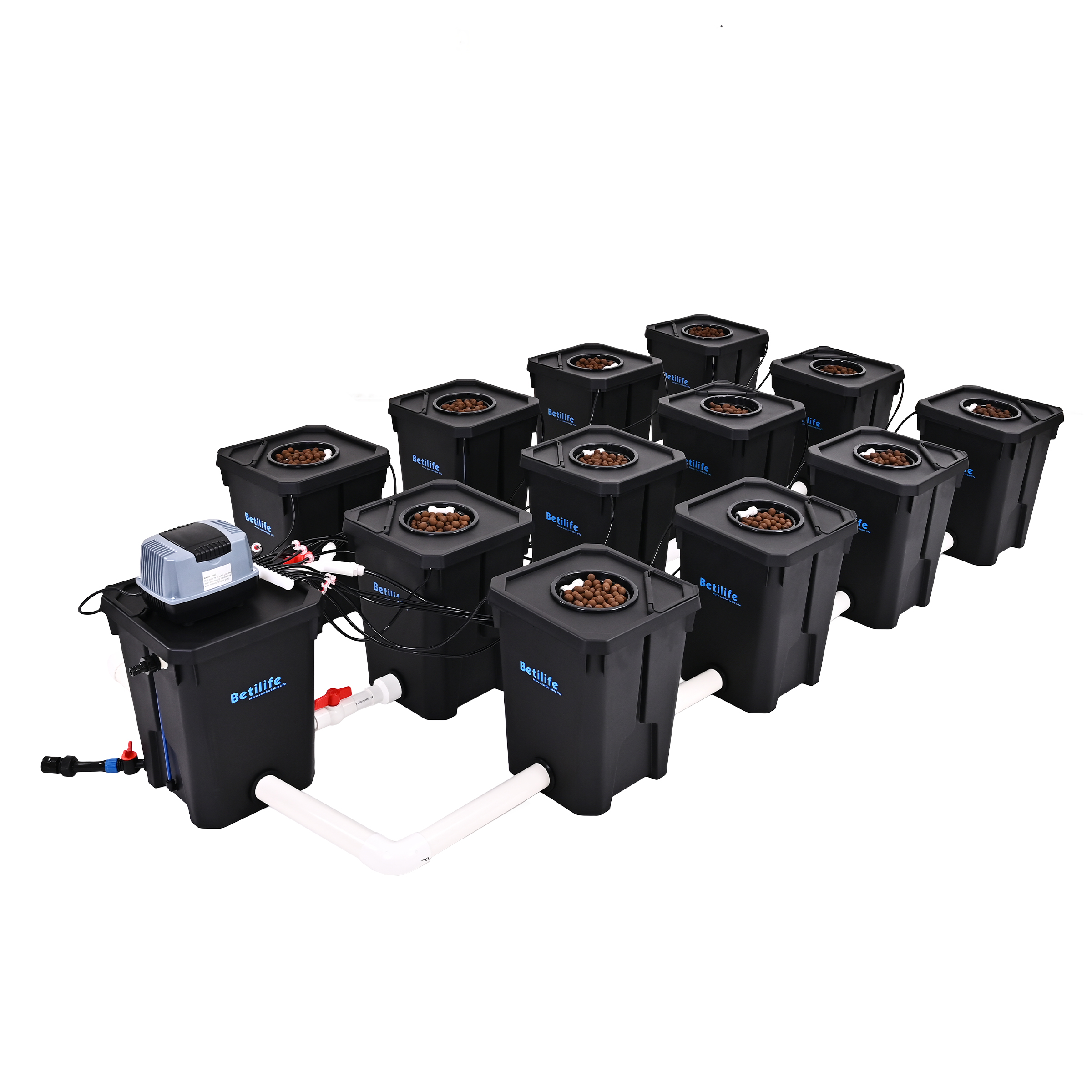
An RDWC (Recirculating Deep Water Culture) system is essentially an upgraded version of DWC designed for greater efficiency and scalability.
Instead of using separate buckets for each plant, RDWC systems connect multiple grow buckets to a central reservoir through a series of pipes. A pump circulates nutrient solution throughout the system.
This allows all plants to share the same nutrient solution while maintaining consistent oxygen levels.
Key Components of an RDWC System
A typical RDWC setup includes:
-
Multiple grow buckets
-
Central control reservoir
-
Recirculation pump
-
Air pump and air stones
-
Connecting pipes
The water constantly moves between buckets, keeping nutrients, oxygen, and pH levels stable.
This is why many professional growers prefer systems like the BetiLife™ RDWC Hydroponic System, which are designed specifically for high-performance hydroponic cultivation.
RDWC vs DWC: Quick Comparison
| Feature | DWC | RDWC |
|---|---|---|
| System Design | Individual buckets | Connected bucket system |
| Nutrient Management | Separate per bucket | Shared reservoir |
| Stability | Moderate | High |
| Maintenance | Manual per bucket | Centralized control |
| Growth Speed | Fast | Faster |
| Yield Potential | Good | Higher |
| Scalability | Limited | Excellent |
| Best For | Beginners, <4 plants | Experienced, 4+ plants |
The key difference is system stability. RDWC systems create a more balanced environment for plants by ensuring nutrients circulate evenly across all buckets.
RDWC vs DWC Pros and Cons
Understanding the advantages and disadvantages of both systems will help you decide which one fits your needs.
-
Advantages of DWC
-
Simple Setup
DWC systems are very easy to build. Even beginners can assemble a basic DWC setup with minimal equipment.
-
Lower Startup Cost
Since DWC requires fewer components, the initial investment is relatively low.
-
Ideal for Small Grow Projects
If you're growing only a few plants, DWC systems work well without requiring complex plumbing.
-
-
Disadvantages of DWC
While DWC is simple, it also has several limitations.
-
Nutrient Fluctuations
Because each bucket is separate, nutrient levels can change quickly. Growers must frequently monitor pH and EC levels.
-
Labor Intensive for Multiple Plants
Managing multiple DWC buckets means adjusting each reservoir individually.
-
Water Temperature Problems
Without circulation, water can heat up or lose oxygen, which may stress plant roots.
-
-
Advantages of RDWC
RDWC systems solve many of the issues found in traditional DWC setups.
-
Faster Plant Growth
Continuous nutrient circulation ensures roots always receive fresh oxygenated solution, which accelerates plant growth.
-
Higher Yields
Many growers report 20–30% larger harvests after switching from DWC to RDWC.
-
Stable Nutrient Levels
Because all buckets share the same reservoir, pH and nutrient levels remain consistent.
-
Easier Maintenance
Instead of checking each bucket individually, growers manage a single control reservoir.
-
Better for Scaling
RDWC systems are ideal for growers managing multiple plants or larger operations.
-
-
RDWC Disadvantages
Although RDWC systems provide many benefits, they do require a slightly larger investment.
-
Higher Initial Cost
RDWC systems require pumps, tubing, and more components.
-
More Complex Installation
Setting up the piping system can take additional time during the initial build.
However, once installed, RDWC systems often save time and labor during long-term operation.
-
Why RDWC Systems Produce Better Results
The biggest reason RDWC systems outperform DWC is environmental stability.
Plants grow best when the root zone environment remains stable.
RDWC provides:
-
Consistent nutrient levels
-
Stable pH balance
-
Continuous oxygen supply
-
Even water temperature
These conditions allow plants to focus energy on growth and fruit production instead of stress recovery.
Introducing the BetiLife™ RDWC Hydroponic System
For growers looking to take advantage of RDWC technology, the BetiLife™ RDWC Hydroponic System offers a complete professional-grade solution.
The system is designed to deliver efficient nutrient circulation, high oxygen levels, and reliable plant performance.

Key Features
-
Multiple Configuration Options
Available in 5-bucket, 7-bucket, and 9-bucket systems (custom bucket counts are also available, e.g., 24, 36, 50, or more), allowing growers to choose the right scale for their operation.
5-Gallon (16L) Buckets
Large buckets provide enough space for extensive root development.
-
Recirculating Nutrient System
A high-efficiency pump ensures nutrients circulate evenly across all buckets.
-
Automated Water Flow
Reduces manual labor and simplifies daily hydroponic management.
-
Optimized for High-Demand Crops
Ideal for crops that require fast growth and strong root development.
BetiLife™ RDWC Hydroponic System helps growers achieve faster growth, higher yields, and improved crop turnover.
Is RDWC Better than DWC?
For most growers managing multiple plants, RDWC is generally the better option.
RDWC is best for:
-
Indoor hydroponic farms
-
Growers seeking higher yields
-
Multi-plant cultivation
-
Reduced daily maintenance
DWC is best for:
-
Beginners learning hydroponics
-
Small hobby grows
-
Single plant experiments
While DWC remains a great entry-level system, RDWC offers greater efficiency, scalability, and productivity.
RDWC vs DWC: Which System Should You Choose?
Choosing between RDWC and DWC depends on your goals.
| Grow Goal | Best System |
|---|---|
| Learning hydroponics | DWC |
| Growing a few plants | DWC |
| High yields | RDWC |
| Multi-plant systems | RDWC |
| Commercial growing | RDWC |
If your goal is maximizing plant performance and production, RDWC systems offer clear advantages.
Frequently Asked Questions (FAQ)
Is RDWC harder to maintain than DWC?
No. Although RDWC systems are more complex to install, they are often easier to maintain because growers manage a single reservoir instead of multiple buckets.
Does RDWC grow plants faster than DWC?
Yes. Because nutrients and oxygen circulate continuously, plants in RDWC systems typically grow faster than in traditional DWC setups.
Can beginners use RDWC systems?
Yes. Many modern RDWC kits are designed for easy installation and use, making them suitable for beginners who want a more advanced hydroponic system.
How many plants can an RDWC system support?
That depends on the system configuration. Systems like the BetiLife™ RDWC Hydroponic System are available in 5, 7, and 9 bucket configurations (custom bucket counts are also available, e.g., 24, 36, 50, or more) to support different grow scales.
Hydroponics exemplifies innovation in agriculture, offering sustainable solutions for food production in resource-limited or space-constrained environments.
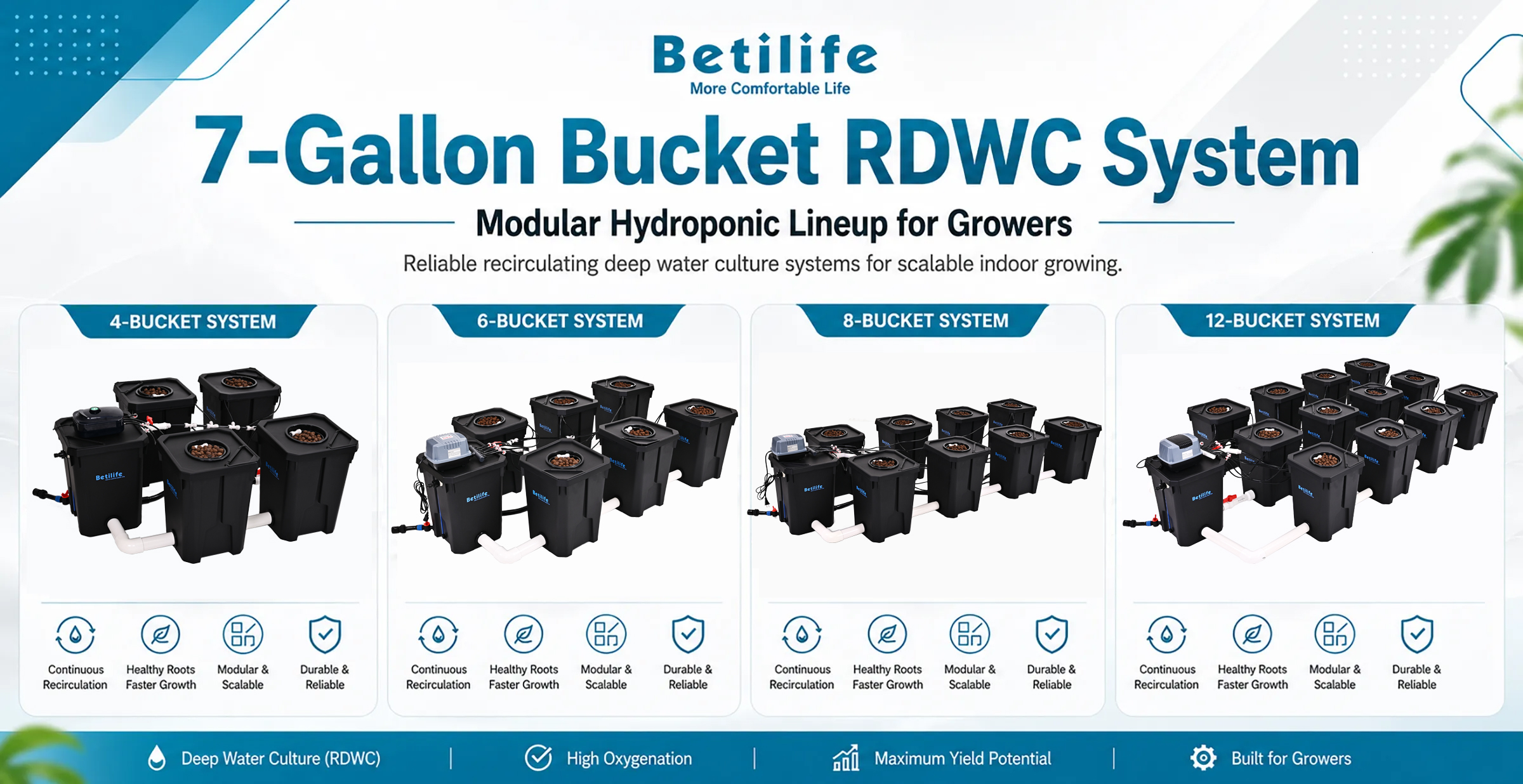
7-Gallon Bucket Commercial RDWC System
Learn more about hydroponics:
- What Is Hydroponics
- What is the Nutrient Film Technique NFT
- What is Aeroponic
- What is the Ebb and Fow Flood and Drain System
- What is Drip System
- What is the Wick System In Hydroponics
- What Are The Best Flowers For Hydroponics
- Can You Do Hydroponic Carrots
- What Are The Best Plants To Grow In Hydroponic Towers
- What Are The Best Hydroponic Lettuce Varieties
- What Are Hydroponic Strawberries
- How to Choose the Best Hydroponic Grow Pods Coir
- Best Nutrients for Deep Water Culture
- How to Grow Arugula Hydroponically
- Growing Hydroponic Cilantro
- How to Grow Hydroponic Lavender
- What Plants Grow Best in a Deep Water Culture System